Core health concepts and habits
Students start the year by learning how the body works and what daily choices keep it healthy. They look at sleep, food, exercise, and stress, and connect those habits to how they feel day to day.
This is the year health class shifts from learning the rules to making real decisions on their own. Students look at how friends, family, social media, and advertising shape choices about food, sleep, relationships, and substances. They practice speaking up, setting goals, and finding trustworthy health information instead of taking the first answer online. By the end of the year, students can walk through a tough choice out loud and explain how they would handle it.
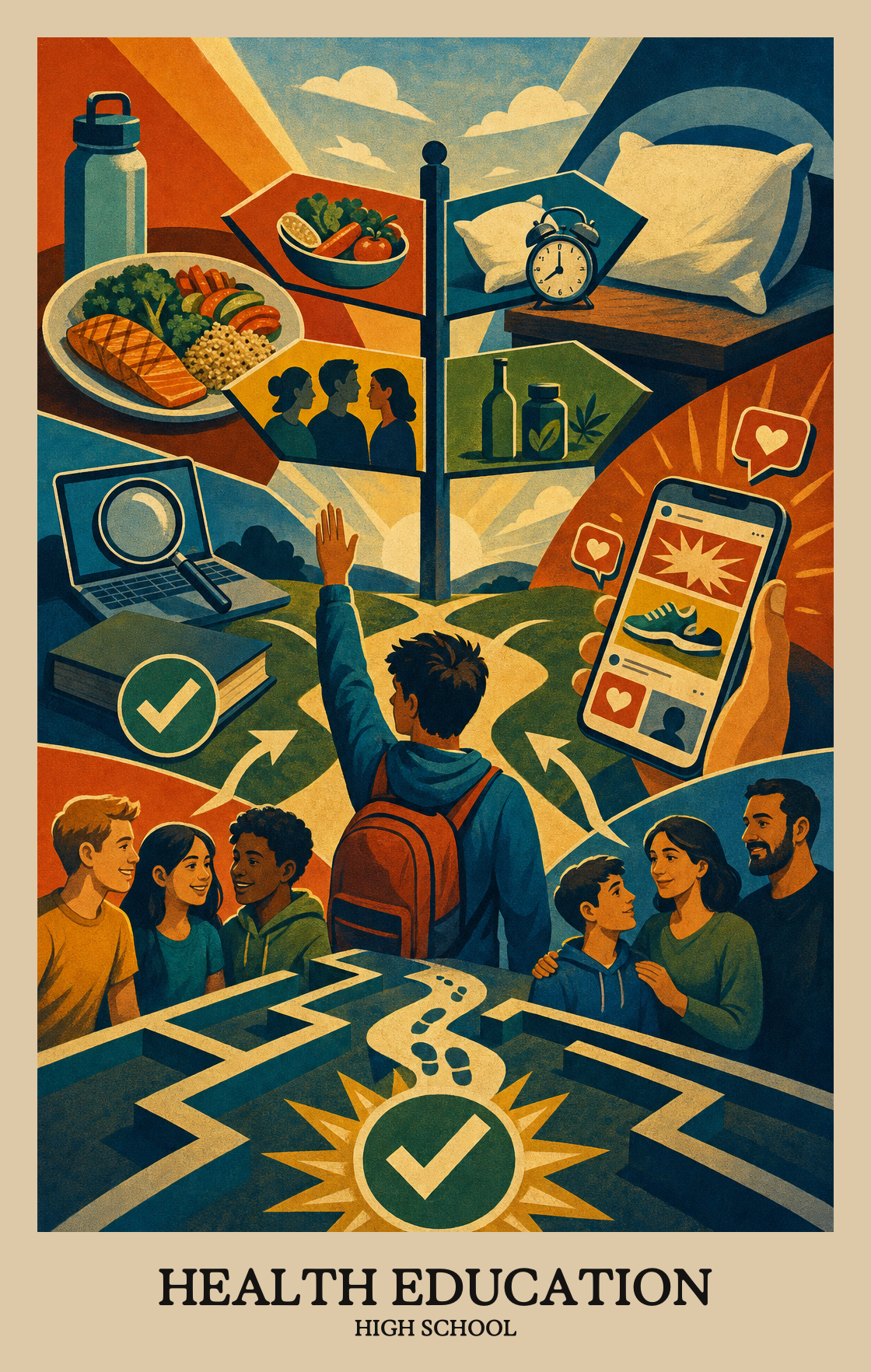
Students start the year by learning how the body works and what daily choices keep it healthy. They look at sleep, food, exercise, and stress, and connect those habits to how they feel day to day.
Students study what shapes their decisions, from family and friends to social media and advertising. They start to notice when a message is trying to sell them something or push them toward a risky choice.
Students practice telling solid health information apart from rumors and ads. They learn where to look for trustworthy sources and how to read a label, a clinic website, or a product claim with a careful eye.
Students work on talking through tough situations with friends, family, and partners. They practice saying no, asking for help, setting limits, and listening when someone else is struggling.
Students walk through how to make a real decision under pressure and how to set a goal they can actually reach. They plan small steps, track progress, and adjust when life gets in the way.
Students close the year by putting it all together. They practice safer behaviors around substances, driving, and relationships, and look at how to support family members and speak up for healthier schools and neighborhoods.
Students learn how the body, mind, and relationships work together so they can make choices that keep them healthy now and into adulthood.
Students examine how personal values, family habits, friends, media, and culture shape the health choices they make. The goal is to spot those influences before they steer a decision.
Students find and evaluate health information from real sources, like a doctor's website or a government health page, then judge whether the information is reliable enough to act on.
Students practice the conversations that matter for health: asking questions at a doctor's appointment, setting limits with peers, or talking through a hard decision with someone they trust.
Students practice a step-by-step process for making health choices, like deciding how to handle peer pressure, manage stress, or respond to risky situations. The goal is thinking through real decisions before they happen.
Students practice setting specific health goals, like improving sleep or staying active, and build a step-by-step plan to reach them. The focus is on making goals realistic and tracking progress over time.
Students learn to make daily choices that lower health risks, like staying active, getting enough sleep, and avoiding substances. The focus is building habits that protect their health now and into adulthood.
Students practice skills for improving health at home and in their community, from having an honest conversation with a family member to organizing efforts that help a neighborhood stay healthier.
| Standard | Definition | Code |
|---|---|---|
| How to build and keep good health High School | Students learn how the body, mind, and relationships work together so they can make choices that keep them healthy now and into adulthood. | CA-HE.1.9-12 |
| What shapes your health choices High School | Students examine how personal values, family habits, friends, media, and culture shape the health choices they make. The goal is to spot those influences before they steer a decision. | CA-HE.2.9-12 |
| Finding and checking reliable health information High School | Students find and evaluate health information from real sources, like a doctor's website or a government health page, then judge whether the information is reliable enough to act on. | CA-HE.3.9-12 |
| Talking to others about your health High School | Students practice the conversations that matter for health: asking questions at a doctor's appointment, setting limits with peers, or talking through a hard decision with someone they trust. | CA-HE.4.9-12 |
| How to make smart health decisions High School | Students practice a step-by-step process for making health choices, like deciding how to handle peer pressure, manage stress, or respond to risky situations. The goal is thinking through real decisions before they happen. | CA-HE.5.9-12 |
| Setting health goals that stick High School | Students practice setting specific health goals, like improving sleep or staying active, and build a step-by-step plan to reach them. The focus is on making goals realistic and tracking progress over time. | CA-HE.6.9-12 |
| Habits that lower health risks High School | Students learn to make daily choices that lower health risks, like staying active, getting enough sleep, and avoiding substances. The focus is building habits that protect their health now and into adulthood. | CA-HE.7.9-12 |
| Supporting health in your family and community High School | Students practice skills for improving health at home and in their community, from having an honest conversation with a family member to organizing efforts that help a neighborhood stay healthier. | CA-HE.8.9-12 |
Students learn the basics of taking care of their body and mind, including nutrition, sleep, exercise, mental health, relationships, and how to avoid risky situations. They also practice skills like making decisions, setting goals, and talking through hard conversations.
Use short moments instead of long talks. Bring something up while driving or cooking, ask one open question, and let the conversation end when it ends. Teens often come back to a topic later if the first mention felt low pressure.
They should be able to find trustworthy health information, weigh choices before acting, set a realistic goal and track it, and speak up clearly in tough situations. They should also know where to go for help with mental health, substance use, or a hard relationship.
Most teachers anchor each unit in a content area like mental health, nutrition, or relationships, then layer the skill standards on top. Decision-making and communication tend to land best mid-year, once students trust the room. Save advocacy projects for the end so students can pull everything together.
Listen for small shifts: questioning a health claim on social media, mentioning a friend they are worried about, or asking about sleep or stress. Those are signs the skills are landing, even when grades and worksheets do not show much.
Analyzing influences and accessing reliable information are the hardest. Students can name peer pressure and advertising in the abstract but struggle to spot them in their own feeds. Plan to revisit both skills in every unit rather than teaching them once.
Thank them for asking before you answer, even if the question catches you off guard. Give the facts you know, admit what you do not know, and offer to look it up together or call the doctor. Staying calm keeps them coming back next time.
Aim for roughly half and half. Students need accurate information about bodies, substances, and mental health, but the standards are built around skills they apply for life. Role plays, goal-setting check-ins, and source analysis should show up in most weeks.
They should know how to schedule their own appointment, refill a prescription, read a nutrition label, recognize when stress has tipped into something bigger, and ask for help without shame. Practice these one at a time during senior year.