Exploring career pathways
Students start the year by looking at the wide range of industries open to them, from health care and construction to media arts and agriculture. They begin to notice which kinds of work match their interests and strengths.
This is the stretch when school starts pointing toward a real job. Students pick a career area that interests them, like health care, construction, business, farming, or computers, and build actual skills in it. They learn how to show up on time, work on a team, communicate with adults, and use the tools of that field. By spring, they can talk through a career path they're considering and back it up with hands-on work they've done.
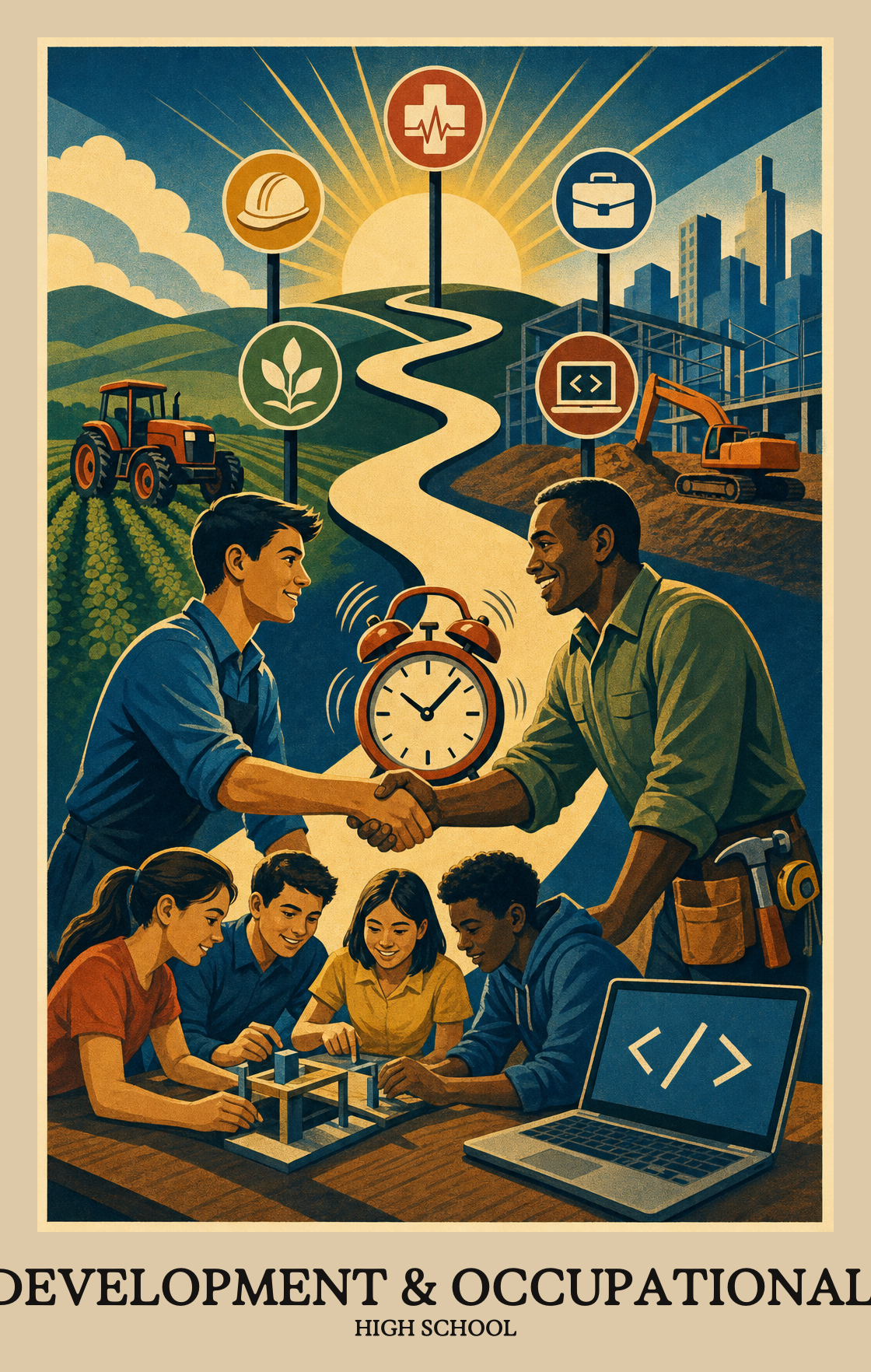
Students start the year by looking at the wide range of industries open to them, from health care and construction to media arts and agriculture. They begin to notice which kinds of work match their interests and strengths.
Students practice the habits that make someone a strong employee, like showing up on time, communicating clearly, and following through. They learn how integrity and teamwork look on the job.
Students dig into the academic and technical skills tied to a specific industry. They use real tools, software, and methods that workers use in that field, and apply math, reading, and science to job tasks.
Students take on projects that ask them to think through messy, open-ended problems. They research, weigh options, consider costs to people and the environment, and stick with a problem until they find a workable answer.
Students map out what comes after high school, whether that is college, an apprenticeship, the military, or a job. They set goals, look at finances, and line up the education and training their plan will need.
Students learn to show up reliably, follow through on commitments, and treat coworkers and community members with respect. The goal is the same whether they're on a job site or in a classroom.
Students use reading, writing, and math to solve real problems at work, not just in class. The goal is to connect what they learned in school to what a job actually asks them to do.
Students learn to manage their own health habits and money decisions as part of preparing for work and adult life. This includes understanding how daily choices around sleep, stress, and spending shape long-term stability.
Students learn to say what they mean clearly and back it up with good reasons, whether they're writing an email, giving a presentation, or talking through a problem at work.
Students learn to think through how a choice at work or in life ripples outward: who it affects, what it costs, and what it does to the surrounding community or environment.
Students practice coming up with new ideas and turning them into real plans or products, not just following a set formula. They learn to treat an untested approach as a starting point, not a mistake.
Students learn to find trustworthy information before making a decision or building an argument. They choose credible sources, check facts, and use what they find to support their thinking.
Students practice working through hard problems without giving up. They learn to slow down, ask better questions, and try a different approach when the first one doesn't work.
Students practice making decisions the right way, even when no one is watching. That means being honest, following through on commitments, and handling responsibility without cutting corners.
Students map out the next steps in their education and work life based on what they actually want. That means looking at real options, like college, trade programs, or jobs, and building a plan that connects today's choices to a clear goal.
Students learn to choose the right tool for the job, whether that means a spreadsheet, a scheduling app, or a collaboration platform, and use it in a way that actually saves time and reduces errors.
Students practice finishing real tasks as part of a team, learning to work alongside people whose backgrounds and perspectives differ from their own.
| Standard | Definition | Code |
|---|---|---|
| Being a good citizen at work and in your community High School | Students learn to show up reliably, follow through on commitments, and treat coworkers and community members with respect. The goal is the same whether they're on a job site or in a classroom. | CA-CTE.CRP.1 |
| Applying academic skills on the job High School | Students use reading, writing, and math to solve real problems at work, not just in class. The goal is to connect what they learned in school to what a job actually asks them to do. | CA-CTE.CRP.2 |
| Health and money habits for life High School | Students learn to manage their own health habits and money decisions as part of preparing for work and adult life. This includes understanding how daily choices around sleep, stress, and spending shape long-term stability. | CA-CTE.CRP.3 |
| Clear communication at work High School | Students learn to say what they mean clearly and back it up with good reasons, whether they're writing an email, giving a presentation, or talking through a problem at work. | CA-CTE.CRP.4 |
| Weigh the real costs of every decision High School | Students learn to think through how a choice at work or in life ripples outward: who it affects, what it costs, and what it does to the surrounding community or environment. | CA-CTE.CRP.5 |
| Creative thinking at work High School | Students practice coming up with new ideas and turning them into real plans or products, not just following a set formula. They learn to treat an untested approach as a starting point, not a mistake. | CA-CTE.CRP.6 |
| Research you can actually trust High School | Students learn to find trustworthy information before making a decision or building an argument. They choose credible sources, check facts, and use what they find to support their thinking. | CA-CTE.CRP.7 |
| Think through hard problems without giving up High School | Students practice working through hard problems without giving up. They learn to slow down, ask better questions, and try a different approach when the first one doesn't work. | CA-CTE.CRP.8 |
| Leading with integrity at work High School | Students practice making decisions the right way, even when no one is watching. That means being honest, following through on commitments, and handling responsibility without cutting corners. | CA-CTE.CRP.9 |
| Planning your education and career path High School | Students map out the next steps in their education and work life based on what they actually want. That means looking at real options, like college, trade programs, or jobs, and building a plan that connects today's choices to a clear goal. | CA-CTE.CRP.10 |
| Using tech to get more done High School | Students learn to choose the right tool for the job, whether that means a spreadsheet, a scheduling app, or a collaboration platform, and use it in a way that actually saves time and reduces errors. | CA-CTE.CRP.11 |
| Working well on diverse teams High School | Students practice finishing real tasks as part of a team, learning to work alongside people whose backgrounds and perspectives differ from their own. | CA-CTE.CRP.12 |
Students study farming, plant science, animal care, forestry, and agricultural business to prepare for careers in food systems and natural resource industries.
Students explore career paths in fields like graphic design, film production, game design, theater, and music. Courses build real-world skills for jobs in creative industries, from entry-level work to management roles.
Students learn the hands-on skills behind building homes, commercial spaces, and large structures. Courses cover carpentry, cabinetry, plumbing, electrical work, and heavy construction, preparing students for jobs in the trades right after graduation.
Students in this strand study how businesses run, how money moves through financial systems, and how companies operate across borders. It points toward careers in management, banking, accounting, and global trade.
Students learn the skills needed for careers working with children, families, and communities. This covers paths like teaching, early childhood care, counseling support, and consumer services.
Students learn the skills behind careers in energy systems, environmental work, and telecommunications. Think power grids, clean energy projects, and the infrastructure that keeps water, utilities, and communication networks running.
Students learn the skills behind designing buildings, developing engineering systems, and solving environmental problems. These programs point toward careers in architecture, engineering technology, and related technical fields.
Students learn the skills behind careers in fashion design, clothing production, retail, interior design, and personal services. The coursework connects classroom learning to real jobs in these industries.
Health Science and Medical Technology courses prepare students for jobs in hospitals, labs, clinics, and research settings. Students explore paths in patient care, medical data, lab science, and health technology depending on which program they choose.
Students learn the skills behind jobs in restaurants, hotels, travel planning, and tourism. This strand covers everything from cooking and customer service to event planning and working at resorts or attractions.
Students explore career paths in tech, from fixing computer networks to writing software to building video games. These courses connect classroom skills to real jobs in the information and communication technology industry.
Students learn the skills behind making physical products, from designing and machining parts to welding and graphic production. These programs prepare students for careers in manufacturing, fabrication, and product design.
Students learn how to market products, sell to customers, and run a business. This strand covers everything from starting your own company to selling goods across international markets.
Students study the skills and knowledge behind careers in emergency response, law, and public safety. Think firefighting, legal work, and law enforcement.
Students learn how engines, aircraft, and vehicles actually work, then train for jobs in fields like auto repair, aviation, or aerospace. The focus is hands-on skill for real careers in transportation.
| Standard | Definition | Code |
|---|---|---|
| Careers in farming, animals, and natural resources High School | Students study farming, plant science, animal care, forestry, and agricultural business to prepare for careers in food systems and natural resource industries. | CA-CTE.AG |
| Arts, media, and entertainment careers High School | Students explore career paths in fields like graphic design, film production, game design, theater, and music. Courses build real-world skills for jobs in creative industries, from entry-level work to management roles. | CA-CTE.AME |
| Building and construction trades careers High School | Students learn the hands-on skills behind building homes, commercial spaces, and large structures. Courses cover carpentry, cabinetry, plumbing, electrical work, and heavy construction, preparing students for jobs in the trades right after graduation. | CA-CTE.BCT |
| Business, finance, and management careers High School | Students in this strand study how businesses run, how money moves through financial systems, and how companies operate across borders. It points toward careers in management, banking, accounting, and global trade. | CA-CTE.BF |
| Careers working with children and families High School | Students learn the skills needed for careers working with children, families, and communities. This covers paths like teaching, early childhood care, counseling support, and consumer services. | CA-CTE.ECD |
| Energy, environment, and utilities careers High School | Students learn the skills behind careers in energy systems, environmental work, and telecommunications. Think power grids, clean energy projects, and the infrastructure that keeps water, utilities, and communication networks running. | CA-CTE.EEU |
| Engineering, architecture, and design careers High School | Students learn the skills behind designing buildings, developing engineering systems, and solving environmental problems. These programs point toward careers in architecture, engineering technology, and related technical fields. | CA-CTE.EA |
| Fashion, interior design, and personal services careers High School | Students learn the skills behind careers in fashion design, clothing production, retail, interior design, and personal services. The coursework connects classroom learning to real jobs in these industries. | CA-CTE.FID |
| Health science and medical careers High School | Health Science and Medical Technology courses prepare students for jobs in hospitals, labs, clinics, and research settings. Students explore paths in patient care, medical data, lab science, and health technology depending on which program they choose. | CA-CTE.HSMT |
| Food service, hospitality, and tourism careers High School | Students learn the skills behind jobs in restaurants, hotels, travel planning, and tourism. This strand covers everything from cooking and customer service to event planning and working at resorts or attractions. | CA-CTE.HTR |
| ICT career pathways High School | Students explore career paths in tech, from fixing computer networks to writing software to building video games. These courses connect classroom skills to real jobs in the information and communication technology industry. | CA-CTE.ICT |
| Manufacturing, welding, and product design careers High School | Students learn the skills behind making physical products, from designing and machining parts to welding and graphic production. These programs prepare students for careers in manufacturing, fabrication, and product design. | CA-CTE.MPD |
| Marketing, sales, and entrepreneurship careers High School | Students learn how to market products, sell to customers, and run a business. This strand covers everything from starting your own company to selling goods across international markets. | CA-CTE.MSS |
| Emergency response, law, and public safety careers High School | Students study the skills and knowledge behind careers in emergency response, law, and public safety. Think firefighting, legal work, and law enforcement. | CA-CTE.PS |
| Transportation and aviation careers High School | Students learn how engines, aircraft, and vehicles actually work, then train for jobs in fields like auto repair, aviation, or aerospace. The focus is hands-on skill for real careers in transportation. | CA-CTE.TRN |
Students pick a hands-on pathway like health care, building trades, agriculture, business, or computing. They learn job skills alongside their regular classes. The goal is to leave high school with real experience and a clearer sense of what they want to do next.
Ask about the pathway and what a typical day in that job looks like. Share stories about work in the family, including how people got hired and what they wish they had known. Even short conversations about money, schedules, and bosses give students useful background.
No. Picking a pathway is a way to try something on, not a final decision. Many students change direction in college or in their first job, and the habits they build now still carry over.
Students finish projects that look like real workplace tasks, not just worksheets. They can talk about their work, point to evidence of growth, and show a resume, portfolio, or certification. Soft skills like showing up on time and working in a team get the same weight as technical skills.
Treat the twelve practices as the through line, not a separate unit. Tag each major project with the two or three practices it actually builds, such as teamwork, ethics, or research. Grade those alongside the technical skill so students see that work habits count.
Plan two or three anchor experiences across the year, such as a guest speaker, a site visit, and a project judged by someone from the field. Outside feedback raises the stakes and shows students what the industry actually expects. Start outreach early since scheduling takes time.
Communication and follow-through. Students often have the technical knowledge but freeze when asked to email a professional, explain their work to an adult, or finish a multi-step project without reminders. Build short, low-stakes practice for these into the weekly routine.
By the end of the year students should have a current resume, a sample of their best work, and a written plan for what comes after high school. They should be able to walk a stranger through that plan in two minutes. If they can do that, they are ready.