Building a personal lens
Students start the year by drawing on their own experiences to spark new ideas for scenes, characters, and plays. Expect students to come home talking about what stories they want to tell and why.
This is the year theater students work like professionals, shaping their own artistic point of view. Students draw on personal experience and outside research to build characters, scenes, and full productions they can defend. They rehearse, revise, and give honest feedback using real criteria, not just opinions. By spring, students can perform a polished piece and explain the choices behind every moment on stage.
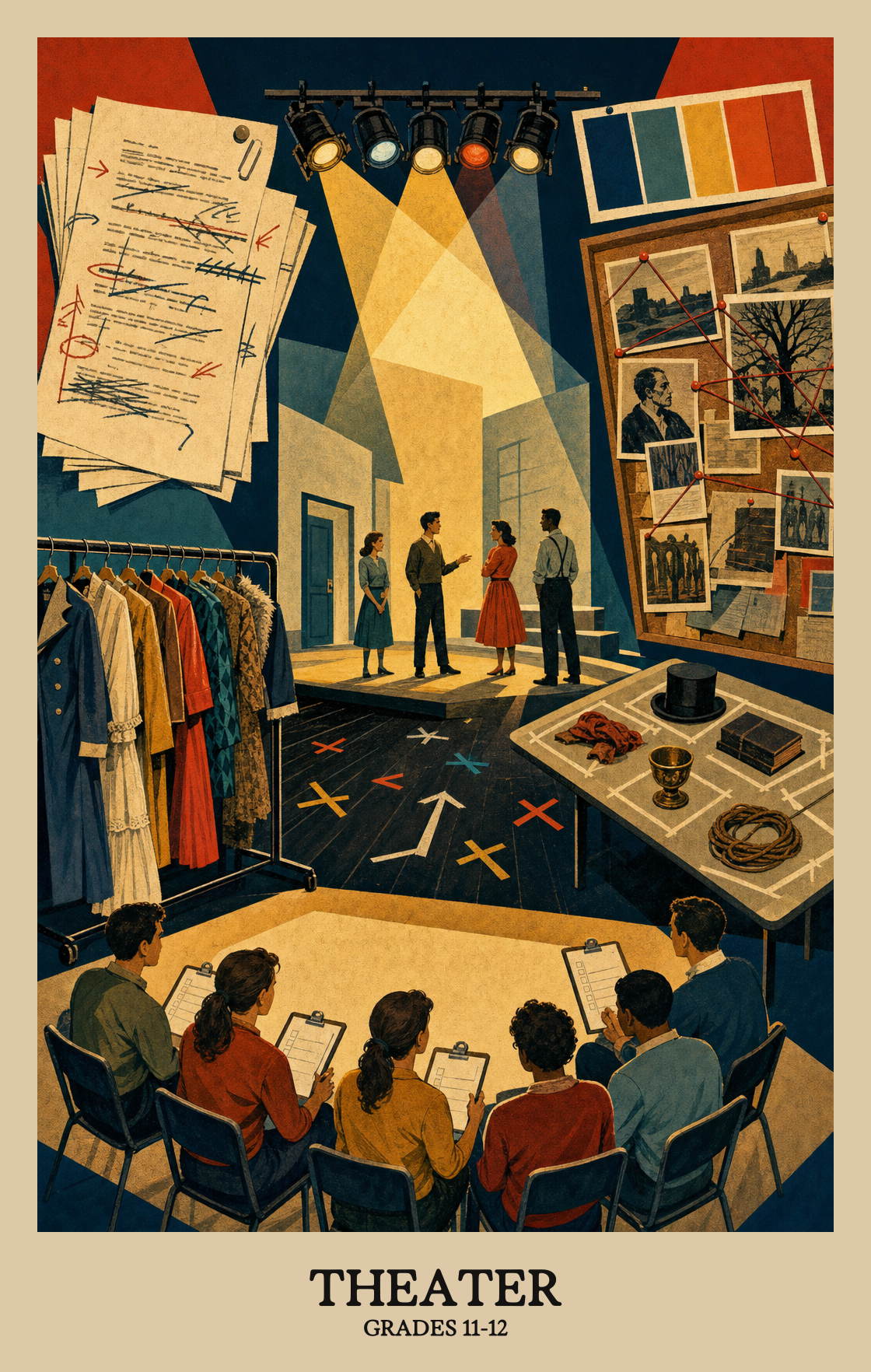
Students start the year by drawing on their own experiences to spark new ideas for scenes, characters, and plays. Expect students to come home talking about what stories they want to tell and why.
Students shape rough ideas into organized work. They draft, restructure, and rework scenes with feedback from classmates and teachers, learning that strong theater comes from many rounds of revision.
Students watch and read theater closely, then dig into what the playwright or director meant and how choices on stage create that meaning. They learn to back up opinions with specific evidence from the work.
Students study how plays reflect the time, place, and culture they come from. Conversations at home may turn to history, identity, and why a story written long ago still lands today.
Students pick material to perform, then sharpen acting, voice, and staging through steady rehearsal. The goal is a performance that an audience can follow and feel.
Students bring the work to an audience and reflect on it using clear criteria. They learn to judge their own performances and others' with honesty and respect, not just applause.
Students draw on what they have read, lived, or studied to shape a performance. Personal experience and outside research both show up in the choices they make on stage.
Students pull from what they've read, lived, and learned to shape original theatrical work. Personal experience and outside knowledge become raw material for the choices they make on stage or on the page.
Students connect a play or performance to the time period, culture, or events that shaped it, then use that context to explain why the work matters or what it means.
Students connect plays and performances to the historical moments and cultural forces that shaped them, then explain how that context changes what the work means.
| Standard | Definition | Code |
|---|---|---|
| Using life experience to make theater Grades 11-12 | Students draw on what they have read, lived, or studied to shape a performance. Personal experience and outside research both show up in the choices they make on stage. | CA-TH:Cn10.11-12.HsAccomplished |
| Using life experience to make theater Grades 11-12 | Students pull from what they've read, lived, and learned to shape original theatrical work. Personal experience and outside knowledge become raw material for the choices they make on stage or on the page. | CA-TH:Cn10.11-12.HsAdvanced |
| Theater and its place in history Grades 11-12 | Students connect a play or performance to the time period, culture, or events that shaped it, then use that context to explain why the work matters or what it means. | CA-TH:Cn11.11-12.HsAccomplished |
| Theater and its place in history Grades 11-12 | Students connect plays and performances to the historical moments and cultural forces that shaped them, then explain how that context changes what the work means. | CA-TH:Cn11.11-12.HsAdvanced |
Students develop original concepts for a theatrical work, moving from early ideas to a clear creative vision that could guide a full production.
Students develop original concepts for a production by pushing past their first ideas, testing unexpected directions, and shaping raw creative instincts into something stageable.
Students refine a theater piece by shaping its structure, making deliberate choices about what to cut, keep, or shift until the work reflects a clear artistic vision.
Students refine a theatrical concept from first idea to finished scene, making deliberate choices about structure, character, and staging that hold together as a whole.
Students revise a piece of theater work until it holds together, making deliberate choices about script, staging, and performance to reach a finished result they can defend.
Students revise and finish a piece of theater work, making deliberate choices about performance, design, or script until the work is ready to share with an audience.
| Standard | Definition | Code |
|---|---|---|
| Coming up with original ideas for a play Grades 11-12 | Students develop original concepts for a theatrical work, moving from early ideas to a clear creative vision that could guide a full production. | CA-TH:Cr1.11-12.HsAccomplished |
| Coming up with ideas for a play Grades 11-12 | Students develop original concepts for a production by pushing past their first ideas, testing unexpected directions, and shaping raw creative instincts into something stageable. | CA-TH:Cr1.11-12.HsAdvanced |
| Develop and shape original theater work Grades 11-12 | Students refine a theater piece by shaping its structure, making deliberate choices about what to cut, keep, or shift until the work reflects a clear artistic vision. | CA-TH:Cr2.11-12.HsAccomplished |
| Develop and shape original theatrical ideas Grades 11-12 | Students refine a theatrical concept from first idea to finished scene, making deliberate choices about structure, character, and staging that hold together as a whole. | CA-TH:Cr2.11-12.HsAdvanced |
| Finishing and refining a theater piece Grades 11-12 | Students revise a piece of theater work until it holds together, making deliberate choices about script, staging, and performance to reach a finished result they can defend. | CA-TH:Cr3.11-12.HsAccomplished |
| Finishing and polishing a theater piece Grades 11-12 | Students revise and finish a piece of theater work, making deliberate choices about performance, design, or script until the work is ready to share with an audience. | CA-TH:Cr3.11-12.HsAdvanced |
Students choose a scene or script to perform and explain why it fits the ensemble's strengths and the story they want to tell. The choice is deliberate, backed by a real reading of the material.
Students study a range of scripts or performance pieces, then choose one to present based on how well it fits the artistic goals of the work.
Students rehearse and sharpen their performance until the acting, blocking, and technical choices hold together as a finished piece ready for an audience.
Students rehearse and sharpen their performances until the work is ready to show an audience. That means revisiting choices about movement, voice, and timing until every element of the piece holds together.
Students shape every choice in a performance, from movement to line delivery, so the audience walks away with a clear feeling or idea the piece was built to create.
Students make deliberate choices in performance so the audience walks away with a clear, intended meaning. Every element on stage, from movement to silence, serves that purpose.
| Standard | Definition | Code |
|---|---|---|
| Choosing and analyzing work to perform Grades 11-12 | Students choose a scene or script to perform and explain why it fits the ensemble's strengths and the story they want to tell. The choice is deliberate, backed by a real reading of the material. | CA-TH:Pr4.11-12.HsAccomplished |
| Choosing and analyzing work to perform Grades 11-12 | Students study a range of scripts or performance pieces, then choose one to present based on how well it fits the artistic goals of the work. | CA-TH:Pr4.11-12.HsAdvanced |
| Refine your performance for the stage Grades 11-12 | Students rehearse and sharpen their performance until the acting, blocking, and technical choices hold together as a finished piece ready for an audience. | CA-TH:Pr5.11-12.HsAccomplished |
| Refining technique for performance Grades 11-12 | Students rehearse and sharpen their performances until the work is ready to show an audience. That means revisiting choices about movement, voice, and timing until every element of the piece holds together. | CA-TH:Pr5.11-12.HsAdvanced |
| Perform with intention and meaning Grades 11-12 | Students shape every choice in a performance, from movement to line delivery, so the audience walks away with a clear feeling or idea the piece was built to create. | CA-TH:Pr6.11-12.HsAccomplished |
| Perform with intention and meaning Grades 11-12 | Students make deliberate choices in performance so the audience walks away with a clear, intended meaning. Every element on stage, from movement to silence, serves that purpose. | CA-TH:Pr6.11-12.HsAdvanced |
Students watch or read a scene and break down the choices behind it, explaining how an actor's movement, a director's staging, or a script's structure shapes what the audience feels.
Students watch performances closely and break down what they see: the choices an actor made, how the space was used, what the design communicates. Analysis goes beyond gut reaction to explain how the parts work together.
Students analyze a scene, script, or performance and explain what choices the director or playwright made on purpose. They build a case for what the work means and why it matters.
Students analyze a scene, script, or performance and explain what the artist was trying to say and how the choices made (casting, staging, dialogue) support that meaning.
Students set their own criteria and use them to judge a performance or production, explaining what worked, what didn't, and why.
Students watch or read a piece of theater and judge it against clear, specific criteria, explaining in concrete terms why it works or where it falls short.
| Standard | Definition | Code |
|---|---|---|
| Reading theater with a critic's eye Grades 11-12 | Students watch or read a scene and break down the choices behind it, explaining how an actor's movement, a director's staging, or a script's structure shapes what the audience feels. | CA-TH:Re7.11-12.HsAccomplished |
| Reading a performance with a critical eye Grades 11-12 | Students watch performances closely and break down what they see: the choices an actor made, how the space was used, what the design communicates. Analysis goes beyond gut reaction to explain how the parts work together. | CA-TH:Re7.11-12.HsAdvanced |
| Reading meaning in a performance Grades 11-12 | Students analyze a scene, script, or performance and explain what choices the director or playwright made on purpose. They build a case for what the work means and why it matters. | CA-TH:Re8.11-12.HsAccomplished |
| Reading meaning in a performance Grades 11-12 | Students analyze a scene, script, or performance and explain what the artist was trying to say and how the choices made (casting, staging, dialogue) support that meaning. | CA-TH:Re8.11-12.HsAdvanced |
| Judging what makes theater work Grades 11-12 | Students set their own criteria and use them to judge a performance or production, explaining what worked, what didn't, and why. | CA-TH:Re9.11-12.HsAccomplished |
| How to judge a performance Grades 11-12 | Students watch or read a piece of theater and judge it against clear, specific criteria, explaining in concrete terms why it works or where it falls short. | CA-TH:Re9.11-12.HsAdvanced |
Students work like young theater artists. They create original scenes, rehearse and refine performances, analyze plays they read or see, and connect their work to history and culture. Expect a mix of acting, writing, design choices, and thoughtful discussion about why a piece matters.
Be the patient audience. Hold the script and feed lines, then watch a run-through and say what landed and what was hard to follow. Avoid acting coaching. The honest reaction of one trusted listener is worth more than notes on technique.
Many teachers start with responding and short creating tasks to build a shared vocabulary, then move into a longer devised or scripted project in the middle of the year. Save the most polished performance work for the final stretch, when students can refine with real intention.
Yes. Generating original ideas and shaping them into finished work is a core part of the year. Encourage the writing at home by asking what the scene is about and who wants what from whom. Those two questions push a draft forward fast.
Specificity in choices and giving useful feedback to peers. Students often play a general mood instead of a clear action, and their notes to classmates stay vague. Short, repeated practice with both pays off more than one big lesson.
By spring, students should be able to build a character with real choices behind it, rehearse with focus, and talk about a play using evidence from the script. They should also connect what they make to a larger idea about people or society.
Lean on shared criteria rather than a single right answer. Rubrics built around intent, craft, and impact let a quiet monologue and a bold ensemble piece be judged on the same terms. Students should also self-assess against those criteria before a final showing.
Watch a filmed stage production together, not just a movie, and talk about it after. Ask what the play was really about and which moment stuck. Reading a short play aloud at the kitchen table also helps, even with only two voices.
Enough that students can place a play in its world, but not so much that research swallows the rehearsal time. A short context primer before scene work usually does the job, with deeper inquiry reserved for one anchor production each semester.