Movement skills and game play
Students sharpen the basic moves behind sports and activities, like passing, dodging, striking, and keeping their balance. They put these moves to work in real games rather than drilling them in isolation.
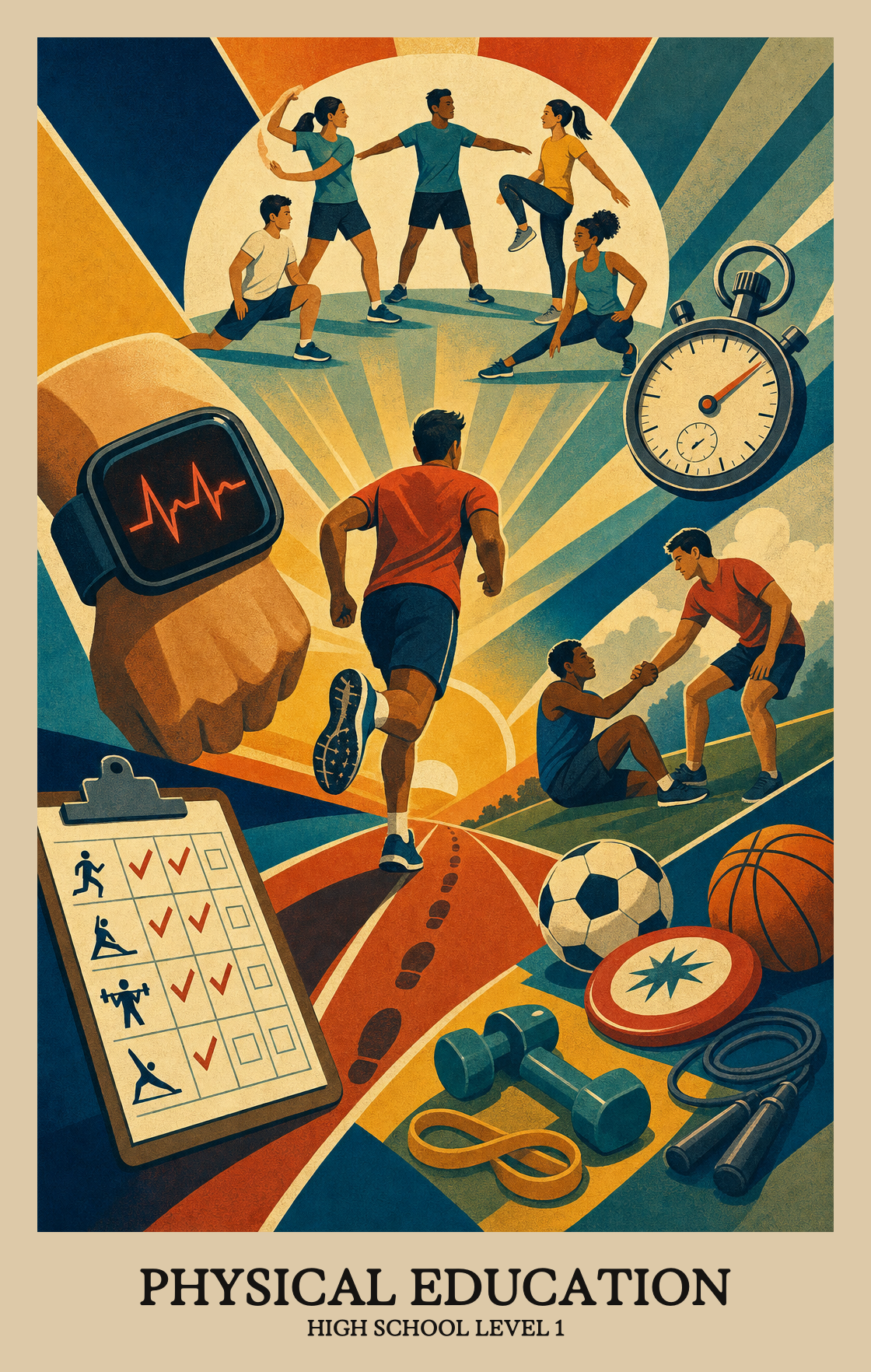
This is the year gym class shifts from learning the rules to building a personal fitness habit. Students sharpen their skills in sports and activities they actually enjoy, and they start using simple training ideas like heart rate, pacing, and warm-ups to get stronger. They also practice good sportsmanship and learn how to handle pressure on a team. By spring, students can design a basic workout plan they could stick with on their own.
Students sharpen the basic moves behind sports and activities, like passing, dodging, striking, and keeping their balance. They put these moves to work in real games rather than drilling them in isolation.
Students start thinking like a player, not just moving like one. They learn to read what the other team is doing, pick a smart spot on the field or court, and use simple stats to see what is working.
Students build a fitness routine they can actually keep up with. They track things like heart rate, strength, and flexibility, and learn how steady activity fits into a healthy week.
Students practice the social side of activity, like cheering on a teammate, handling a tough loss, and including classmates with different skill levels. Coaches and parents tend to notice this part first.
Students look beyond gym class at how people stay active as adults. They explore activities they enjoy, local options like gyms and rec leagues, and jobs connected to fitness, coaching, and health.
Students practice and refine the physical skills needed for a range of sports and activities, from throwing and catching to footwork and body control.
Students use real game situations to apply principles like spacing, timing, and defensive positioning. They think through why a movement works, not just how to do it.
Students learn to build fitness habits that hold up outside of gym class, not just during it. That means understanding how exercise affects the body and making choices that support long-term health.
Students follow safety rules, take turns, and treat teammates and opponents with respect during class activities.
Students explain why staying active matters beyond just fitness, whether it helps them feel good, push through a challenge, express themselves, or connect with others.
Students identify jobs tied to fitness and health, then practice using local resources like gyms, parks, or community programs to build habits that support long-term physical wellness.
| Standard | Definition | Code |
|---|---|---|
| Moving with skill and control High School Level 1 | Students practice and refine the physical skills needed for a range of sports and activities, from throwing and catching to footwork and body control. | NY-PE.1.hs-level-1 |
| Strategies that improve how you move and perform High School Level 1 | Students use real game situations to apply principles like spacing, timing, and defensive positioning. They think through why a movement works, not just how to do it. | NY-PE.2.hs-level-1 |
| Staying active and fit for life High School Level 1 | Students learn to build fitness habits that hold up outside of gym class, not just during it. That means understanding how exercise affects the body and making choices that support long-term health. | NY-PE.3.hs-level-1 |
| Respect yourself and others in PE High School Level 1 | Students follow safety rules, take turns, and treat teammates and opponents with respect during class activities. | NY-PE.4.hs-level-1 |
| Why staying active matters for your whole life High School Level 1 | Students explain why staying active matters beyond just fitness, whether it helps them feel good, push through a challenge, express themselves, or connect with others. | NY-PE.5.hs-level-1 |
| Fitness careers and community wellness resources High School Level 1 | Students identify jobs tied to fitness and health, then practice using local resources like gyms, parks, or community programs to build habits that support long-term physical wellness. | NY-PE.6.hs-level-1 |
Students build skill in a range of activities like team sports, fitness routines, and individual pursuits such as yoga or weight training. They also learn how to plan their own workouts and explain why certain movements or strategies work better than others.
Make movement part of the regular week. A 20-minute walk after dinner, a weekend bike ride, or a quick stretching routine in the morning all count. Asking students what they worked on in class and trying it together keeps the habit going.
No. Sports are part of it, but students also work on personal fitness, healthy habits, and skills like teamwork and self-management. The goal is for students to leave with the knowledge to stay active long after the class ends.
Start with skill and movement work in early units, then layer in strategy and fitness concepts as students get more comfortable. Personal responsibility and wellness themes can run through every unit rather than sitting in a single block.
Students do not need to be athletes to do well. Effort, participation, and growth in personal fitness matter more than scoring goals. Offering choices like dance, hiking, strength training, or recreational games helps students find something they actually enjoy.
Strategy and movement concepts often need a second pass, since students can perform a skill without being able to explain why it works. Building in short reflection moments after games or fitness sessions helps lock in the thinking behind the action.
Bodyweight exercises like push-ups, squats, lunges, and planks build strength with no equipment. A jump rope, a pair of sneakers, and a stopwatch on a phone cover most cardio and fitness goals. Consistency matters more than fancy gear.
Students should be able to design a basic fitness plan, apply strategy in a game or activity, and work respectfully with classmates of different skill levels. They should also be able to name a few activities they would keep doing on their own.
Physical activity connects to real jobs like coaching, physical therapy, athletic training, and recreation work. Knowing about local gyms, parks, rec leagues, and community programs gives students options for staying active after graduation.