Sparking media project ideas
Students start the year brainstorming media projects like short videos, animations, or digital images. They pull from their own lives and interests to come up with ideas worth making.
This is the year students start making media projects with a real audience in mind. Students plan a short video, animation, or digital story, then revise it based on feedback before sharing. They also look at how movies, ads, and shows shape what people think. By spring, students can produce a finished piece, explain the choices behind it, and judge another creator's work using clear reasons.
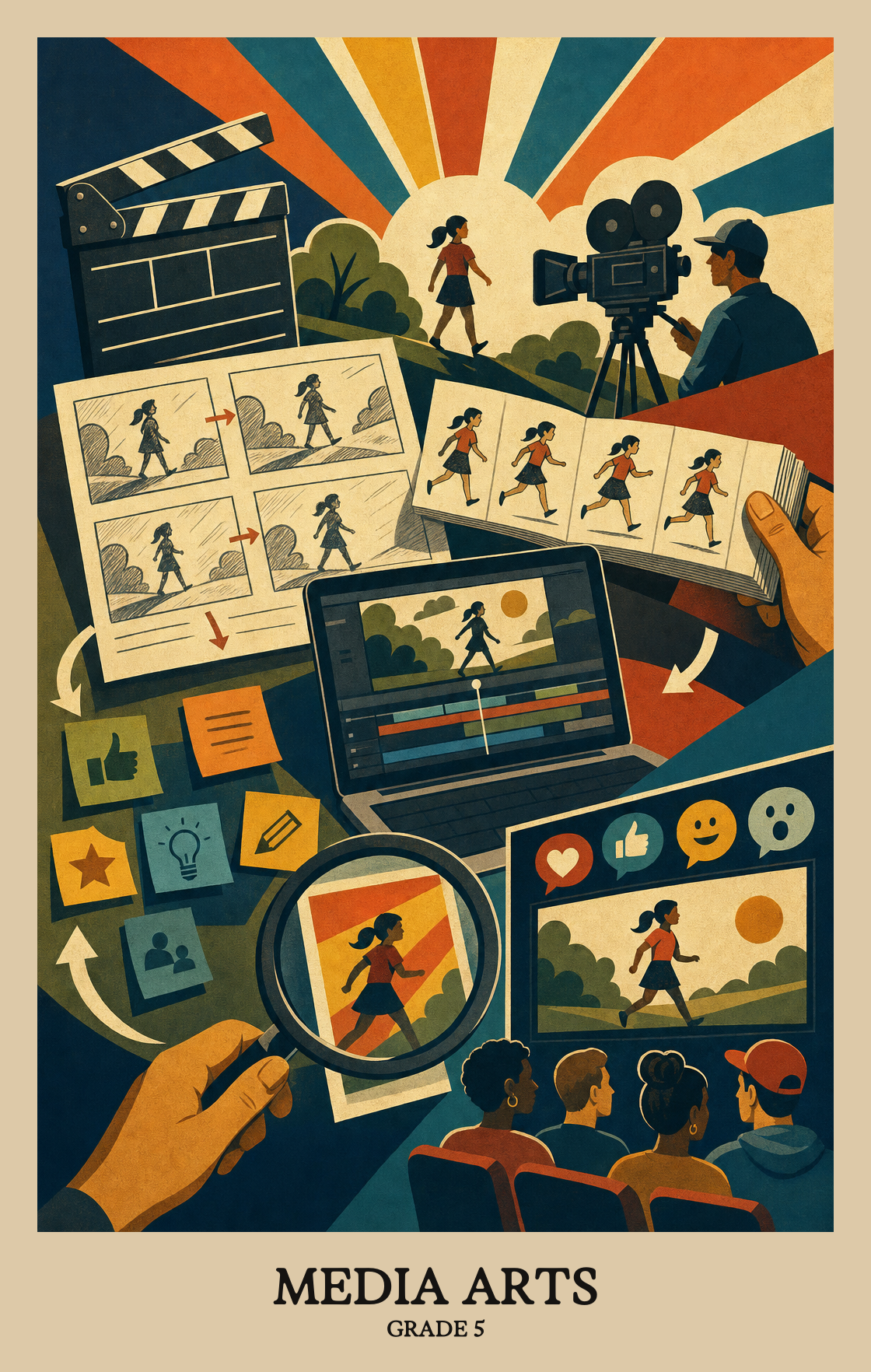
Students start the year brainstorming media projects like short videos, animations, or digital images. They pull from their own lives and interests to come up with ideas worth making.
Students move from ideas to actual projects. They plan scenes, sketch storyboards, and try out tools like cameras, recording apps, or simple editing software to build a first draft.
Students study videos, ads, and digital art made by other people. They notice the choices an artist made, ask what the work is trying to say, and use simple criteria to judge how well it works.
Students look at how media projects connect to culture, history, and the communities around them. They notice how a song, photo, or video carries meaning beyond the screen.
Students refine their projects with feedback, then share finished work with classmates or families. They explain the choices they made and what they want viewers to take away.
Students pull from things they already know and moments they have lived through to shape a media artwork. The goal is a piece that reflects real thought, not just a technical exercise.
Students look at a piece of media art and connect it to what was happening in the world when it was made. Understanding the time and place behind a work helps students make sense of why it looks and feels the way it does.
| Standard | Definition | Code |
|---|---|---|
| Using your own life to make media art | Students pull from things they already know and moments they have lived through to shape a media artwork. The goal is a piece that reflects real thought, not just a technical exercise. | CA-MA:Cn10.5.5 |
| Art reflects the world that made it | Students look at a piece of media art and connect it to what was happening in the world when it was made. Understanding the time and place behind a work helps students make sense of why it looks and feels the way it does. | CA-MA:Cn11.5.5 |
Students brainstorm and develop original ideas for media art projects, such as short videos, photo stories, or digital images, deciding on a concept before they start creating.
Students take a rough media idea and shape it into a finished plan, choosing which images, sounds, or text belong and arranging them so the piece works as a whole.
Students revisit a media project, make deliberate changes based on feedback or their own review, and bring it to a finished state ready to share.
| Standard | Definition | Code |
|---|---|---|
| Coming up with ideas for media art | Students brainstorm and develop original ideas for media art projects, such as short videos, photo stories, or digital images, deciding on a concept before they start creating. | CA-MA:Cr1.5.5 |
| Planning and building a media project | Students take a rough media idea and shape it into a finished plan, choosing which images, sounds, or text belong and arranging them so the piece works as a whole. | CA-MA:Cr2.5.5 |
| Finish and improve your media art | Students revisit a media project, make deliberate changes based on feedback or their own review, and bring it to a finished state ready to share. | CA-MA:Cr3.5.5 |
Students review a collection of their own media projects, decide which ones are strong enough to share, and explain why those pieces best represent their work.
Students practice and improve a media project (a short video, a digital image, or an audio recording) until it's ready to share with an audience. The focus is on making intentional choices that sharpen the final piece.
Students choose how to share a media project so the audience understands the intended message. That might mean adjusting the order, sound, or visuals based on who is watching.
| Standard | Definition | Code |
|---|---|---|
| Choosing artwork worth sharing with others | Students review a collection of their own media projects, decide which ones are strong enough to share, and explain why those pieces best represent their work. | CA-MA:Pr4.5.5 |
| Refine your work before sharing it | Students practice and improve a media project (a short video, a digital image, or an audio recording) until it's ready to share with an audience. The focus is on making intentional choices that sharpen the final piece. | CA-MA:Pr5.5.5 |
| Sharing art that means something | Students choose how to share a media project so the audience understands the intended message. That might mean adjusting the order, sound, or visuals based on who is watching. | CA-MA:Pr6.5.5 |
Students study a media piece (a short film, a webpage, an ad) and explain what choices the creator made and why those choices shape how the audience feels or reacts.
Students explain what a media piece (a short film, a poster, or a photo series) is trying to say and why the creator made the choices they did.
Students watch, read, or listen to a media piece, then use a set of agreed-on criteria to decide what works, what doesn't, and why. The focus is on giving a reasoned opinion, not just a gut reaction.
| Standard | Definition | Code |
|---|---|---|
| Analyzing media art you encounter | Students study a media piece (a short film, a webpage, an ad) and explain what choices the creator made and why those choices shape how the audience feels or reacts. | CA-MA:Re7.5.5 |
| What media art means and why | Students explain what a media piece (a short film, a poster, or a photo series) is trying to say and why the creator made the choices they did. | CA-MA:Re8.5.5 |
| Judging whether art works and why | Students watch, read, or listen to a media piece, then use a set of agreed-on criteria to decide what works, what doesn't, and why. The focus is on giving a reasoned opinion, not just a gut reaction. | CA-MA:Re9.5.5 |
Media arts is the part of the arts that uses cameras, computers, and sound tools to make things like short videos, animations, podcasts, slideshows, and simple games. Students learn to plan a project, make it, and share it with an audience.
Expect short videos, stop-motion animations, podcasts or audio stories, digital art, and simple presentations or websites. Projects usually start with a plan or storyboard, go through a rough draft, and end with a finished piece students share with classmates.
Let students use a phone or tablet to film, record, or edit small projects, and ask them to walk through what they made and why. Five minutes of honest feedback on a draft helps more than buying new equipment.
No. A phone camera, free editing apps, and household objects are enough for almost every fifth grade project. The thinking behind the project matters more than the gear.
Start with short, low-stakes projects that build one skill at a time, such as framing a shot, recording clean audio, or cutting between two clips. Move into longer projects in the second half of the year where students plan, draft, revise, and present a finished piece.
Planning before filming and revising after a first draft are the two weak spots. Students also tend to skip audio quality and credits, so build those into the rubric from the first project.
Students pull from reading, writing, social studies, and science when they choose topics and tell stories. A project on a historical figure or a science concept can meet media arts goals and reinforce content from another class.
Look at the plan, the finished piece, and the student's own reflection on choices they made and changes between drafts. A simple rubric covering idea, craft, and revision keeps grading honest without turning every project into a test.
By spring, students should be able to plan a short project, produce it with reasonable craft, revise it based on feedback, and explain why they made specific choices. They should also be able to give useful feedback on a classmate's work using shared criteria.