Looking closely and noticing
Students start the year by really looking at art. They notice details in a painting or sculpture and talk about what they see before jumping to what it means.
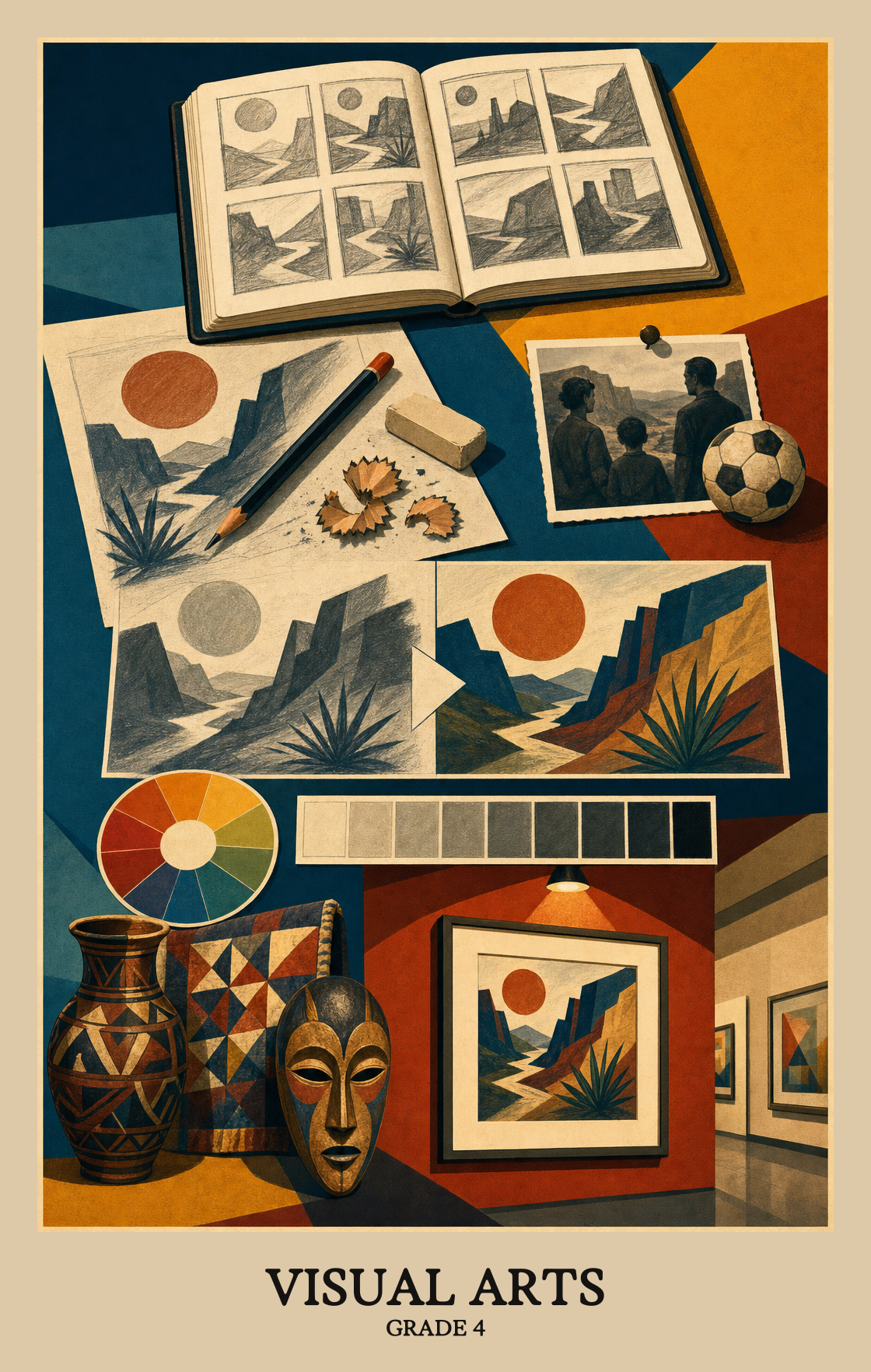
This is the year art starts carrying real ideas. Students plan a piece before they make it, pull from their own experiences, and notice how art connects to history and culture. They practice specific techniques, then go back and refine the work instead of calling the first try done. By spring, students can prepare a finished piece for display and explain what it means and why they made the choices they did.
Students start the year by really looking at art. They notice details in a painting or sculpture and talk about what they see before jumping to what it means.
Students pull ideas from their own memories, family stories, and things they care about. A sketchbook fills up with starting points for bigger projects later in the year.
Students practice real techniques with pencils, paint, clay, and collage. They learn how to plan a piece, fix mistakes along the way, and keep working until it looks the way they wanted.
Students look at art from different places and time periods. They start to see how artists respond to where and when they live, and they try some of those ideas in their own work.
Students choose pieces they are proud of, get them ready to display, and explain the choices they made. They also give thoughtful feedback on classmates' work using clear reasons.
Students draw on things they already know and moments from their own life to make choices about what to create and why.
Students look at a painting, sculpture, or other artwork and connect it to the time, place, or culture it came from. That context helps explain why the work looks the way it does and what it meant to the people who made it.
| Standard | Definition | Code |
|---|---|---|
| Using your own life to make art | Students draw on things they already know and moments from their own life to make choices about what to create and why. | CA-VA:Cn10.4.4 |
| Art through time and culture | Students look at a painting, sculpture, or other artwork and connect it to the time, place, or culture it came from. That context helps explain why the work looks the way it does and what it meant to the people who made it. | CA-VA:Cn11.4.4 |
Students brainstorm and sketch original ideas before starting an art project, turning a rough thought into a clear plan they can actually make.
Students take a rough idea or sketch and work it into a finished piece, making deliberate choices about what to keep, change, or cut along the way.
Students revisit a piece of art they started, make changes based on what they notice, and decide when it is finished.
| Standard | Definition | Code |
|---|---|---|
| Coming up with ideas for art | Students brainstorm and sketch original ideas before starting an art project, turning a rough thought into a clear plan they can actually make. | CA-VA:Cr1.4.4 |
| Planning and building art ideas | Students take a rough idea or sketch and work it into a finished piece, making deliberate choices about what to keep, change, or cut along the way. | CA-VA:Cr2.4.4 |
| Finish and improve your artwork | Students revisit a piece of art they started, make changes based on what they notice, and decide when it is finished. | CA-VA:Cr3.4.4 |
Students look at several pieces of their own artwork, decide which ones are strongest, and choose what to show others and why.
Students practice and improve a piece of artwork until it's ready to share, making deliberate choices about how the finished work looks.
Students choose how to display or share their artwork so a viewer understands what the piece is about. The arrangement, setting, or framing becomes part of the message.
| Standard | Definition | Code |
|---|---|---|
| Choosing artwork worth sharing | Students look at several pieces of their own artwork, decide which ones are strongest, and choose what to show others and why. | CA-VA:Pr4.4.4 |
| Refine artwork before showing it | Students practice and improve a piece of artwork until it's ready to share, making deliberate choices about how the finished work looks. | CA-VA:Pr5.4.4 |
| Sharing art that means something | Students choose how to display or share their artwork so a viewer understands what the piece is about. The arrangement, setting, or framing becomes part of the message. | CA-VA:Pr6.4.4 |
Students look closely at a piece of art and explain what they notice, from the colors and shapes the artist chose to how those choices work together to create a mood or feeling.
Students look at a piece of art and explain what they think the artist was trying to say. They back up their idea with details they see in the image, like color, shape, or mood.
Students look at a piece of art and decide if it works, using specific reasons like color choice, composition, or how well it fits the artist's goal. They explain their thinking, not just their opinion.
| Standard | Definition | Code |
|---|---|---|
| Reading and analyzing art | Students look closely at a piece of art and explain what they notice, from the colors and shapes the artist chose to how those choices work together to create a mood or feeling. | CA-VA:Re7.4.4 |
| Reading meaning in art | Students look at a piece of art and explain what they think the artist was trying to say. They back up their idea with details they see in the image, like color, shape, or mood. | CA-VA:Re8.4.4 |
| Judging what makes art work | Students look at a piece of art and decide if it works, using specific reasons like color choice, composition, or how well it fits the artist's goal. They explain their thinking, not just their opinion. | CA-VA:Re9.4.4 |
Students work in four big areas: making art, sharing it, talking about other people's art, and connecting art to their own lives and the world. They plan a piece, try out techniques, revise it, and explain what they were going for.
Ask what they have been thinking about lately, then suggest they sketch three quick versions before picking one. Looking at picture books, family photos, or short walks outside also gives them something real to draw from.
No. A pencil, paper, scissors, glue, and a small set of markers or colored pencils cover almost everything. Saving boxes, scrap paper, and old magazines gives students more to build and collage with.
A common arc is to start with idea generation and sketching, move into a few longer projects that practice planning and revision, then end with a small show where students choose a piece and explain their choices. Build in time to talk about other artists throughout.
Students can plan a piece, revise it based on feedback, and talk about why they made the choices they did. They can also look at someone else's art and say what they notice, what it might mean, and what is working.
Ask them to point at one part they like and one part they want to change. That moves the conversation from good or bad to specific choices, which is exactly what art class is asking them to do.
Revising a piece instead of starting over, and using art vocabulary to describe what they see. Short critique routines, done often with low stakes, help more than long single lessons.
They can take a project from idea to finished piece, explain their choices in a few sentences, and respond to another artist's work with more than just liking or not liking it.