Exploring pictures and sound
Students start the year playing with photos, drawings, short videos, and recorded sounds. They notice what they see and hear and begin to share simple ideas about what those pictures and sounds remind them of.
This is the year students start using cameras, tablets, and recorders as tools for telling their own stories. Students take pictures, record sounds, and act out short scenes drawn from their own lives. They share their work with classmates and talk about what they see and hear in others' creations. By spring, students can make a simple photo, video, or sound piece and explain what it is about.
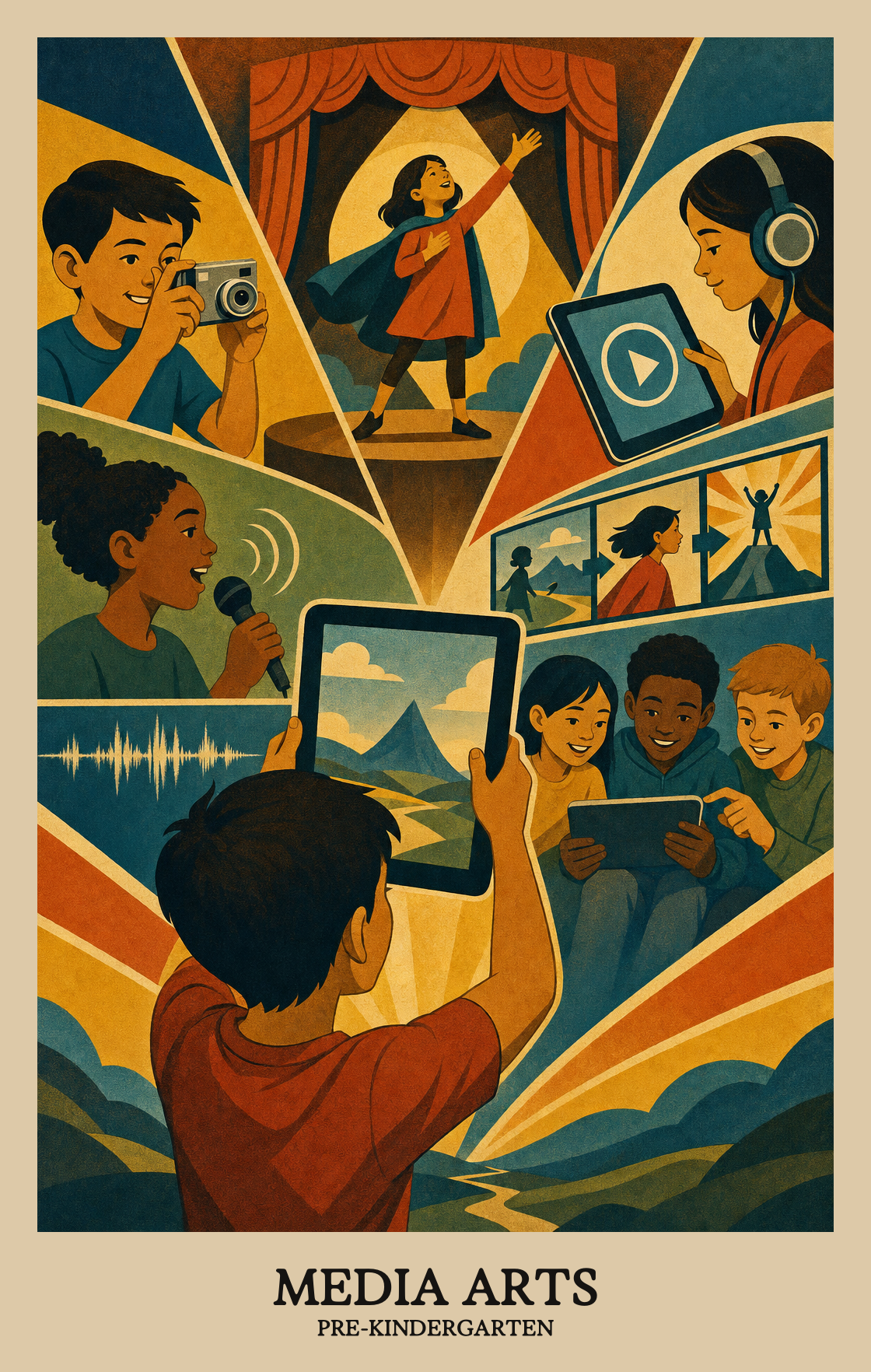
Students start the year playing with photos, drawings, short videos, and recorded sounds. They notice what they see and hear and begin to share simple ideas about what those pictures and sounds remind them of.
Students try out their own ideas for things to make, like a photo of a pet, a short song, or a drawing on a tablet. They pick favorites and start turning a quick idea into something they want to build.
Students put their ideas together into small projects using cameras, drawing apps, blocks, puppets, or recorded voices. They make changes when something does not look or sound the way they wanted.
Students pick a piece they want others to see and practice showing it to the class or family. They talk about what their work means and listen to what classmates noticed about it.
Students link their projects to things they know, like family traditions, books, songs, or holidays. They begin to see that the pictures and stories people make come from real lives and places.
Students connect something they already know or have done to a media art project, like using a memory or a favorite thing as the starting point for what they make.
Students look at pictures, videos, and art made by people from different places and talk about what they see. Noticing where art comes from helps students understand the world around them.
| Standard | Definition | Code |
|---|---|---|
| Making art from what you know | Students connect something they already know or have done to a media art project, like using a memory or a favorite thing as the starting point for what they make. | CA-MA:Cn10.pk.PK |
| Art and the world around us | Students look at pictures, videos, and art made by people from different places and talk about what they see. Noticing where art comes from helps students understand the world around them. | CA-MA:Cn11.pk.PK |
Students come up with ideas for simple media projects, like drawing a picture to share or deciding what to make with clay or a camera.
Students sort pictures, sounds, or simple materials to build a media project. With a teacher's help, they put their ideas in order before sharing them.
Students finish a media art project by looking it over, making small changes, and deciding when it is done.
| Standard | Definition | Code |
|---|---|---|
| Coming up with art ideas | Students come up with ideas for simple media projects, like drawing a picture to share or deciding what to make with clay or a camera. | CA-MA:Cr1.pk.PK |
| Making and arranging art ideas | Students sort pictures, sounds, or simple materials to build a media project. With a teacher's help, they put their ideas in order before sharing them. | CA-MA:Cr2.pk.PK |
| Finish and improve your artwork | Students finish a media art project by looking it over, making small changes, and deciding when it is done. | CA-MA:Cr3.pk.PK |
Students choose which of their media projects to show others, like picking a drawing to hang on the wall.
Students practice a media project, such as a drawing or simple video, more than once to get it ready to share.
Students share a drawing, photo, or simple digital image to show what they are thinking or feeling.
| Standard | Definition | Code |
|---|---|---|
| Picking art to share with others | Students choose which of their media projects to show others, like picking a drawing to hang on the wall. | CA-MA:Pr4.pk.PK |
| Practicing art before sharing it | Students practice a media project, such as a drawing or simple video, more than once to get it ready to share. | CA-MA:Pr5.pk.PK |
| Sharing art with an audience | Students share a drawing, photo, or simple digital image to show what they are thinking or feeling. | CA-MA:Pr6.pk.PK |
Students look at pictures, videos, or sounds and talk about what they notice. This is the start of learning to pay attention to art and explain what they see.
Students look at a photo, drawing, or video and say what they think it shows or how it makes them feel. There are no wrong answers, just reasons behind them.
Students look at a piece of art or media and say what they like about it and why. They start to notice what makes something interesting or well made.
| Standard | Definition | Code |
|---|---|---|
| Looking at pictures and art | Students look at pictures, videos, or sounds and talk about what they notice. This is the start of learning to pay attention to art and explain what they see. | CA-MA:Re7.pk.PK |
| What art is trying to say | Students look at a photo, drawing, or video and say what they think it shows or how it makes them feel. There are no wrong answers, just reasons behind them. | CA-MA:Re8.pk.PK |
| Deciding what makes art good | Students look at a piece of art or media and say what they like about it and why. They start to notice what makes something interesting or well made. | CA-MA:Re9.pk.PK |
Media arts means making things with cameras, microphones, drawing apps, and other simple tech tools. At this age it looks like taking photos, recording short voice messages, making little videos, or playing with sound and pictures on a tablet. The goal is play and curiosity, not polished projects.
Students should be able to come up with a simple idea, like a photo of a pet or a short song about a snack, and use a tool to make it. They should also be able to share what they made and say a sentence or two about why they made it that way.
Hand over a phone or tablet and let students take five photos of something they love. Then sit together and ask which one they want to keep and why. That tiny choice is the heart of media arts at this age.
Very little. Most activities take five to ten minutes and often happen alongside a grown-up. The tool matters less than the talking before and after, like planning what to record and looking at it together.
Start with looking and listening. Have students notice photos, songs, and short videos and say what they see and hear. Move into simple making in the middle of the year, like staged photos or recorded stories. End the year with small choices about what to share and why.
Two things tend to lag. First, holding a device steady long enough to capture what they meant to capture. Second, picking one piece to share instead of all of them. Both get better with short, repeated practice rather than longer lessons.
Ask students to make something about a person, a place, or a tradition they know. A photo of a grandmother's hands, a recording of a song from home, or a drawing of a favorite meal all count. This builds the link between personal experience and the work they make.
Students are ready when they can plan a small idea, use a basic tool with help, and talk about what they liked or wanted to change. They should also be able to listen to a classmate's work and say one specific thing they noticed.