Exploring sound and voice
Students start the year playing with their singing voices, clapping along to favorite songs, and noticing the sounds around them. Parents often hear new tunes hummed at home and in the car.
This is the year music becomes something students make, not just hear. Students sing, clap, and play simple instruments, and they start picking favorite songs and saying what they like about them. They begin shaping their own little tunes and movements, with help from a teacher. By spring, students can share a song or rhythm in front of others and tell what a piece of music made them feel.
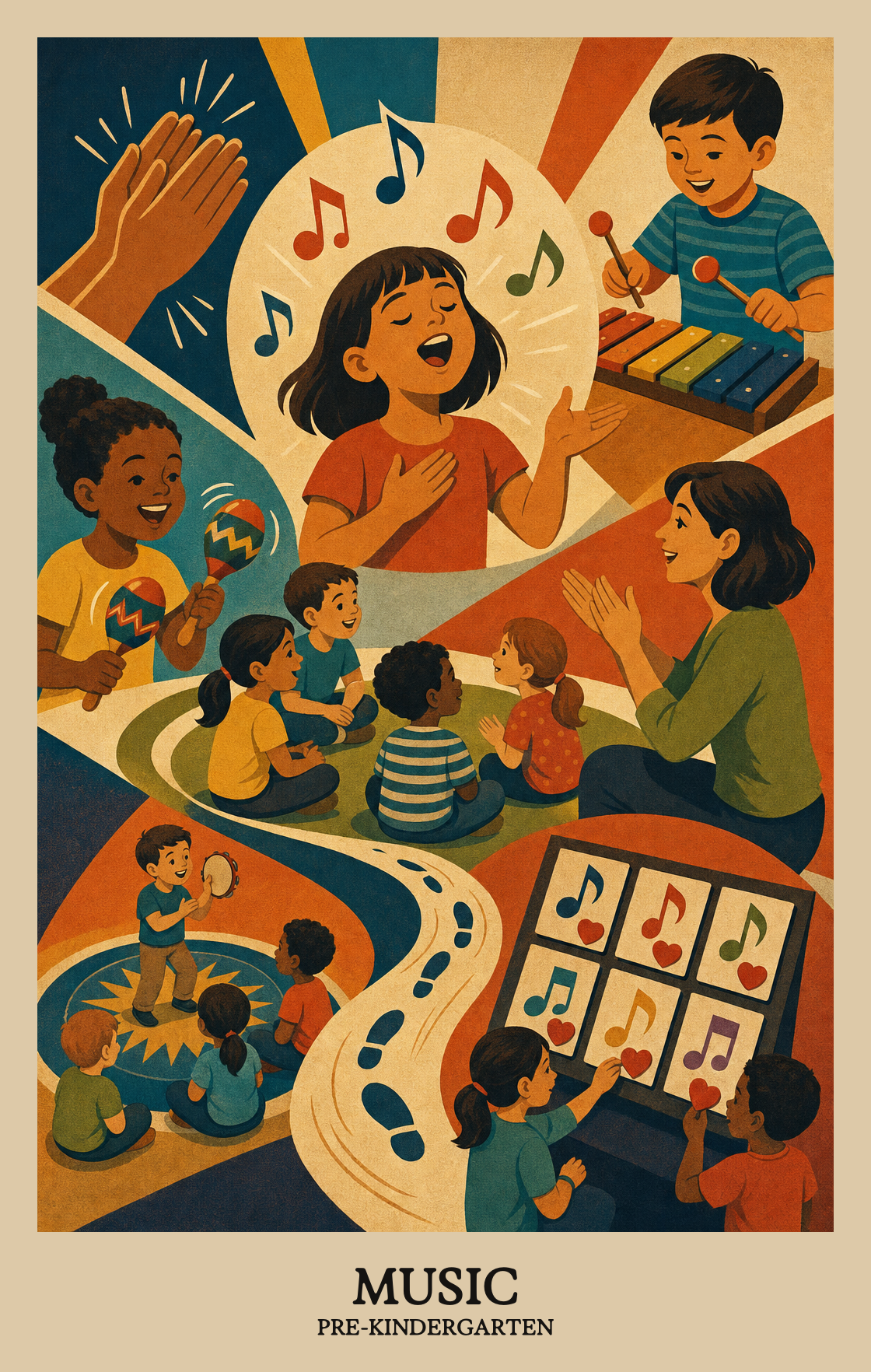
Students start the year playing with their singing voices, clapping along to favorite songs, and noticing the sounds around them. Parents often hear new tunes hummed at home and in the car.
Students try out shakers, drums, and other simple instruments. They practice keeping a steady beat together and taking turns leading and following during group songs.
Students invent short songs, sound stories, and movements to match what they hear. They start making small choices about how a song should go, like loud or soft, fast or slow.
Students perform short songs for classmates and listen to music from different families and cultures. They talk about how a song makes them feel and what they liked about it.
Students connect what they already know and what they've lived through to the music they make and respond to.
Songs, stories, and dances come from real places and real people. Students listen to music from different communities and start to notice that what we sing and celebrate tells something about who we are.
| Standard | Definition | Code |
|---|---|---|
| Making music from what you know | Students connect what they already know and what they've lived through to the music they make and respond to. | CA-MU:Cn10.pk.PK |
| Music from different times and places | Songs, stories, and dances come from real places and real people. Students listen to music from different communities and start to notice that what we sing and celebrate tells something about who we are. | CA-MU:Cn11.pk.PK |
Students come up with their own musical ideas, like making up a song or deciding how to use a drum or shaker.
Students experiment with simple sounds and rhythms, then put them together into a short musical idea they can share or repeat.
Students pick a song or sound they made and practice it until it feels just right. Finishing and polishing their own musical ideas is the work.
| Standard | Definition | Code |
|---|---|---|
| Making up musical ideas | Students come up with their own musical ideas, like making up a song or deciding how to use a drum or shaker. | CA-MU:Cr1.pk.PK |
| Making music with your own ideas | Students experiment with simple sounds and rhythms, then put them together into a short musical idea they can share or repeat. | CA-MU:Cr2.pk.PK |
| Finish a song or musical idea | Students pick a song or sound they made and practice it until it feels just right. Finishing and polishing their own musical ideas is the work. | CA-MU:Cr3.pk.PK |
Students choose a song or sound to share with the group and practice it before performing.
Students practice a song or rhythm until it sounds the way they want it to. They learn that making music takes repetition and care before sharing it with others.
Students share a song or movement with others and put feeling into it, using their voice or body to show what the music means to them.
| Standard | Definition | Code |
|---|---|---|
| Picking songs to sing and share | Students choose a song or sound to share with the group and practice it before performing. | CA-MU:Pr4.pk.PK |
| Practicing a song before performing it | Students practice a song or rhythm until it sounds the way they want it to. They learn that making music takes repetition and care before sharing it with others. | CA-MU:Pr5.pk.PK |
| Sharing music with an audience | Students share a song or movement with others and put feeling into it, using their voice or body to show what the music means to them. | CA-MU:Pr6.pk.PK |
Students listen to a short song or sound and share what they notice, like whether it feels fast or slow, loud or quiet.
Students listen to a song or watch a performance and share what they think it feels like or what story it might be telling.
Students listen to a song or watch a performance and say what they like about it and why. It is an early step in learning to think about music, not just enjoy it.
| Standard | Definition | Code |
|---|---|---|
| Listening to and talking about music | Students listen to a short song or sound and share what they notice, like whether it feels fast or slow, loud or quiet. | CA-MU:Re7.pk.PK |
| What music makes us feel | Students listen to a song or watch a performance and share what they think it feels like or what story it might be telling. | CA-MU:Re8.pk.PK |
| Decide what makes music good | Students listen to a song or watch a performance and say what they like about it and why. It is an early step in learning to think about music, not just enjoy it. | CA-MU:Re9.pk.PK |
Students sing simple songs, move to a beat, play shakers and drums, and make up their own sounds and short tunes. They also listen to music and talk about how it makes them feel. Most of the learning happens through play, not worksheets.
Sing in the car, clap the beat of a favorite song, or bang on pots while cooking. Five minutes of steady beat and silly singing counts. The goal is for students to feel comfortable making sound, not to perform.
No. At this age, students learn by ear and by copying. Tapping a steady beat, matching pitch on simple songs, and trying out classroom instruments matters far more than reading notes.
Students can join a group song, keep a steady beat most of the time, choose an instrument on purpose, and say something about a piece of music they heard. They can also make up a short pattern of sounds and share it.
Start with steady beat, call-and-response singing, and exploring classroom instruments. Move into matching pitch, simple patterns, and music from different cultures and seasons. End the year with short student-made pieces and small group sharing.
Keeping a steady beat while singing is the hardest piece, along with stopping and starting on a cue. Build in short daily beat practice, like patting knees during a transition, rather than one long lesson per week.
Let them watch first, then join with an instrument before joining with their voice. Small group singing and partner echoes feel safer than solos. Most students warm up by the middle of the year if no one pushes a performance.
Sing together in a low, easy range and skip the recorded version for a while. Match the child's pitch first, then slide up or down so they can follow. Praise trying, not staying in tune.
Watch and listen during normal music time. Note who keeps a steady beat, who matches pitch, who picks instruments on purpose, and who can describe a song. Short notes after class work better than a formal rubric.