Skills and game sense
Students sharpen the movement skills they have been building since elementary school. They use those skills in real games and notice how positioning, timing, and teamwork change the outcome.
This is the year gym class shifts from learning skills to using them like an athlete. Students play team sports and fitness activities with real strategy, not just basic moves. They also start tracking their own fitness and building habits that fit their lives outside of school. By spring, students can lead themselves through a workout, play a game with skill and sportsmanship, and explain how regular activity keeps the body healthy.
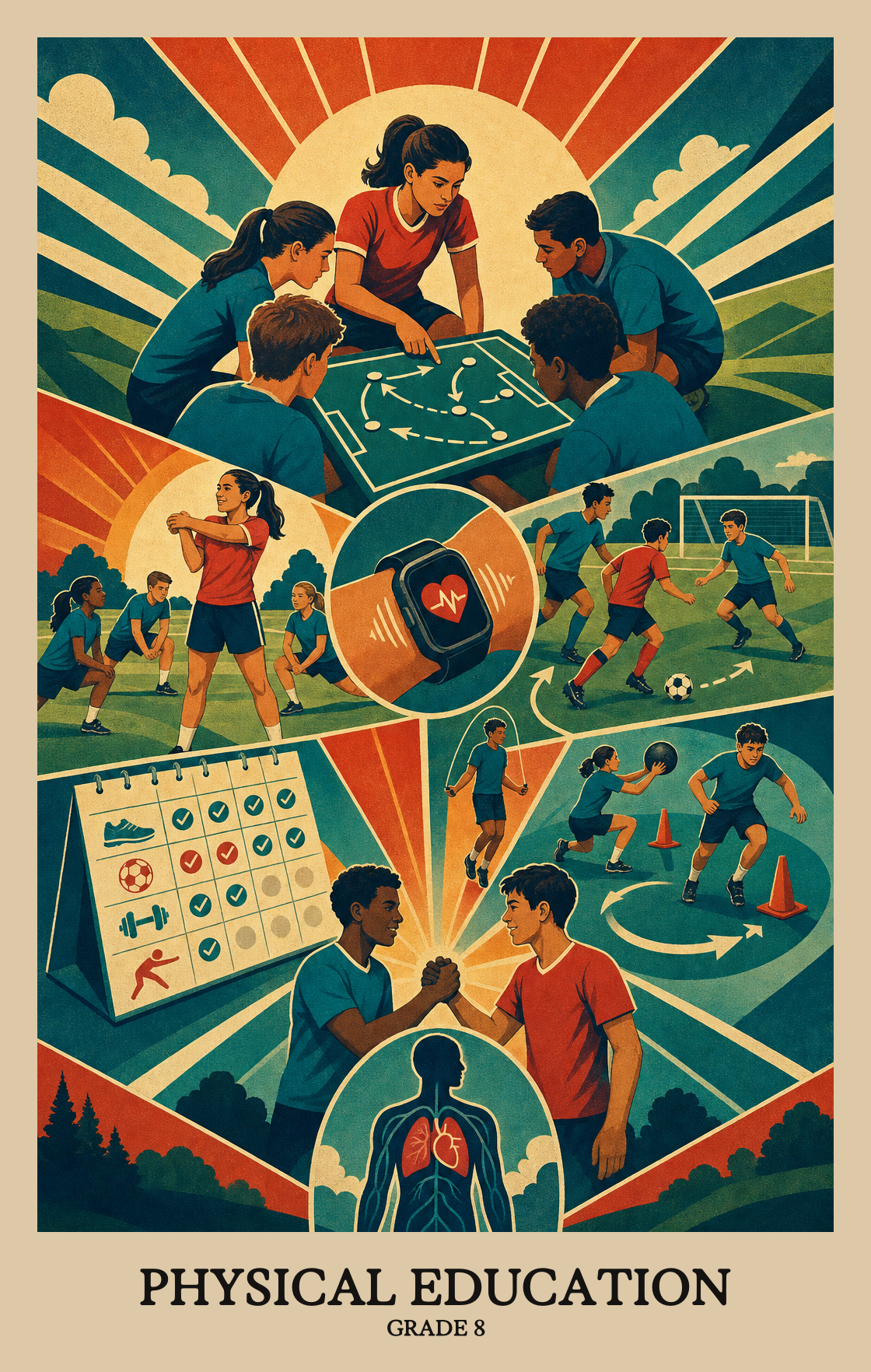
Students sharpen the movement skills they have been building since elementary school. They use those skills in real games and notice how positioning, timing, and teamwork change the outcome.
Students learn how to plan a workout, track their effort, and build routines they can keep doing on their own. The goal is fitness that fits into a real week, not just a class period.
Students practice handling pressure, disagreements, and competition without losing their cool. They learn to lead a group, include teammates, and call their own fouls honestly.
Students explore activities they might keep up after middle school, from hiking to dance to lifting. They also look at jobs and community resources tied to fitness and wellness.
Students practice and refine a range of physical skills, from throwing and catching to footwork and balance, well enough to use them confidently in games and activities.
Students use what they know about speed, space, and tactics to make smarter decisions during a game or activity. They apply those ideas on purpose, not just by instinct.
Students learn to build and stick with habits that keep their body healthy over time, like knowing how hard to push during exercise and how to track their own progress.
Students practice self-control and respectful behavior during activities, following rules and looking out for classmates. The focus is on how students treat themselves and others, not just how well they play.
Students explain why staying active matters to them personally, whether that means managing stress, enjoying a sport, pushing themselves to improve, or connecting with others.
Students explore jobs in fitness and health, then practice managing time, money, or local resources to stay active and build habits that support long-term wellbeing.
| Standard | Definition | Code |
|---|---|---|
| Moving your body with skill and control | Students practice and refine a range of physical skills, from throwing and catching to footwork and balance, well enough to use them confidently in games and activities. | NY-PE.1.8 |
| Using strategy and stats to move better | Students use what they know about speed, space, and tactics to make smarter decisions during a game or activity. They apply those ideas on purpose, not just by instinct. | NY-PE.2.8 |
| Staying fit and active for life | Students learn to build and stick with habits that keep their body healthy over time, like knowing how hard to push during exercise and how to track their own progress. | NY-PE.3.8 |
| Respect yourself and others in PE | Students practice self-control and respectful behavior during activities, following rules and looking out for classmates. The focus is on how students treat themselves and others, not just how well they play. | NY-PE.4.8 |
| Why staying active matters for your whole self | Students explain why staying active matters to them personally, whether that means managing stress, enjoying a sport, pushing themselves to improve, or connecting with others. | NY-PE.5.8 |
| Careers and resources in fitness and wellness | Students explore jobs in fitness and health, then practice managing time, money, or local resources to stay active and build habits that support long-term wellbeing. | NY-PE.6.8 |
Students take on more complex sports and fitness activities, like volleyball rallies, basketball plays, or running a mile at a steady pace. They also learn the reasoning behind the skills, including how to warm up, how to track heart rate, and how strategy changes a game.
Build short bursts of activity into the day. A 20-minute walk after dinner, a bike ride on weekends, or stretching before bed all count. Students this age benefit from seeing adults stay active too.
Students should play several sports with reasonable skill, design a basic fitness routine, and explain why exercise matters for their health. They should also work well on a team and handle winning or losing with respect.
Most plans rotate through team sports, individual fitness, and a personal wellness unit. Save cooperative games and skill-heavy units for early in the year, then move into strategy-rich team play once students have the basics.
Ask what part feels hard. Many students at this age get self-conscious about their bodies or skills in front of peers. Finding one activity they enjoy outside of school, such as swimming, dance, martial arts, or hiking, often shifts how they feel about moving.
Pacing during cardio work and game strategy are the common gaps. Students often sprint and burn out, or freeze on offense because they do not see the play developing. Short drills that pair a skill with a decision tend to stick better than isolated practice.
Aim for about 60 minutes of moderate activity most days. It does not have to happen all at once. Walking the dog, shooting hoops in the driveway, or a weekend sport practice all add up.
The focus shifts from learning basic skills to applying them under pressure. Students think about strategy, track their own fitness progress, and start connecting physical activity to lifelong health and career interests like coaching, training, or sports medicine.