Exploring sound and voice
Students start the year discovering the sounds they can make with their voices, hands, and simple instruments. Parents may hear humming, clapping, and made-up songs at home.
This is the year music becomes something students make, not just hear. Students explore singing, clapping, and simple instruments to come up with their own sounds and short patterns. They also start to notice how a song makes them feel and share what they think about it. By spring, students can pat a steady beat to a familiar song and perform a short piece with a small group.
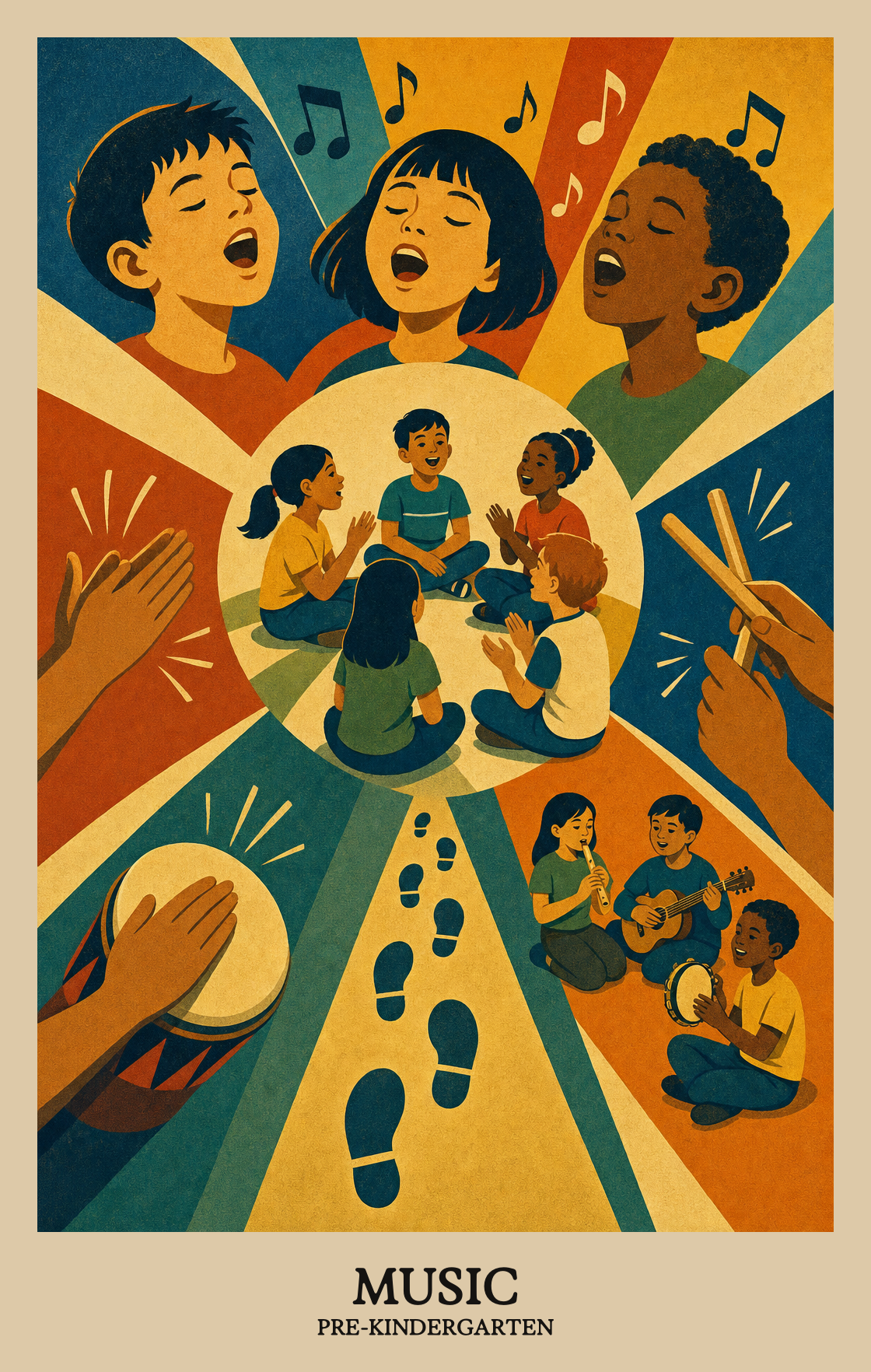
Students start the year discovering the sounds they can make with their voices, hands, and simple instruments. Parents may hear humming, clapping, and made-up songs at home.
Students invent short songs, rhythms, and movements of their own. They try out ideas, change them, and pick the version they like best.
Students practice songs and rhythms to perform for classmates and family. They learn what it feels like to get ready, take a turn, and show what they made.
Students listen to songs from different places and times. They notice what feels fast or slow, happy or calm, and connect the music to their own lives.
Students connect what they already know and feel to the music they make and hear, finding their own reasons why a song or sound matters to them.
Songs and musical sounds connect to where and how people live. Students begin noticing that music can tell stories about families, communities, and everyday life.
| Standard | Definition | Code |
|---|---|---|
| Music connects to your own life | Students connect what they already know and feel to the music they make and hear, finding their own reasons why a song or sound matters to them. | MU:Cn10.pk |
| Songs tell stories about our world | Songs and musical sounds connect to where and how people live. Students begin noticing that music can tell stories about families, communities, and everyday life. | MU:Cn11.pk |
Students explore sounds by experimenting with their voice, body, or simple instruments. They start to notice that they can make up their own musical ideas.
Students pick a few sounds or movements and put them together to make a short musical idea their own.
Students pick their favorite song or sound they made and practice it until it feels just right. This is early work on finishing something and making it better.
| Standard | Definition | Code |
|---|---|---|
| Coming up with musical ideas | Students explore sounds by experimenting with their voice, body, or simple instruments. They start to notice that they can make up their own musical ideas. | MU:Cr1.pk |
| Putting musical ideas together | Students pick a few sounds or movements and put them together to make a short musical idea their own. | MU:Cr2.pk |
| Finish and polish a song | Students pick their favorite song or sound they made and practice it until it feels just right. This is early work on finishing something and making it better. | MU:Cr3.pk |
Students choose a song or sound to share with others and think about how they want to perform it.
Students practice a song or simple rhythm until they can perform it for others. Getting it right takes repetition, and that practice is the point.
Singing a song or playing music for others is a way to share a feeling or tell a story. Students learn that performing has a purpose beyond just making sound.
| Standard | Definition | Code |
|---|---|---|
| Picking songs to sing and play | Students choose a song or sound to share with others and think about how they want to perform it. | MU:Pr4.pk |
| Practicing music before performing | Students practice a song or simple rhythm until they can perform it for others. Getting it right takes repetition, and that practice is the point. | MU:Pr5.pk |
| Sharing music with an audience | Singing a song or playing music for others is a way to share a feeling or tell a story. Students learn that performing has a purpose beyond just making sound. | MU:Pr6.pk |
Students listen to a short piece of music and share what they notice, like whether it feels fast or slow, loud or quiet.
Students listen to a song or watch a performance and say what they think it feels like or what story it might be telling.
Students listen to a song or watch a performance and say what they liked or what sounded good to them. They start learning that their opinions about music can have reasons behind them.
| Standard | Definition | Code |
|---|---|---|
| Listening to and thinking about music | Students listen to a short piece of music and share what they notice, like whether it feels fast or slow, loud or quiet. | MU:Re7.pk |
| What music makes you feel | Students listen to a song or watch a performance and say what they think it feels like or what story it might be telling. | MU:Re8.pk |
| Deciding what makes music sound good | Students listen to a song or watch a performance and say what they liked or what sounded good to them. They start learning that their opinions about music can have reasons behind them. | MU:Re9.pk |
Students sing simple songs, move to a beat, play shakers and drums, and listen to short pieces of music. Most of the learning happens through play. Students try out sounds, make up little tunes, and respond to music with their bodies and voices.
Sing in the car, clap along to songs while cooking, or tap a steady beat on a pot. Ask what a song reminds students of or how it makes them feel. Even five minutes of singing or dancing together builds the same skills as classroom music time.
No. Reading notes comes much later. Right now the goal is feeling a steady beat, matching pitch when singing, and noticing whether music is fast or slow, loud or quiet.
Start with steady beat, simple call-and-response songs, and exploring classroom instruments. Move into matching pitch, fast and slow, and loud and quiet. End the year with short performances and songs from different cultures and traditions.
Students can keep a steady beat, sing a familiar song with the group, make up a short pattern of sounds, and say something simple about a piece they heard. Confidence and willingness to join in matter as much as accuracy.
Keeping a steady beat is the one most students need to revisit all year. Matching pitch while singing also takes time. Build both into warm-ups and transitions rather than treating them as separate lessons.
Not at all. Many students sing freely at home long before they sing in a group. Keep singing together at home without pressure, and let students hum, whisper, or just listen. Comfort with their own voice usually comes first.
Play songs from family traditions, holidays, or grandparents' favorites and talk about where the music comes from. Students learn that music belongs to people and places, which is a big part of the work this year.
Look for students who can join a group song, keep a beat with an instrument, follow start and stop signals, and share a simple opinion about a piece of music. Those habits set them up for the more structured singing and playing that comes next.