Pretending and dress-up play
Students step into make-believe roles. They try on costumes, use props, and act out simple characters like a firefighter, a puppy, or a parent making dinner.
This is the year pretend play becomes the first taste of theater. Students act out stories from their own lives and from books, trying on characters and voices with their bodies and faces. They share short scenes with classmates and talk about what they saw others do. By spring, students can take on a role in a make-believe story and perform a small part of it for the group.
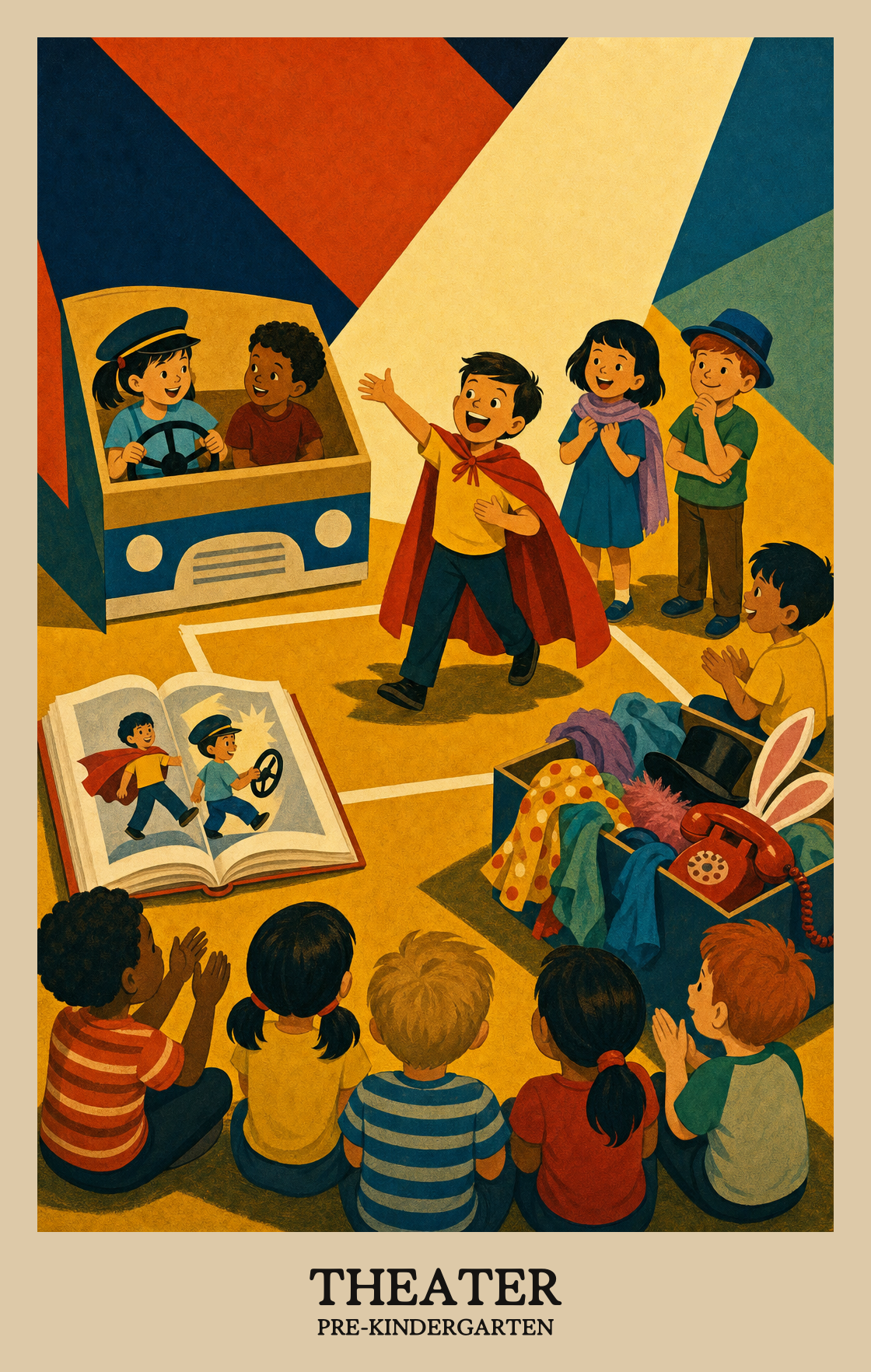
Students step into make-believe roles. They try on costumes, use props, and act out simple characters like a firefighter, a puppy, or a parent making dinner.
Students invent short pretend scenes with classmates. They come up with ideas, decide who plays which part, and act out a beginning, middle, and end.
Students practice a short skit or song and show it to the class or families. They learn to use a clear voice, face the audience, and stay in their part.
Students watch short performances and picture-book stories acted out. They talk about what happened, how a character felt, and what they liked.
Students draw on something they know or have done to make a character or a scene feel real. A memory, a feeling, or a favorite story can be the starting point for acting or pretend play.
Students connect stories and characters they act out to their own lives and the world around them. They begin to see how theater reflects where people come from and how they live.
| Standard | Definition | Code |
|---|---|---|
| Stories from your own life | Students draw on something they know or have done to make a character or a scene feel real. A memory, a feeling, or a favorite story can be the starting point for acting or pretend play. | TH:Cn10.pk |
| Stories from different times and places | Students connect stories and characters they act out to their own lives and the world around them. They begin to see how theater reflects where people come from and how they live. | TH:Cn11.pk |
Students make up characters, stories, and simple pretend situations through play and imagination.
Students pick a character to pretend to be and act out a simple story or scene through play.
Students pick a favorite way to act out a story or character, then practice it until it feels just right.
| Standard | Definition | Code |
|---|---|---|
| Making up characters and stories | Students make up characters, stories, and simple pretend situations through play and imagination. | TH:Cr1.pk |
| Turning ideas into a short play | Students pick a character to pretend to be and act out a simple story or scene through play. | TH:Cr2.pk |
| Finish a short play or puppet show | Students pick a favorite way to act out a story or character, then practice it until it feels just right. | TH:Cr3.pk |
Students choose which song, story, or short scene to perform and practice it until they feel ready to share it with others.
Students practice a short performance, working on speaking clearly and moving with purpose, until it feels ready to share with others.
Students act out a story or character in front of others, using their voice, face, and body to show what something means or how it feels.
| Standard | Definition | Code |
|---|---|---|
| Picking a story to act out | Students choose which song, story, or short scene to perform and practice it until they feel ready to share it with others. | TH:Pr4.pk |
| Getting ready to perform | Students practice a short performance, working on speaking clearly and moving with purpose, until it feels ready to share with others. | TH:Pr5.pk |
| Sharing a story through performance | Students act out a story or character in front of others, using their voice, face, and body to show what something means or how it feels. | TH:Pr6.pk |
Students look at a short play or puppet show and talk about what they noticed, a funny moment, a costume, or how a character moved.
Students say what they think a story, puppet, or performance is about and why a character acts the way they do.
Students look at a drawing, a dance, or a short play and say what they liked and why. They practice having a reason for their opinion, not just a feeling.
| Standard | Definition | Code |
|---|---|---|
| Noticing what happens in a play | Students look at a short play or puppet show and talk about what they noticed, a funny moment, a costume, or how a character moved. | TH:Re7.pk |
| What a story means to you | Students say what they think a story, puppet, or performance is about and why a character acts the way they do. | TH:Re8.pk |
| Deciding what makes a play good | Students look at a drawing, a dance, or a short play and say what they liked and why. They practice having a reason for their opinion, not just a feeling. | TH:Re9.pk |
Most of the work is pretend play. Students act out stories, take on characters like a firefighter or a bear, and use voices, faces, and bodies to show feelings. There are no scripts to memorize and no real performances to worry about.
Play pretend together for a few minutes a day. Act out a favorite story, use puppets or stuffed animals to make up a scene, or take turns being different characters. Ask what the character is feeling and why.
No. Shy students often start by watching, then join in with a puppet or a small role before acting in front of others. Pretend play with a parent or sibling at home builds confidence without any pressure to perform.
Start with simple imitation and pretend play, then move into acting out familiar stories from books and songs. Later in the year, students can help invent their own short scenes and try sharing them with classmates in small groups.
No formal play is expected. Sharing a short scene with classmates or family is plenty. The point is for students to try on characters, tell a simple story with their bodies and voices, and talk about what they made.
Staying in a character and listening to a partner during a scene are the hardest parts at this age. Short, repeated pretend-play activities with clear roles help more than long lessons. Modeling the character first also gives students something to copy.
After a story, song, or video, ask which character they liked and why. Ask how a character felt and how they could tell. These small conversations build the habit of noticing feelings, choices, and meaning in a story.
By the end of the year, most students can pretend to be a character, act out part of a familiar story, and say something simple about what they saw a classmate do. They should also be willing to try a role, even a small one.