Exploring art materials
Students get their hands on crayons, paint, paper, clay, and glue. The focus is figuring out how each material works and noticing the marks and shapes they can make.
This is the year art becomes a way to tell what students see and feel. Students try out crayons, paint, paper, and clay, and they start talking about their choices and what their pictures show. They also look at other people's art and share what they notice. By spring, students can make a drawing or painting of something from their own life and tell you a little about it.
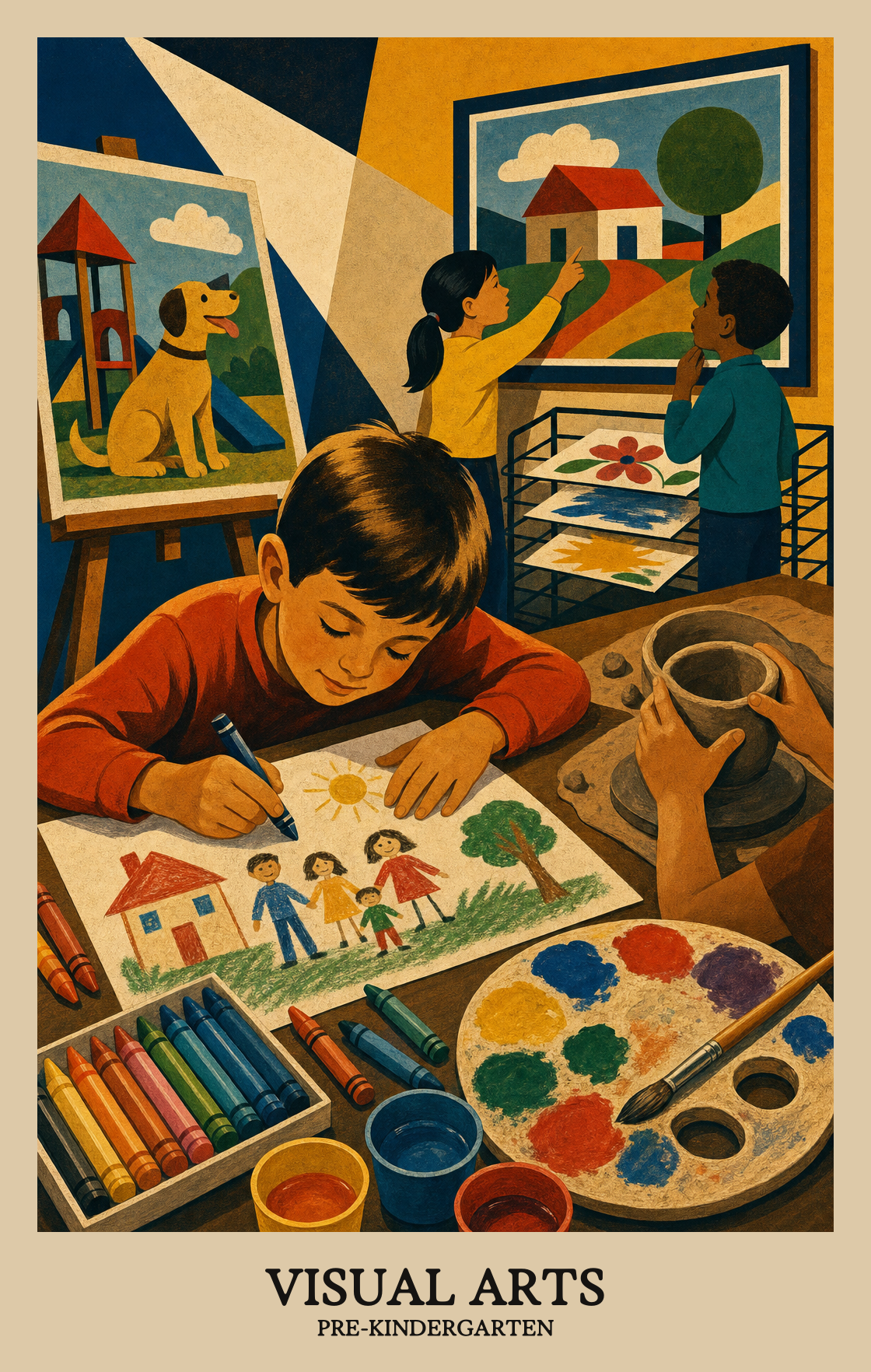
Students get their hands on crayons, paint, paper, clay, and glue. The focus is figuring out how each material works and noticing the marks and shapes they can make.
Students start drawing and building from what they know. A pet, a family member, a favorite snack, or a trip to the park can all turn into a picture or a small sculpture.
Students stick with a project long enough to add details and decide when it is done. They practice slowing down, looking at their work, and making small changes before calling it finished.
Students pick pieces to display and tell others what they made and why. They also look at art by classmates and artists, and start saying what they notice and how a picture makes them feel.
Students draw on things they know and moments they remember to make their own art. A drawing might come from a family dinner, a favorite animal, or something that made them laugh.
Students look at artwork and talk about where it came from, who made it, and what life was like for that person. A painting or drawing tells a story beyond what you see on the surface.
| Standard | Definition | Code |
|---|---|---|
| Making art from your own life | Students draw on things they know and moments they remember to make their own art. A drawing might come from a family dinner, a favorite animal, or something that made them laugh. | VA:Cn10.pk |
| Art from different times and places | Students look at artwork and talk about where it came from, who made it, and what life was like for that person. A painting or drawing tells a story beyond what you see on the surface. | VA:Cn11.pk |
Students come up with ideas for their own drawings, paintings, and art projects. This is the beginning of learning to think like an artist.
Students pick up crayons, paint, or collage materials and make something on purpose. They start with an idea and follow through to finish a piece of their own.
Students finish a drawing or craft by looking it over and adding details or making small changes before calling it done.
| Standard | Definition | Code |
|---|---|---|
| Coming up with art ideas | Students come up with ideas for their own drawings, paintings, and art projects. This is the beginning of learning to think like an artist. | VA:Cr1.pk |
| Making art on purpose | Students pick up crayons, paint, or collage materials and make something on purpose. They start with an idea and follow through to finish a piece of their own. | VA:Cr2.pk |
| Finish and polish your artwork | Students finish a drawing or craft by looking it over and adding details or making small changes before calling it done. | VA:Cr3.pk |
Students pick which of their drawings or projects to share with the class and start to explain why they chose it.
Students practice and improve a drawing or craft before sharing it with others. They learn that making something better takes more than one try.
Students share their drawings and artwork with others and explain, in simple words, what their picture means or shows.
| Standard | Definition | Code |
|---|---|---|
| Picking art to share with others | Students pick which of their drawings or projects to share with the class and start to explain why they chose it. | VA:Pr4.pk |
| Finishing a drawing to share with others | Students practice and improve a drawing or craft before sharing it with others. They learn that making something better takes more than one try. | VA:Pr5.pk |
| Sharing art to say something | Students share their drawings and artwork with others and explain, in simple words, what their picture means or shows. | VA:Pr6.pk |
Students look closely at a picture or artwork and talk about what they notice, like colors, shapes, or what the image shows.
Students look at a piece of art and say what they think the artist was trying to show or how it makes them feel.
Students look at a drawing or painting and say what they like about it and why. They start to notice what makes a picture feel finished or interesting.
| Standard | Definition | Code |
|---|---|---|
| Looking at and talking about art | Students look closely at a picture or artwork and talk about what they notice, like colors, shapes, or what the image shows. | VA:Re7.pk |
| What art means to you | Students look at a piece of art and say what they think the artist was trying to show or how it makes them feel. | VA:Re8.pk |
| Deciding what makes art good | Students look at a drawing or painting and say what they like about it and why. They start to notice what makes a picture feel finished or interesting. | VA:Re9.pk |
Students play with crayons, paint, clay, glue, scissors, and collage scraps. They learn to make marks on purpose, talk about what they made, and notice colors and shapes in pictures around them. Most of the work is exploration, not finished projects.
Keep a basket with paper, crayons, child-safe scissors, and glue sticks where students can reach it. Ask open questions like what is happening in this picture or what color did you pick. Hang finished work somewhere students can see it.
No. At this age the point is the choices students make, not a matching result. A purple sun and a six-legged cat both count as real art. Praise the thinking behind the picture rather than how neat it looks.
Start with simple tools and one material at a time, such as crayons in the fall and tempera paint a few weeks later. Add scissors, glue, and clay once students can handle the earlier tools. Save group projects and multi-step work for spring, when stamina is stronger.
Holding scissors correctly, using a small dot of glue instead of a puddle, and rinsing a brush between colors. Plan to model these every few weeks, not just once. Students also need practice talking about their work in full sentences.
Drawing and painting build the same fine motor control students need for writing letters. Talking about a picture builds vocabulary and storytelling. Sorting collage scraps by color or shape ties into early math.
Students should pick a subject to draw or paint, stick with it long enough to finish, and say a sentence or two about what they made. They should know the names of basic colors and shapes and use scissors and glue with some control.
Pick one picture and look at it together for a minute. Ask what students see, how it makes them feel, and what they think is happening. There are no wrong answers, and short visits work better than long ones.