Exploring sound and ideas
Students start the year by playing with sound. They make up short musical ideas using their voices, classroom instruments, and movement, and notice how a steady beat feels different from a free rhythm.
This is the year music gets more intentional. Students start making real choices as they create short pieces, picking rhythms and melodies on purpose instead of just experimenting. They practice singing and playing with cleaner timing and clearer feeling, and they begin to say why a song works or how it makes them feel. By spring, students can perform a short piece they helped shape and explain a simple reason behind their choices.
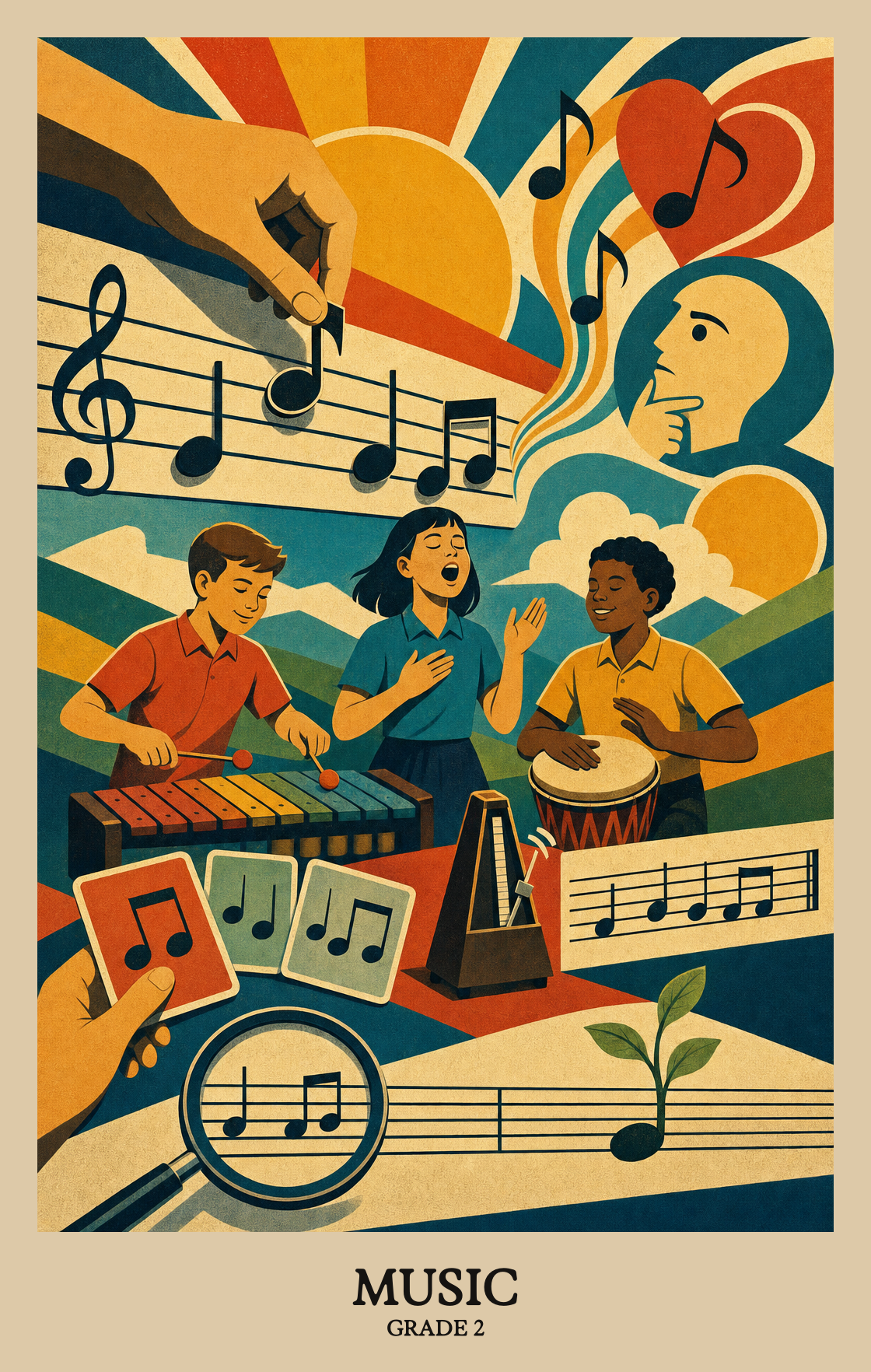
Students start the year by playing with sound. They make up short musical ideas using their voices, classroom instruments, and movement, and notice how a steady beat feels different from a free rhythm.
Students take their musical ideas and start to organize them. They pick which sounds to keep, repeat patterns on purpose, and shape a short piece they can play or sing the same way twice.
Students practice a song or piece and get it ready to share. They work on singing in tune, playing in time with the group, and showing what the music means through how they perform it.
Students listen closely to music made by others and by themselves. They describe what they hear, share what they think the music is about, and use simple reasons to say what works and what could be better.
Students connect music to their own lives and to the people who made it. They notice how songs come from different places and times, and how music shows up at home, at school, and in celebrations.
Students connect what they already know and what they've lived through to the music they create and perform. Personal stories, feelings, and observations all shape the choices students make as young musicians.
Students connect a song or piece of music to the time, place, or culture it came from. Learning where music began helps them understand why it sounds the way it does.
| Standard | Definition | Code |
|---|---|---|
| Making music from your own experiences | Students connect what they already know and what they've lived through to the music they create and perform. Personal stories, feelings, and observations all shape the choices students make as young musicians. | MU:Cn10.2 |
| Music from different times and places | Students connect a song or piece of music to the time, place, or culture it came from. Learning where music began helps them understand why it sounds the way it does. | MU:Cn11.2 |
Students come up with their own musical ideas, like inventing a short melody or clapping out a rhythm they made up.
Students take a musical idea they came up with and shape it into a short piece, deciding which sounds to keep, change, or put in order.
Students revisit a short song or rhythm they made, fix what isn't working, and finish it. The goal is a piece they're ready to share.
| Standard | Definition | Code |
|---|---|---|
| Coming up with musical ideas | Students come up with their own musical ideas, like inventing a short melody or clapping out a rhythm they made up. | MU:Cr1.2 |
| Turning musical ideas into songs | Students take a musical idea they came up with and shape it into a short piece, deciding which sounds to keep, change, or put in order. | MU:Cr2.2 |
| Finish and polish a piece of music | Students revisit a short song or rhythm they made, fix what isn't working, and finish it. The goal is a piece they're ready to share. | MU:Cr3.2 |
Students choose a song or piece to perform and think about how they want it to sound. They make decisions about tempo, dynamics, and expression before they play or sing it for others.
Students practice a song or piece repeatedly, fixing small mistakes and improving tone, rhythm, or dynamics before performing it for an audience.
Students perform a song or piece to share something they feel or mean, not just to play the right notes.
| Standard | Definition | Code |
|---|---|---|
| Choosing music to perform | Students choose a song or piece to perform and think about how they want it to sound. They make decisions about tempo, dynamics, and expression before they play or sing it for others. | MU:Pr4.2 |
| Practicing a song until it's ready | Students practice a song or piece repeatedly, fixing small mistakes and improving tone, rhythm, or dynamics before performing it for an audience. | MU:Pr5.2 |
| Perform music and mean it | Students perform a song or piece to share something they feel or mean, not just to play the right notes. | MU:Pr6.2 |
Students listen to a short piece of music and describe what they notice, such as when it gets louder, faster, or changes mood. They start building the habit of paying close attention to what they hear.
Students listen to a piece of music and explain what feeling or story they think it tells, using what they hear in the melody, rhythm, or tempo to back up their idea.
Students listen to a piece of music and decide what makes it good or not so good, using simple ideas like steady beat, clear melody, or how well it fits the moment.
| Standard | Definition | Code |
|---|---|---|
| Listening closely to music | Students listen to a short piece of music and describe what they notice, such as when it gets louder, faster, or changes mood. They start building the habit of paying close attention to what they hear. | MU:Re7.2 |
| What music is trying to say | Students listen to a piece of music and explain what feeling or story they think it tells, using what they hear in the melody, rhythm, or tempo to back up their idea. | MU:Re8.2 |
| Decide what makes music good | Students listen to a piece of music and decide what makes it good or not so good, using simple ideas like steady beat, clear melody, or how well it fits the moment. | MU:Re9.2 |
Students sing, clap rhythms, play simple instruments, and listen to short pieces of music. They also start making up their own short patterns and songs, and they talk about what they hear. The year mixes performing, creating, and responding to music.
Sing in the car, clap along to songs, and ask what the music made students think about. Playing different kinds of music at dinner and naming what's fast, slow, loud, or soft counts as practice. None of this requires reading notes or playing an instrument.
No. Students learn to keep a steady beat, echo simple rhythms, and follow basic patterns, often with classroom instruments like shakers or drums. Reading standard notation comes later.
Start with steady beat and simple rhythm patterns, since almost everything else builds on those. Once students can keep a beat and echo short patterns, singing, creating, and responding to music get much easier to teach.
Spend the first months building shared songs and rhythm games so students have material to work with. Then bring in short creating tasks, like making up a four-beat pattern, and finish units with small performances and listening discussions. Responding can happen in every lesson through quick listening prompts.
That's common at this age and usually passes with low-pressure practice. Singing together at home, humming, or making up silly songs in the kitchen helps students get comfortable using their voice without feeling watched.
Keeping a steady beat under a changing rhythm trips students up, as does matching pitch when singing in a group. Plan to revisit both across the year in short, frequent bursts rather than one long unit.
By spring, students should keep a steady beat, echo a short rhythm or melody, and talk about a piece of music using words like fast, slow, loud, soft, happy, or sad. They should also be willing to share a short pattern or song they made up.