Finding ideas to move
Students start the year by turning personal experiences, memories, and observations into movement ideas. Parents may hear them talk about a feeling or moment they want to show through dance.
This is the year dance shifts from learning steps to shaping ideas on purpose. Students draw on their own experiences and what they see in the world to build short pieces with a clear point of view. They polish technique, rehearse with intention, and watch other dancers with a more careful eye. By spring, they can perform a piece they helped create and explain what it means and why they made those choices.
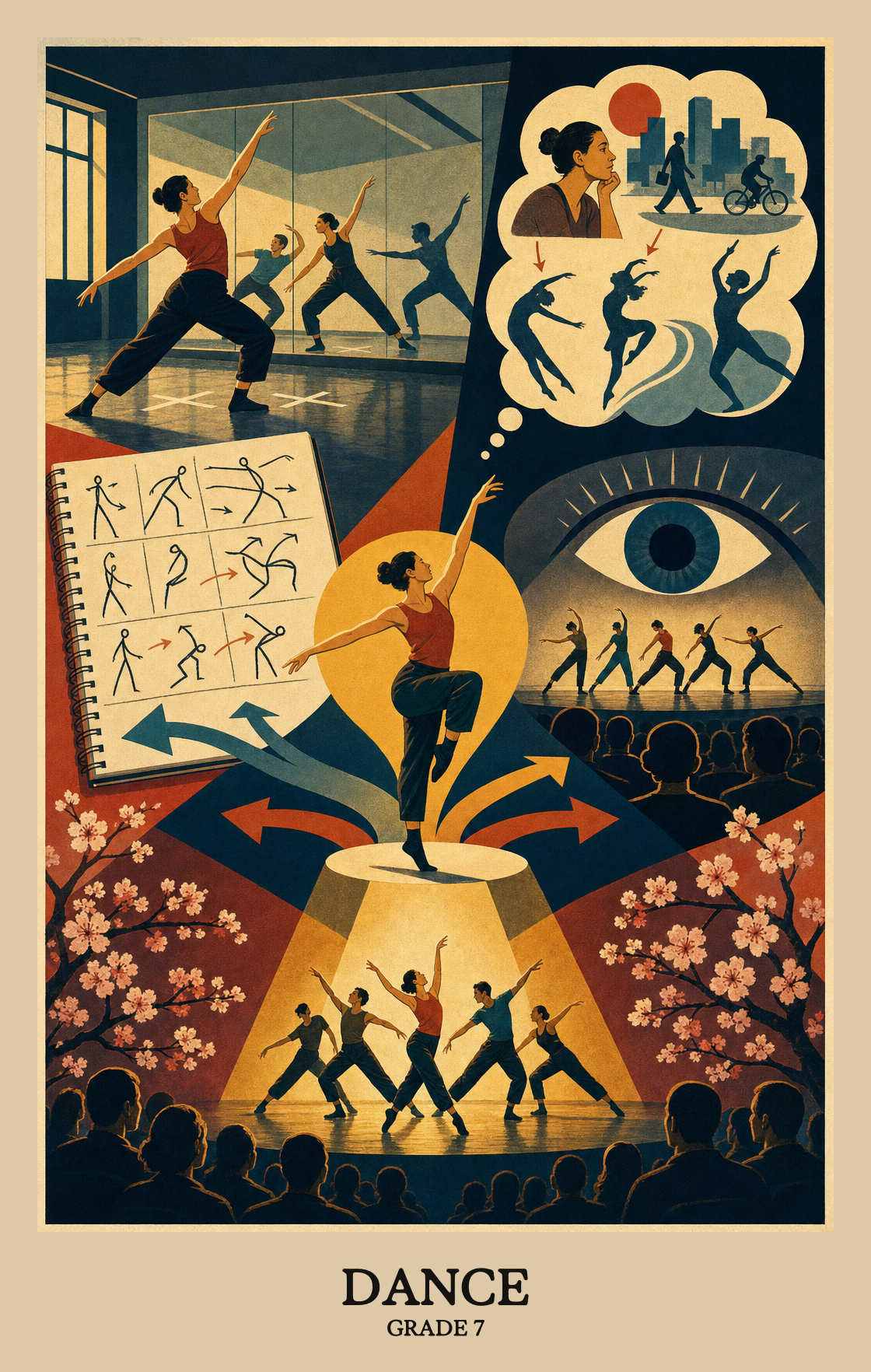
Students start the year by turning personal experiences, memories, and observations into movement ideas. Parents may hear them talk about a feeling or moment they want to show through dance.
Students take rough ideas and build them into longer pieces with a clear beginning, middle, and end. They try out choices, get feedback from classmates, and rework sections that do not land.
Students work on the physical side of dance, including balance, control, timing with music, and clean shapes. They practice the same sequence many times to make it sharper and more confident.
Students look at dances from different cultures, time periods, and communities, and think about what each one was trying to say. They use what they notice to make their own performances more meaningful.
Students perform finished pieces for an audience and watch each other with a careful eye. They use clear criteria to talk about what worked, what the dance meant, and what they would change next time.
Students connect what they know and what they've lived through to the dances they create. Personal experience shapes the choices they make in the studio.
Students look at a dance piece and connect it to the time, place, or culture it came from. That context helps explain why the movement looks and feels the way it does.
| Standard | Definition | Code |
|---|---|---|
| Using life experience to make dances | Students connect what they know and what they've lived through to the dances they create. Personal experience shapes the choices they make in the studio. | DA:Cn10.7 |
| Dance and its cultural history | Students look at a dance piece and connect it to the time, place, or culture it came from. That context helps explain why the movement looks and feels the way it does. | DA:Cn11.7 |
Students brainstorm and develop original ideas for a dance, turning a concept, feeling, or image into movement they can build on.
Students take their movement ideas and shape them into a structured dance, making choices about order, timing, and how sections connect to form a complete piece.
Students revisit a dance they've been building and make deliberate changes to improve it. They finalize their choices about movement, timing, and structure before the work is considered done.
| Standard | Definition | Code |
|---|---|---|
| Coming up with dance ideas | Students brainstorm and develop original ideas for a dance, turning a concept, feeling, or image into movement they can build on. | DA:Cr1.7 |
| Developing a dance idea into a full piece | Students take their movement ideas and shape them into a structured dance, making choices about order, timing, and how sections connect to form a complete piece. | DA:Cr2.7 |
| Finish and refine a dance piece | Students revisit a dance they've been building and make deliberate changes to improve it. They finalize their choices about movement, timing, and structure before the work is considered done. | DA:Cr3.7 |
Students review their own dances and choose which pieces are ready to share with an audience, explaining why each choice reflects their intent as a performer.
Students practice and improve a dance piece until it's ready to perform, focusing on technique, timing, and how the movement looks to an audience.
Students perform a dance to communicate a clear idea or feeling to an audience, making deliberate choices about movement so the meaning comes through.
| Standard | Definition | Code |
|---|---|---|
| Choosing dances worth performing | Students review their own dances and choose which pieces are ready to share with an audience, explaining why each choice reflects their intent as a performer. | DA:Pr4.7 |
| Refine a dance piece for performance | Students practice and improve a dance piece until it's ready to perform, focusing on technique, timing, and how the movement looks to an audience. | DA:Pr5.7 |
| Perform a dance with purpose and intent | Students perform a dance to communicate a clear idea or feeling to an audience, making deliberate choices about movement so the meaning comes through. | DA:Pr6.7 |
Students watch a dance performance and break down what they see: how the movement is structured, what choices the choreographer made, and what those choices communicate.
Students explain what a dance is trying to say and why the choreographer made specific choices, such as a repeated movement or a sudden change in speed.
Students use a set of criteria, like effort, technique, or storytelling, to judge a dance performance and explain what makes it strong or where it falls short.
| Standard | Definition | Code |
|---|---|---|
| Reading dance with a critical eye | Students watch a dance performance and break down what they see: how the movement is structured, what choices the choreographer made, and what those choices communicate. | DA:Re7.7 |
| Reading meaning in dance | Students explain what a dance is trying to say and why the choreographer made specific choices, such as a repeated movement or a sudden change in speed. | DA:Re8.7 |
| Judging dance with clear criteria | Students use a set of criteria, like effort, technique, or storytelling, to judge a dance performance and explain what makes it strong or where it falls short. | DA:Re9.7 |
Students move through four big areas: creating their own dances, performing them, responding to dances they watch, and connecting dance to the world around them. They make short pieces from an idea, rehearse and refine them, and then talk about what worked and why.
Ask about the idea behind a piece, not the steps. Watch a short dance clip together and ask what the dancer was trying to say. Give space to rehearse without comments on how it looks.
No. The work is about turning an idea into movement, shaping it, and performing it with intent. Strength and flexibility grow over the year, but they are not the bar for success.
Start with short improvisations from a clear prompt, then move to organizing those ideas into a structure with a beginning, middle, and end. Save refinement work for later in the year, once students have material worth shaping.
Intent. Students can make movement and copy choreography, but explaining what a piece means and choosing movement that matches that meaning takes repeated practice. Build in short reflection moments after every showing.
By spring, students should be able to take a prompt, make a short dance with a clear idea behind it, rehearse it, perform it with focus, and give specific feedback on a peer's work using shared criteria.
Work is judged against shared criteria the class uses all year, things like clear intent, choices that fit the idea, and quality of performance. Two very different dances can both meet the bar.
Performing for one partner or a small group counts. Ask what part of a piece feels ready to share and what part still needs rehearsal. Confidence grows from small showings, not from one big stage moment.