Skills and team sports kickoff
Students sharpen the throws, catches, kicks, and footwork they need for games like soccer, basketball, and volleyball. The focus is on doing the move well, not just keeping up.
This is the year gym class shifts from learning the moves to running the game. Students apply strategy in team sports, track their own fitness, and lead warm-ups or small-group drills with less coaching from the sideline. They also start connecting daily activity to long-term health and the jobs built around it. By spring, students can set a personal fitness goal, follow a plan to reach it, and play a team game with real strategy.
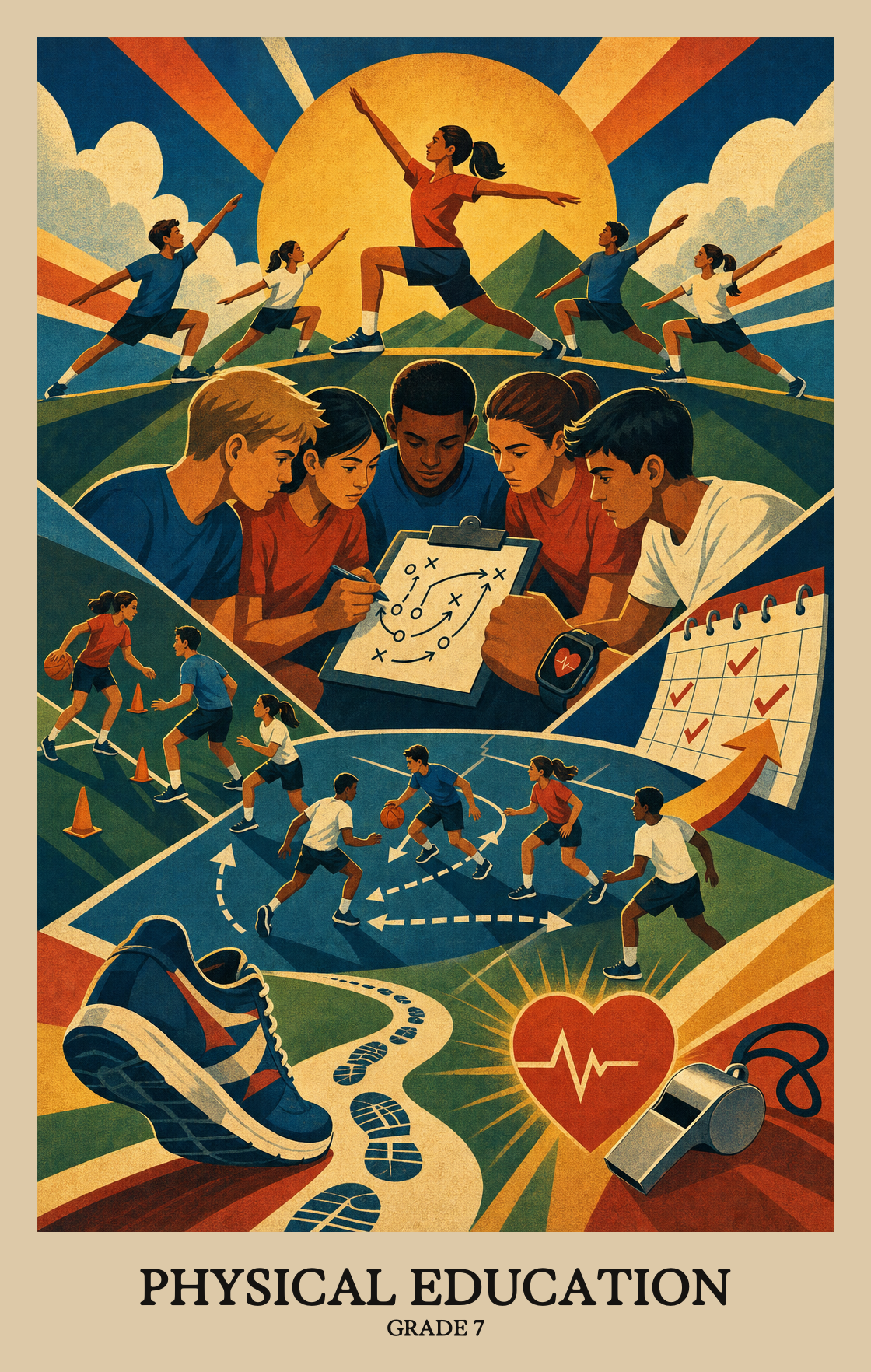
Students sharpen the throws, catches, kicks, and footwork they need for games like soccer, basketball, and volleyball. The focus is on doing the move well, not just keeping up.
Students start thinking like players, not just participants. They read the field, pick the smarter pass, and use simple stats to talk about what worked and what to try next time.
Students build endurance, strength, and flexibility through workouts they can repeat on their own. They learn how to set a fitness goal and track their progress over a few weeks.
Students practice the social side of sports. That means good sportsmanship after a tough loss, working with classmates they did not pick, and giving teammates feedback that helps instead of stings.
Students try activities they might keep doing as adults, like hiking, yoga, dance, or recreational sports. They also look at jobs and community resources tied to fitness and health.
Students practice a range of physical skills, from throwing and catching to balancing and footwork patterns. The goal is to perform each skill with real control, not just get through the motion.
Students use concepts like spacing, timing, and body position to make smarter decisions during games and physical activities. They apply what they know about movement to improve how they perform.
Students learn to build habits that keep their body healthy long-term. That means understanding how hard to push during exercise, how often to be active, and why consistent movement matters beyond gym class.
Students follow rules, respect teammates and opponents, and take responsibility for their own actions during class and games.
Students explain why staying active matters to them personally, whether it helps them feel good, take on a challenge, or connect with others.
Students learn to spot careers tied to fitness and health, like coaching or athletic training, and practice making smart choices about time, money, and local resources to stay active and well.
| Standard | Definition | Code |
|---|---|---|
| Moving your body with skill and control | Students practice a range of physical skills, from throwing and catching to balancing and footwork patterns. The goal is to perform each skill with real control, not just get through the motion. | NY-PE.1.7 |
| Movement strategies that improve performance | Students use concepts like spacing, timing, and body position to make smarter decisions during games and physical activities. They apply what they know about movement to improve how they perform. | NY-PE.2.7 |
| Staying active and fit for life | Students learn to build habits that keep their body healthy long-term. That means understanding how hard to push during exercise, how often to be active, and why consistent movement matters beyond gym class. | NY-PE.3.7 |
| Respect yourself and others in PE | Students follow rules, respect teammates and opponents, and take responsibility for their own actions during class and games. | NY-PE.4.7 |
| Why staying active matters | Students explain why staying active matters to them personally, whether it helps them feel good, take on a challenge, or connect with others. | NY-PE.5.7 |
| Fitness careers and wellness resources | Students learn to spot careers tied to fitness and health, like coaching or athletic training, and practice making smart choices about time, money, and local resources to stay active and well. | NY-PE.6.7 |
Students build skills in team sports, individual activities, and fitness routines. They also learn how the body responds to exercise and how to set personal fitness goals. The work goes beyond playing games and includes strategy, teamwork, and healthy habits.
Aim for 60 minutes of activity most days. That can be a walk after dinner, a bike ride, a pickup game, or a dance video in the living room. The goal is steady movement, not a workout plan.
Sports are only one piece of this year. Students also try fitness activities, dance, hiking, and individual challenges like yoga or jump rope. Help students find one or two activities they actually enjoy and build from there.
Most plans rotate through team sports, individual and lifetime activities, fitness concepts, and a dance or rhythmic unit. Build fitness vocabulary early so students can talk about heart rate, effort, and goal-setting in later units. Save complex strategy games for after students have the basic skills.
Striking and overhand throwing tend to lag, and game strategy often needs explicit teaching rather than discovery. Plan short skill stations before gameplay and pause games to point out spacing, passing lanes, and defensive positioning.
Grade on effort, skill progress, knowledge, and behavior rather than athletic ability. Short skill checks, fitness logs, and quick written reflections give a fuller picture than game performance alone. Make the criteria clear to students from day one.
Students should perform basic skills in several sports, explain how to improve a fitness component like endurance or flexibility, and work well with classmates of different skill levels. They should also be able to set a simple fitness goal and track progress toward it.
For an ongoing injury or medical issue, yes, a note from a doctor helps the teacher plan safe alternatives. For a single off day, talk to the teacher directly. Students can often still participate in modified ways rather than miss class entirely.