Movement skills and team play
Students sharpen the basics of throwing, catching, kicking, and striking, then use those skills in small-sided games. Parents may hear about new sports and what it takes to play a position well.
This is the year gym class starts feeling like real training. Students move past basic skills and learn to use strategy in games, like reading a defender or setting up a teammate. They also start tracking their own fitness and figuring out which activities they actually enjoy outside of class. By spring, students can warm up on their own, play a team game with real tactics, and explain how regular activity helps their health.
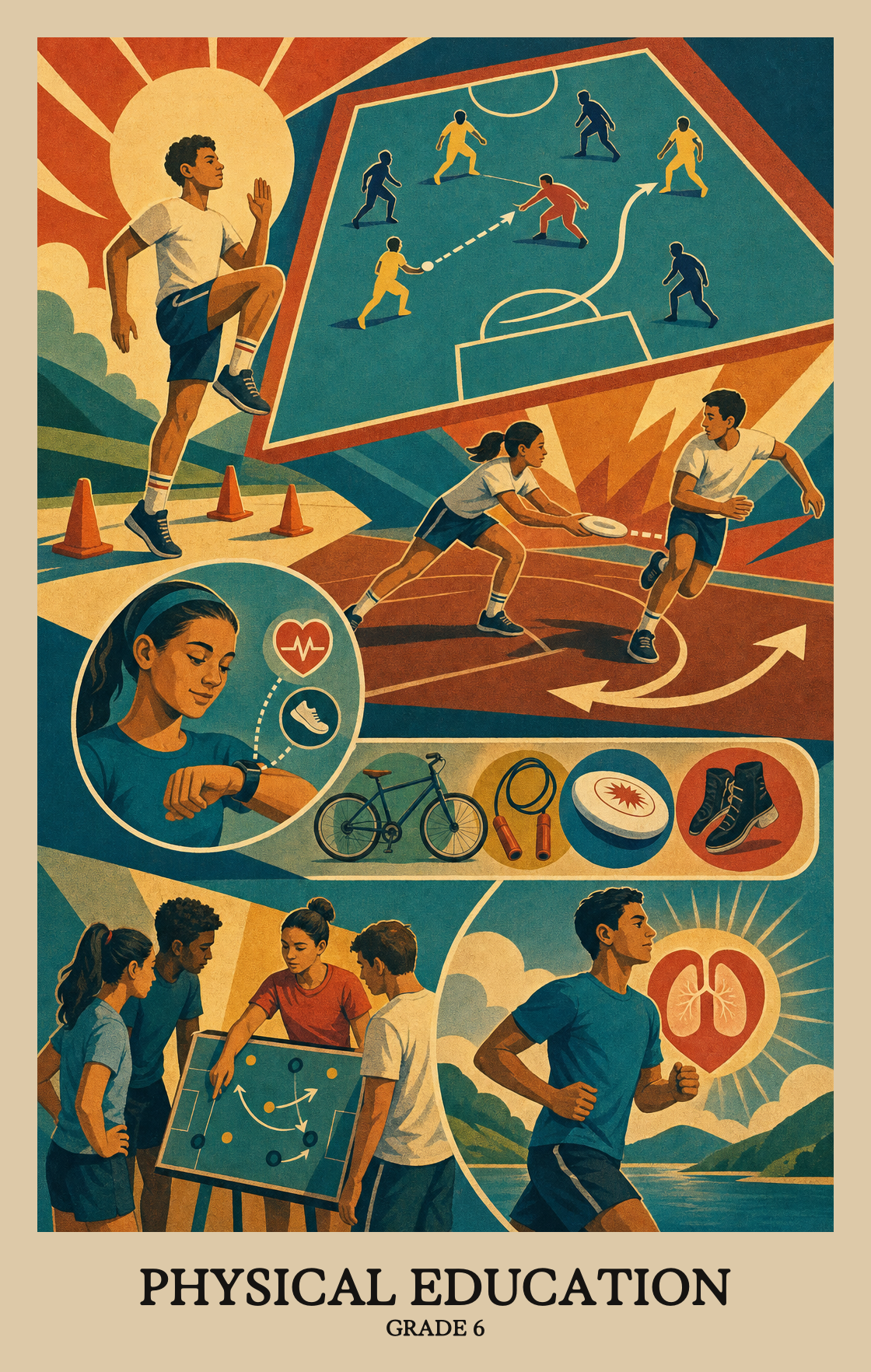
Students sharpen the basics of throwing, catching, kicking, and striking, then use those skills in small-sided games. Parents may hear about new sports and what it takes to play a position well.
Students learn how to read a game, not just play it. They practice spacing, passing lanes, and simple offensive and defensive moves, and start using stats to talk about how a play went.
Students build endurance, strength, and flexibility through workouts they can repeat on their own. They set personal fitness goals and track progress over several weeks.
Students practice working with classmates they did not pick, handling wins and losses, and following rules without being told. Parents may notice better self-control during sports and games at home.
Students explore activities they might keep doing outside of school, from hiking to dance to weight training. They also look at jobs and community programs connected to fitness and sport.
Students practice the fundamental movement skills that show up across sports and activities, like throwing, jumping, catching, and changing direction with control.
Students use what they know about body position, timing, and game strategy to make smarter decisions while moving or competing. The focus is on thinking through performance, not just practicing it.
Students learn to build habits that keep their bodies healthy and active, not just for gym class but long-term. This includes understanding how exercise affects the body and making choices that support lasting fitness.
Students practice self-control and respect during class activities, following rules and treating classmates fairly even when competition or disagreement makes that harder.
Students explain why staying active matters beyond just fitness, pointing to reasons like personal enjoyment, the chance to push themselves, or connecting with others.
Students explore jobs tied to fitness and health, like coaching or physical therapy, and learn to find local resources (gyms, parks, community programs) that help them stay active now and as they grow.
| Standard | Definition | Code |
|---|---|---|
| Moving and controlling your body | Students practice the fundamental movement skills that show up across sports and activities, like throwing, jumping, catching, and changing direction with control. | NY-PE.1.6 |
| How movement concepts improve athletic performance | Students use what they know about body position, timing, and game strategy to make smarter decisions while moving or competing. The focus is on thinking through performance, not just practicing it. | NY-PE.2.6 |
| Staying active and fit for life | Students learn to build habits that keep their bodies healthy and active, not just for gym class but long-term. This includes understanding how exercise affects the body and making choices that support lasting fitness. | NY-PE.3.6 |
| Respecting yourself and others in PE | Students practice self-control and respect during class activities, following rules and treating classmates fairly even when competition or disagreement makes that harder. | NY-PE.4.6 |
| Why staying active is good for you | Students explain why staying active matters beyond just fitness, pointing to reasons like personal enjoyment, the chance to push themselves, or connecting with others. | NY-PE.5.6 |
| Fitness careers and community wellness resources | Students explore jobs tied to fitness and health, like coaching or physical therapy, and learn to find local resources (gyms, parks, community programs) that help them stay active now and as they grow. | NY-PE.6.6 |
Students practice skills across team sports, individual activities, and fitness work. They start applying strategy, not just running drills. By the end of the year, students should be able to play a game, follow the rules, and explain why a play worked or did not.
Pick one active thing students enjoy and make time for it a few days a week. A walk, a bike ride, shooting hoops in the driveway, or kicking a ball at the park all count. The goal at this age is building a habit, not training for a sport.
Aim for about 60 minutes of moving around most days. It does not have to happen all at once. Walking the dog, playing tag with siblings, or helping carry groceries all add up.
Most teachers rotate through fitness, team sports, individual or lifetime activities, and cooperative games. Open with skill review and fitness baselines so later units build on shared movement vocabulary. Save game play for after students have practiced the underlying skills.
Students can perform basic skills like throwing, catching, dribbling, and striking under game-like pressure. They can explain a simple strategy, follow rules without constant reminders, and stay active through a full class. They also know which activities they enjoy enough to keep doing.
Sixth grade is when students start comparing bodies and skills. Reassure them that effort matters more than performance, and talk with the teacher early about uniform options or modifications. A short walk together after dinner can rebuild confidence away from peers.
Underhand and overhand throwing form, defensive positioning, and pacing during longer activities tend to need the most work. Many students also struggle with self-officiating and resolving small disputes during games. Build short routines around these from day one.
Grades usually reflect participation, effort, skill growth, and behavior, not athletic talent. A student who tries hard and treats classmates well can earn a strong grade even if they are still learning a sport. Ask the teacher for the specific rubric if it is not clear.
Use personal goal-setting and growth over time instead of class rankings. Have students track their own results privately and set one small target to work toward. Pair fitness days with discussion about why each activity matters for everyday life.