Healthy habits and daily choices
Students learn what keeps the body strong, from sleep and water to brushing teeth and washing hands. They start to notice the small daily choices that add up to feeling well.
This is the stretch when health class moves from simple rules like "wash your hands" to real decisions students start making on their own. Students learn what their bodies need to stay strong, how to spot risks at home or on the playground, and who to ask for help when something feels wrong. They also start sorting fact from hype in ads and online. By spring, students can explain a healthy habit they practice and name a trusted adult for different kinds of problems.
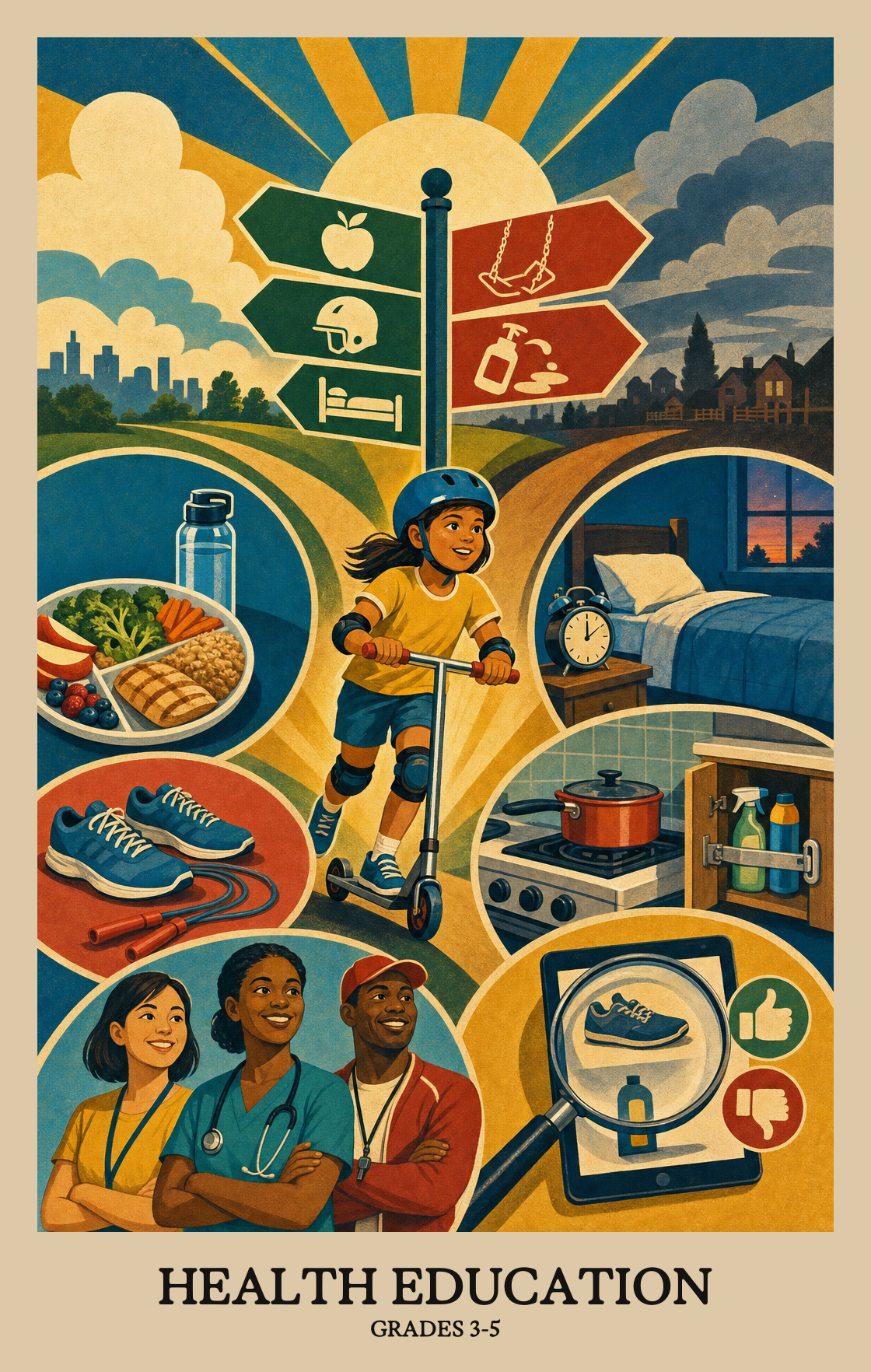
Students learn what keeps the body strong, from sleep and water to brushing teeth and washing hands. They start to notice the small daily choices that add up to feeling well.
Students explore how exercise helps the heart, muscles, and mood. They try different kinds of activity and learn why moving every day matters, even on busy school days.
Students practice what to do in everyday situations like crossing the street, handling a small injury, or knowing when to ask an adult for help. They learn how to spot risks before they become problems.
Students name their emotions and find ways to handle stress, disagreements, and peer pressure. They learn that asking for help is a strength, not a weakness.
Students learn who to turn to when something feels wrong, from a school nurse to a trusted family member. They also start to tell apart helpful information from ads and rumors.
Students practice healthy habits like staying active, getting enough sleep, and taking care of their bodies. This standard covers what students learn about keeping themselves fit and well as they grow.
Students learn what makes a home, school, or neighborhood safe and healthy. They practice identifying hazards and understand basic steps for preventing accidents and illness.
Students learn to make smart choices about time, money, and energy, and to recognize the people and places in their community that can help them. Good resource habits build skills students use at home and in school.
| Standard | Definition | Code |
|---|---|---|
| Staying fit and healthy Grades 3-5 | Students practice healthy habits like staying active, getting enough sleep, and taking care of their bodies. This standard covers what students learn about keeping themselves fit and well as they grow. | NY-HE.1.3-5 |
| Keeping your space safe and healthy Grades 3-5 | Students learn what makes a home, school, or neighborhood safe and healthy. They practice identifying hazards and understand basic steps for preventing accidents and illness. | NY-HE.2.3-5 |
| Managing personal and community resources Grades 3-5 | Students learn to make smart choices about time, money, and energy, and to recognize the people and places in their community that can help them. Good resource habits build skills students use at home and in school. | NY-HE.3.3-5 |
Students learn how to take care of their bodies, stay safe at home and outside, and make good choices with food, sleep, and exercise. They also start learning where to go for help, like a doctor, a school nurse, or a trusted adult.
Pick one small habit to work on together, such as drinking water with meals, a regular bedtime, or a short walk after dinner. Talking through the choice out loud helps students connect the habit to how they feel the next day.
Students should know basic first aid ideas, how to call for help in an emergency, simple rules for crossing streets and riding bikes, and how to stay safer online. They should also know which adults at home and at school they can go to.
A common approach is to start with personal health habits in the fall, move into safety and injury prevention in the winter, and finish with community health and decision-making in the spring. Revisiting earlier topics in short lessons keeps the habits fresh.
Name feelings out loud during everyday moments, like after a hard game or a tough day at school. Ask what helped last time something felt big, and offer simple options such as a walk, a snack, water, or quiet time before talking it through.
Hand washing and food safety often need a second pass because students rush through them. Decision-making steps and knowing when to ask an adult for help also tend to need more practice through short role-plays across the year.
Cook one simple meal together each week and talk about what is on the plate, where it came from, and how it helps the body. Letting students help with the grocery list builds the same skills without feeling like a lesson.
Students can explain a few healthy habits and why they matter, describe what to do in common emergencies, and name trusted adults and community helpers. They can also walk through a simple decision, like what to do if a friend gets hurt on the playground.