Finding ideas to move
Students start the year by turning their own experiences, questions, and interests into movement ideas. Expect them to come home talking about a story or feeling they want to show through dance.
This is the year dance becomes a way to say something on purpose. Students take an idea from their own life, a piece of music, or a current event and build a short dance around it. They sharpen their technique, give and take feedback with classmates, and tie what they make to the cultures and time periods that shaped it. By spring, they can perform a piece they choreographed and explain what it means.
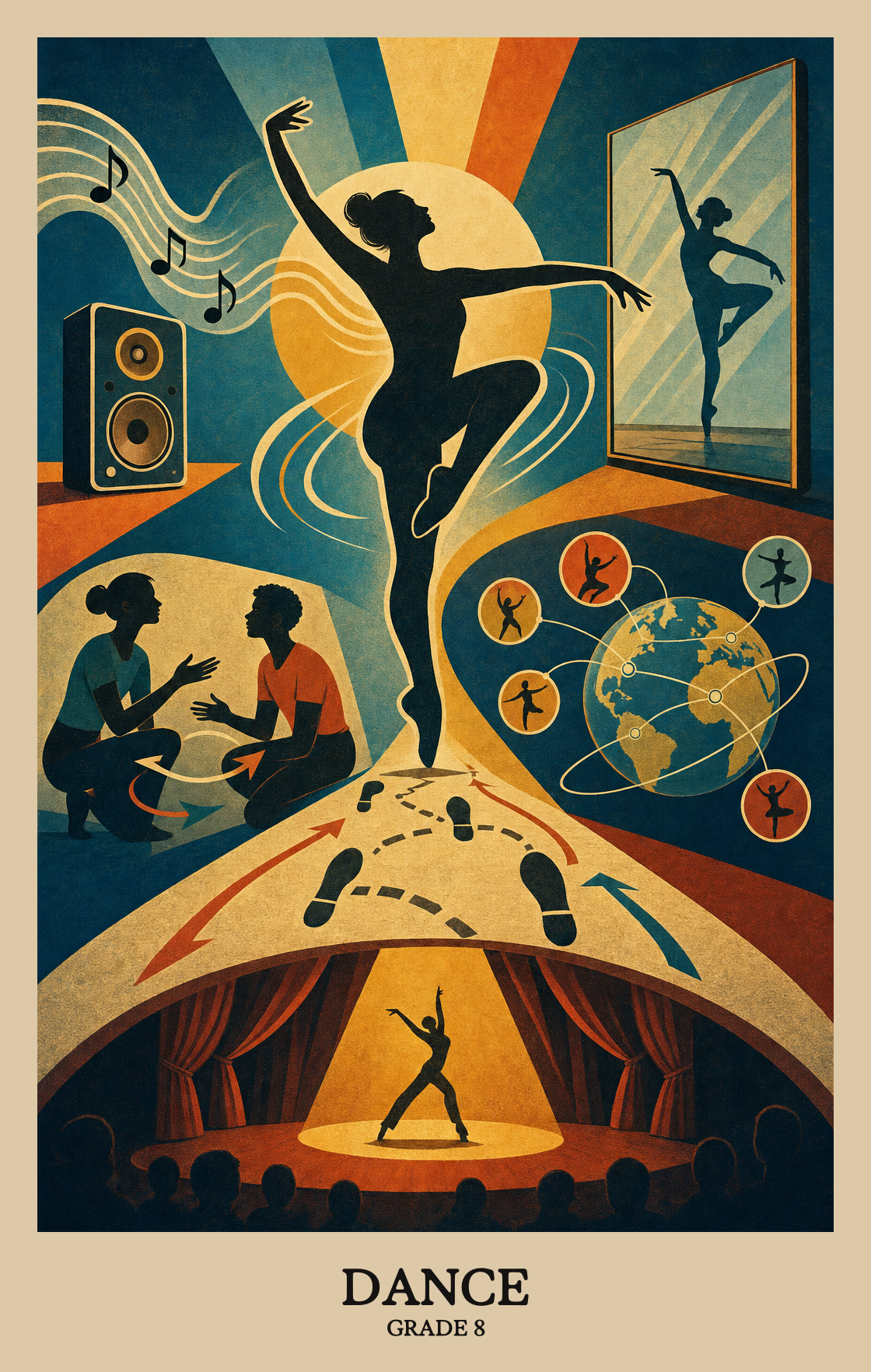
Students start the year by turning their own experiences, questions, and interests into movement ideas. Expect them to come home talking about a story or feeling they want to show through dance.
Students take rough ideas and build them into real choreography. They try different orders, partner formations, and timing, then revise until the piece holds together.
Students look at where dances come from and what they meant to the people who made them. They start to see how culture, history, and current events show up in the way bodies move.
Students sharpen technique and rehearse with the audience in mind. They work on cleaner lines, sharper timing, and clearer expression so the meaning of the piece comes through.
Students learn to talk about dance the way critics and choreographers do. They describe what they see, guess at the artist's intent, and use clear criteria to say what is working and what is not.
Students connect something from their own life to a dance they create or perform, using that personal experience to shape the movement choices they make.
Students examine a dance piece alongside the time period or culture it came from, then explain how that context shapes what the choreographer was expressing.
| Standard | Definition | Code |
|---|---|---|
| Using life experience to make dances | Students connect something from their own life to a dance they create or perform, using that personal experience to shape the movement choices they make. | CA-DA:Cn10.8.8 |
| Dance styles and their cultural roots | Students examine a dance piece alongside the time period or culture it came from, then explain how that context shapes what the choreographer was expressing. | CA-DA:Cn11.8.8 |
Students brainstorm movement ideas and shape them into a plan for a dance, deciding what the piece is about and how it will look before they begin making it.
Students take a dance idea they have been developing and shape it into a finished piece, making deliberate choices about movement, structure, and how the parts fit together.
Students revisit a dance they've been building, make specific changes to sharpen the movement or structure, and prepare it to perform or present as a finished piece.
| Standard | Definition | Code |
|---|---|---|
| Coming up with ideas for a dance | Students brainstorm movement ideas and shape them into a plan for a dance, deciding what the piece is about and how it will look before they begin making it. | CA-DA:Cr1.8.8 |
| Develop and shape a dance idea | Students take a dance idea they have been developing and shape it into a finished piece, making deliberate choices about movement, structure, and how the parts fit together. | CA-DA:Cr2.8.8 |
| Finishing and refining a dance piece | Students revisit a dance they've been building, make specific changes to sharpen the movement or structure, and prepare it to perform or present as a finished piece. | CA-DA:Cr3.8.8 |
Students review and choose dances to perform, thinking carefully about what each piece expresses and how well it suits the stage or audience.
Students practice and improve their dance techniques to get a performance ready to share with an audience. The focus is on refining the details that make the work stronger before it's presented.
Students choose specific movements and staging to communicate an idea or emotion to an audience. Every choice in the dance, from speed to spacing, is made with that message in mind.
| Standard | Definition | Code |
|---|---|---|
| Choosing dances worth performing | Students review and choose dances to perform, thinking carefully about what each piece expresses and how well it suits the stage or audience. | CA-DA:Pr4.8.8 |
| Refining dance technique for performance | Students practice and improve their dance techniques to get a performance ready to share with an audience. The focus is on refining the details that make the work stronger before it's presented. | CA-DA:Pr5.8.8 |
| Perform a dance that says something | Students choose specific movements and staging to communicate an idea or emotion to an audience. Every choice in the dance, from speed to spacing, is made with that message in mind. | CA-DA:Pr6.8.8 |
Students watch a dance and break down how the choreographer made specific choices, explaining what those choices do to the overall feeling or meaning of the piece.
Students analyze a dance performance and explain what the choreographer was trying to communicate, using specific movements or patterns as evidence.
Students watch or perform a dance and judge whether it works, using a clear set of criteria they can explain and defend.
| Standard | Definition | Code |
|---|---|---|
| Reading dance with a critical eye | Students watch a dance and break down how the choreographer made specific choices, explaining what those choices do to the overall feeling or meaning of the piece. | CA-DA:Re7.8.8 |
| Reading meaning in a dance performance | Students analyze a dance performance and explain what the choreographer was trying to communicate, using specific movements or patterns as evidence. | CA-DA:Re8.8.8 |
| Judging dance with your own criteria | Students watch or perform a dance and judge whether it works, using a clear set of criteria they can explain and defend. | CA-DA:Re9.8.8 |
Students create short dances, perform them for others, and watch and talk about dance made by classmates and professionals. The work gets more personal this year, with students drawing on their own experiences and ideas to shape what they make.
Ask what idea or feeling the dance is about, then ask how the movement shows it. Clear a small space in the living room and let practice happen. Watching short dance clips together and talking about what stood out is also useful.
No. The grade focuses on making thoughtful choices, refining movement, and explaining ideas, not on splits or tricks. Steady effort and a willingness to revise matter more than natural flexibility.
A common path is to start with idea generation and short solo studies, move into group choreography with revision cycles, then build toward a performance with reflection and critique. Responding work can run alongside each unit rather than as a separate block.
By spring, students can take a personal or cultural idea, shape it into a short dance with intentional choices, refine it based on feedback, and perform it with clear meaning. They can also explain what a peer's dance is about and back it up with what they saw.
Revision is the sticking point. Most students will create a first draft and call it done. Building a habit of rehearsing, getting feedback, and changing specific moments takes repeated modeling across several short projects.
Grades come from criteria students can see ahead of time, such as clarity of idea, use of space and timing, quality of revision, and thoughtfulness of written or spoken reflection. Personal style is welcome within those criteria.
Readiness shows up when a student can start from an idea, work through drafts, accept feedback without shutting down, and talk about dance using specific observations. Technique matters, but the habits of a maker matter more at this stage.