Movement skills and game play
Students sharpen the basic moves behind sports and activities, like throwing, catching, dribbling, and footwork. Parents may notice steadier coordination and more confidence joining a pickup game.
This is the year P.E. shifts from playing games to building a real fitness plan. Students learn the why behind the warm-up, the workout, and the cool-down, and they track their own progress in strength, endurance, and flexibility. They also practice teamwork skills like handling pressure, setting goals, and working with people who play differently. By spring, students can design and follow a personal fitness routine that targets areas they want to improve.
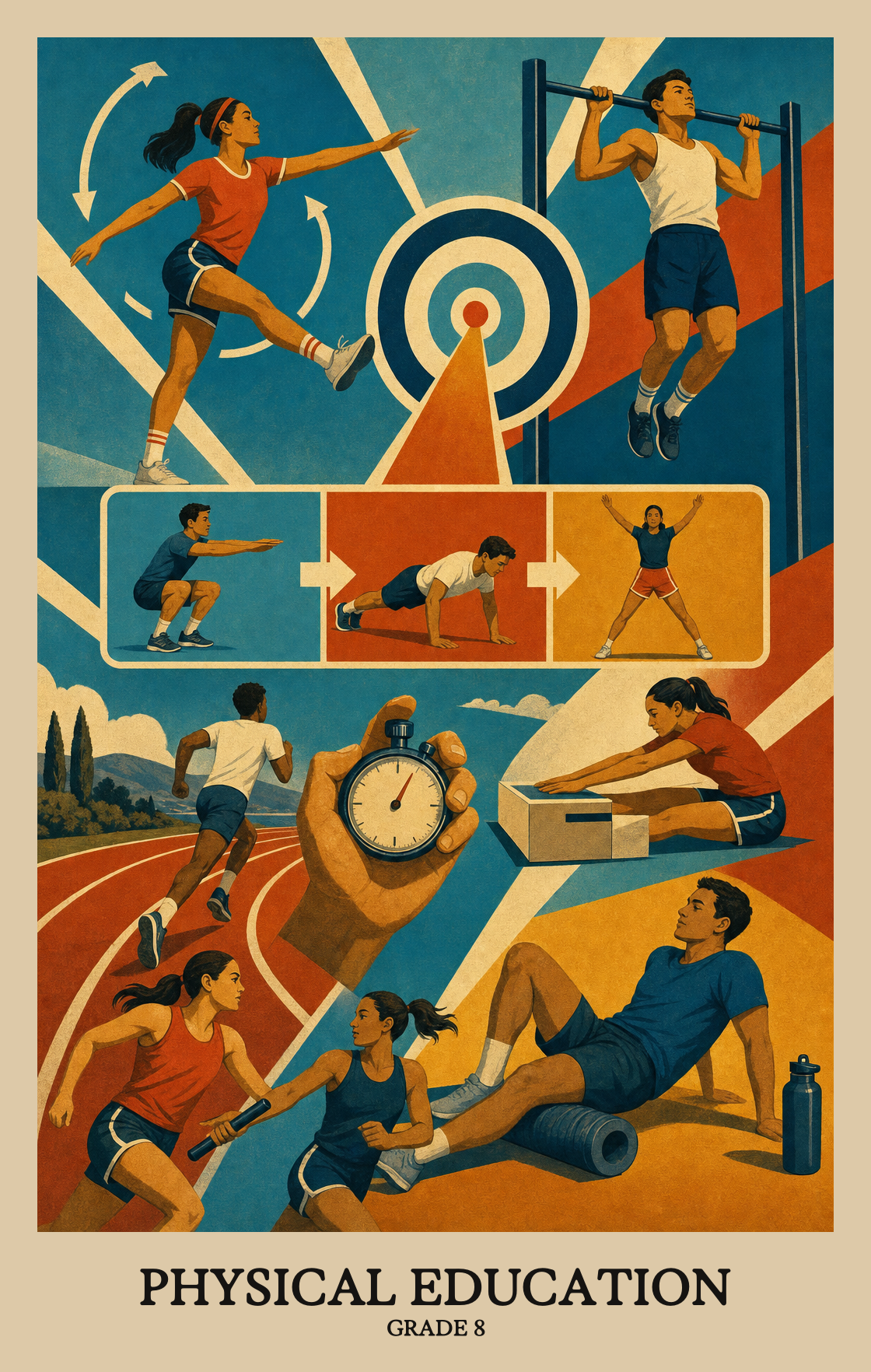
Students sharpen the basic moves behind sports and activities, like throwing, catching, dribbling, and footwork. Parents may notice steadier coordination and more confidence joining a pickup game.
Students learn how to read a game and make smart choices, like spacing out on the field, passing to an open teammate, or adjusting on defense. Expect more talk at home about plays and positions.
Students check their own fitness in areas like running, strength, and flexibility, then set goals and track progress. Parents may see a kid timing a mile, counting push-ups, or logging workouts.
Students learn why a warm-up matters, how the heart responds to exercise, and what builds strength versus stamina. They start to explain choices about food, water, sleep, and rest.
Students work on pushing through hard moments, supporting teammates, and handling wins and losses. Parents may notice a calmer reaction to tough practices and more interest in trying new activities.
Students practice the movements behind real activities like throwing, catching, and changing direction quickly. The goal is building enough body control to handle whatever sport or workout comes next.
Students explain how body position, speed, and timing affect performance in sports and physical activities. They apply those ideas to improve their own movement, not just describe them.
Students track their own fitness levels using tests or logs, then adjust their exercise habits to get stronger, faster, or healthier over time.
Students explain how principles like overload and progression apply to a real workout plan, then use that knowledge to set goals and adjust their training to improve fitness over time.
Students explain how mindset, motivation, and group dynamics affect how well they perform and improve in sports or exercise. They use that understanding to set goals and work better with teammates.
| Standard | Definition | Code |
|---|---|---|
| Moving your body in different activities | Students practice the movements behind real activities like throwing, catching, and changing direction quickly. The goal is building enough body control to handle whatever sport or workout comes next. | CA-PE.1.8 |
| How movement skills improve with practice | Students explain how body position, speed, and timing affect performance in sports and physical activities. They apply those ideas to improve their own movement, not just describe them. | CA-PE.2.8 |
| Tracking your own fitness to stay healthy | Students track their own fitness levels using tests or logs, then adjust their exercise habits to get stronger, faster, or healthier over time. | CA-PE.3.8 |
| How fitness habits improve health and performance | Students explain how principles like overload and progression apply to a real workout plan, then use that knowledge to set goals and adjust their training to improve fitness over time. | CA-PE.4.8 |
| Mindset and teamwork in physical activity | Students explain how mindset, motivation, and group dynamics affect how well they perform and improve in sports or exercise. They use that understanding to set goals and work better with teammates. | CA-PE.5.8 |
California's fitness assessment for grades 5, 7, and 9. Administration was paused in spring 2022 while the program is redesigned to drop body-composition components; districts continue to receive guidance but do not currently submit student-level results.
Students build skills in team sports, individual activities, and fitness. They learn how to move well, how to think through strategy during games, and how to plan their own workouts. By spring, students should be able to design a basic fitness routine and explain why it works.
Aim for about 60 minutes of movement most days. Walks, bike rides, pickup games, dancing, and yard work all count. Students this age care a lot about what their friends think, so finding one or two activities they enjoy with peers matters more than picking the right sport.
Students should understand the difference between strength, endurance, and flexibility, and know how to improve each one. They should be able to take their own pulse, set a fitness goal, and track progress over a few weeks. Tracking is the part most students need help with.
Most teachers rotate units every four to six weeks and weave fitness testing into the start, middle, and end of the year. Skill and strategy standards live inside sport units. Fitness knowledge and the social and mental side of activity work best as short lessons tied to whatever unit is running.
Eighth grade is the year a lot of students start opting out emotionally. Ask what part feels hard, the activity itself or being watched. Often a small change at home, like shooting hoops in the driveway or trying a class outside of school, rebuilds confidence faster than pushing through.
Pacing during endurance work, defensive positioning in team games, and reading a fitness plan are the three that come up every year. Students can often perform a skill in isolation but lose it during live play. Short, focused reteaching during warm-ups tends to stick better than full lessons.
Grades usually reflect participation, skill growth, fitness effort, and short written or verbal checks on concepts like heart rate zones or game strategy. Dressing out and trying hard matter, but so does showing that students understand why they are doing what they are doing.
Ready students can lead a warm-up, explain a fitness goal in their own words, apply basic strategy in a game without being told what to do, and work with peers they did not choose. The social standard is the one that most often signals readiness or a need for more practice.