Generating ideas and inspiration
Students start the year building a habit of collecting ideas from their own lives and the world around them. They keep sketchbooks, try out different approaches, and learn that artists plan before they make.
This is the year art becomes personal and intentional. Students develop their own ideas, draw on life experiences, and push pieces through real revision instead of stopping at a first draft. They study how art connects to history and culture, and they judge work using clear standards rather than gut reactions. By spring, students can plan a finished piece, explain the choices behind it, and prepare it for an audience.
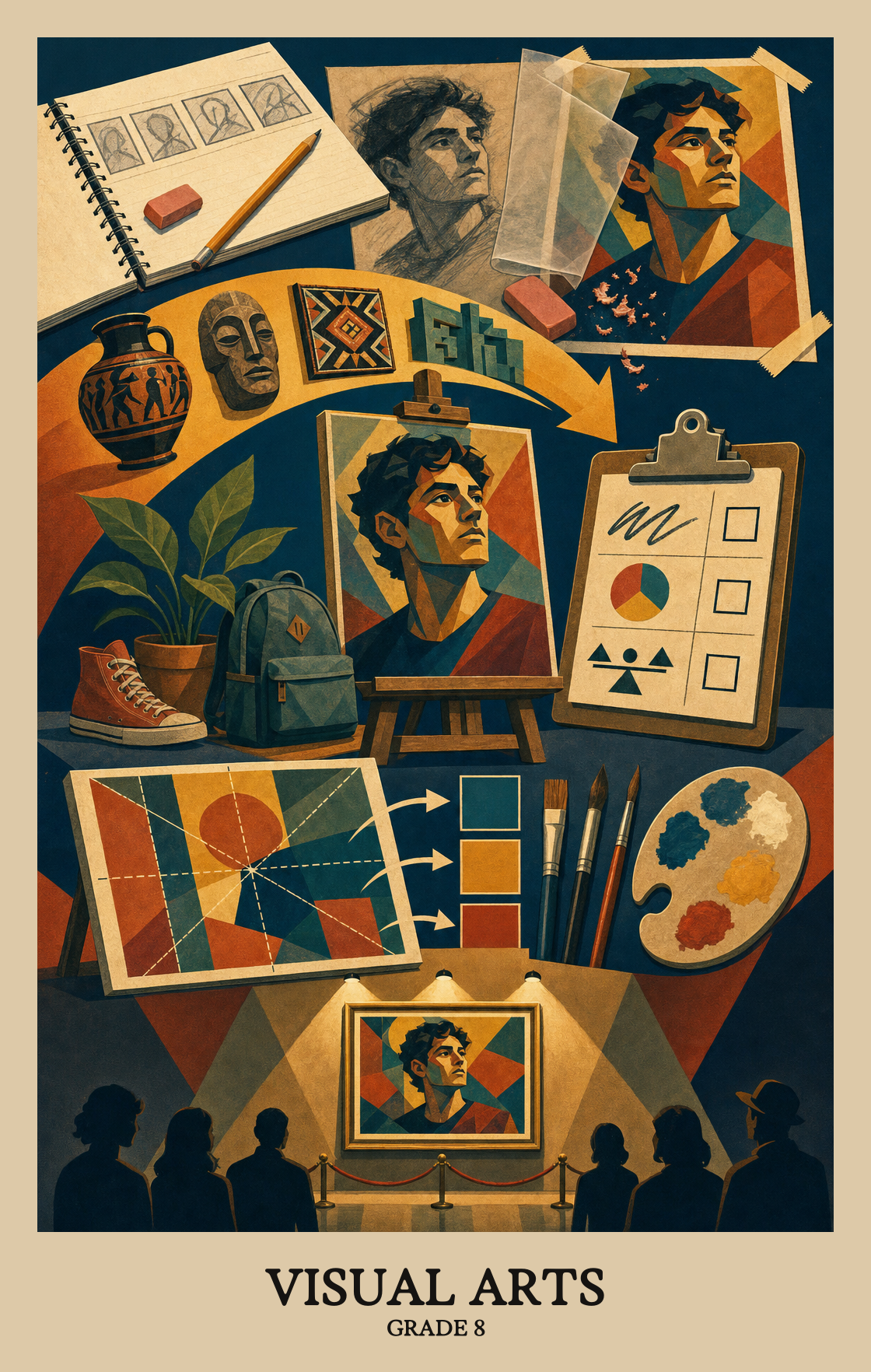
Students start the year building a habit of collecting ideas from their own lives and the world around them. They keep sketchbooks, try out different approaches, and learn that artists plan before they make.
Students practice the hands-on craft of making art. They work with materials like paint, clay, charcoal, or digital tools, and learn how to control the medium well enough to say what they mean.
Students look at art from different times and places and connect it to what was happening in those societies. They start to see how art carries ideas about identity, power, and community.
Students study finished pieces, including their own, and explain what an artist might be trying to say. They use clear reasons to judge whether a piece works and offer useful feedback to classmates.
Students revise pieces, choose which ones to show, and prepare them for an audience. By the end of the year, they can talk about why they made the choices they did and what the work means.
Students draw on things they already know and moments from their own lives to shape what they make in art class.
Students look at a piece of art and explain what was happening in the world when it was made. History, culture, and society shape what artists create, and understanding that context changes how the work reads.
| Standard | Definition | Code |
|---|---|---|
| Using life experience to make art | Students draw on things they already know and moments from their own lives to shape what they make in art class. | CA-VA:Cn10.8.8 |
| Art in its time and place | Students look at a piece of art and explain what was happening in the world when it was made. History, culture, and society shape what artists create, and understanding that context changes how the work reads. | CA-VA:Cn11.8.8 |
Students brainstorm original ideas for artwork and figure out how to make them real. This is the creative thinking that happens before any drawing, painting, or building begins.
Students refine a piece of visual art by making deliberate choices about composition, materials, and technique. They revise their work the way a writer edits a draft, adjusting what isn't working until the piece says what they intended.
Students revise a piece of artwork based on feedback or their own eye, then bring it to a finished state they can stand behind.
| Standard | Definition | Code |
|---|---|---|
| Coming up with ideas for original artwork | Students brainstorm original ideas for artwork and figure out how to make them real. This is the creative thinking that happens before any drawing, painting, or building begins. | CA-VA:Cr1.8.8 |
| Develop and organize your artistic ideas | Students refine a piece of visual art by making deliberate choices about composition, materials, and technique. They revise their work the way a writer edits a draft, adjusting what isn't working until the piece says what they intended. | CA-VA:Cr2.8.8 |
| Finish and refine your artwork | Students revise a piece of artwork based on feedback or their own eye, then bring it to a finished state they can stand behind. | CA-VA:Cr3.8.8 |
Students review their own artwork, decide which pieces are strong enough to share, and explain why those choices reflect their growth as artists.
Students revisit and improve a piece of artwork before presenting it, making deliberate choices about technique, materials, and finish.
Students choose how to display or share their artwork so viewers understand the idea behind it. The arrangement, setting, and context all shape what the work communicates.
| Standard | Definition | Code |
|---|---|---|
| Choosing art to show an audience | Students review their own artwork, decide which pieces are strong enough to share, and explain why those choices reflect their growth as artists. | CA-VA:Pr4.8.8 |
| Refining artwork for an audience | Students revisit and improve a piece of artwork before presenting it, making deliberate choices about technique, materials, and finish. | CA-VA:Pr5.8.8 |
| Sharing art that means something | Students choose how to display or share their artwork so viewers understand the idea behind it. The arrangement, setting, and context all shape what the work communicates. | CA-VA:Pr6.8.8 |
Students look closely at a piece of visual art and explain what they notice, from the choices the artist made to how those choices shape the overall effect of the work.
Students look closely at a piece of art and explain what the artist was trying to say, using specific details from the work to support their reading of it.
Students look at a piece of art and judge it using a set of agreed-on standards, explaining what works, what doesn't, and why. It's structured critique, not just opinion.
| Standard | Definition | Code |
|---|---|---|
| Reading art with a critical eye | Students look closely at a piece of visual art and explain what they notice, from the choices the artist made to how those choices shape the overall effect of the work. | CA-VA:Re7.8.8 |
| Reading meaning in an artwork | Students look closely at a piece of art and explain what the artist was trying to say, using specific details from the work to support their reading of it. | CA-VA:Re8.8.8 |
| Judging artwork using your own criteria | Students look at a piece of art and judge it using a set of agreed-on standards, explaining what works, what doesn't, and why. It's structured critique, not just opinion. | CA-VA:Re9.8.8 |
Students move from making single pieces to thinking like artists. They plan their ideas, build skills with tools like drawing, painting, sculpture, or digital media, and refine work before showing it. They also study how art connects to history, culture, and their own lives.
Keep a few basic supplies around and give students time to sketch without a grade attached. Visit a local museum or look at art online together and ask what they notice. Take their projects seriously, even the messy early drafts.
At this age students compare their work to others and often quit. Remind them that artists redraw and revise constantly. Praise the effort and the choices they made, not how realistic the result looks.
Start with idea generation and sketchbook habits, then build technical skills in two or three media before asking for finished pieces. Save bigger projects that involve revision and presentation for the second half of the year, once students have tools to draw on.
Revision is a core part of this year. Plan for at least two rounds of feedback on major projects, with time between to actually rework the piece. Students should be able to explain what they changed and why.
Yes, but not as memorization. Students look at art from different times and cultures to understand why artists made certain choices and how that connects to their own work. A short conversation about a piece you both see counts.
A strong project shows a clear idea, intentional choices in materials and composition, evidence of revision, and a short artist statement or reflection. Technical polish matters, but so does being able to talk about the work.
Students should be able to start a project from their own idea, stick with it through revision, and talk about what the work means. They should also be comfortable giving and receiving feedback in a critique.
Generating original ideas and pushing past the first draft are the two big ones. Many students also need help giving specific feedback in critiques instead of just saying a piece looks good. Build short routines for both early in the year.