Healthy habits at school
Students start the year learning the everyday routines that keep them well, like washing hands, covering coughs, and getting enough sleep. Parents may hear more about why these habits matter.
This is the year health lessons move from simple rules to small daily habits students can name and practice. Students learn what keeps a body healthy, like washing hands, eating real food, sleeping enough, and asking a trusted adult when something feels wrong. They start making small choices on their own and setting easy goals, such as drinking water or buckling a seatbelt. By spring, students can explain one healthy habit and one safe choice in their own words.
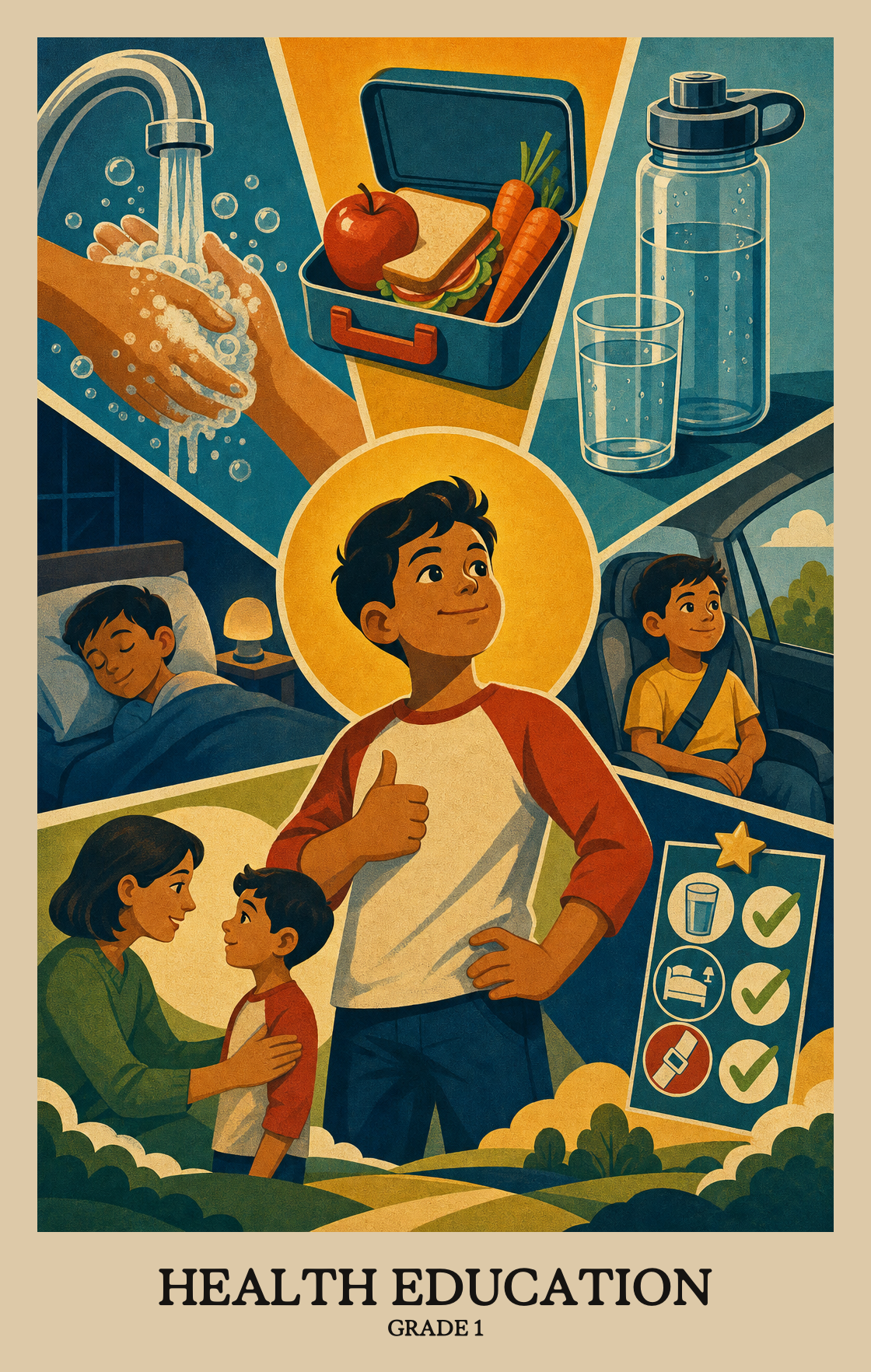
Students start the year learning the everyday routines that keep them well, like washing hands, covering coughs, and getting enough sleep. Parents may hear more about why these habits matter.
Students learn how to stay safe at home, at school, and on the playground. They practice spotting unsafe situations and knowing which adults to tell.
Students name common feelings and learn ways to calm down when upset. They practice kind words and how to ask for help from a friend or grown-up.
Students sort foods that fuel the body and talk about why playing outside matters. They begin setting small goals, like trying a new fruit or moving every day.
Students learn who helps keep people healthy, from doctors and dentists to family members. They practice simple decisions about medicine safety and asking questions.
Students learn basic facts about staying healthy, like why sleep, food, and movement matter. The goal is to understand how everyday choices affect how they feel.
Students learn to notice what shapes their health choices, like how they feel inside, what friends do, or what they see on TV. They start connecting those influences to real decisions about food, sleep, and staying active.
Students learn where to find trustworthy health information, like a doctor, a parent, or a school nurse, and how to tell the difference between sources they can trust and ones they can't.
Students practice asking for help, saying no, and talking through disagreements in ways that keep them safe and healthy. These are the conversation skills they'll use every day.
Students practice making simple choices that are good for their health, like deciding what to eat or what to do when they feel sick. They learn to think through a problem before acting.
Students practice setting small, reachable health goals, like drinking more water or getting to bed on time, and make a simple plan to follow through.
Students learn simple habits that keep them safe and healthy, like washing hands, getting enough sleep, or wearing a helmet. The focus is on turning those habits into something students actually do, not just know about.
Students learn to make healthy choices for themselves and talk about health habits with family and people around them.
| Standard | Definition | Code |
|---|---|---|
| Health habits that help you feel good | Students learn basic facts about staying healthy, like why sleep, food, and movement matter. The goal is to understand how everyday choices affect how they feel. | CA-HE.1.1 |
| What shapes how we feel and act | Students learn to notice what shapes their health choices, like how they feel inside, what friends do, or what they see on TV. They start connecting those influences to real decisions about food, sleep, and staying active. | CA-HE.2.1 |
| Finding trusted health information | Students learn where to find trustworthy health information, like a doctor, a parent, or a school nurse, and how to tell the difference between sources they can trust and ones they can't. | CA-HE.3.1 |
| Talking with others about health | Students practice asking for help, saying no, and talking through disagreements in ways that keep them safe and healthy. These are the conversation skills they'll use every day. | CA-HE.4.1 |
| Choosing what's good for your health | Students practice making simple choices that are good for their health, like deciding what to eat or what to do when they feel sick. They learn to think through a problem before acting. | CA-HE.5.1 |
| Setting health goals | Students practice setting small, reachable health goals, like drinking more water or getting to bed on time, and make a simple plan to follow through. | CA-HE.6.1 |
| Habits that keep you healthy and safe | Students learn simple habits that keep them safe and healthy, like washing hands, getting enough sleep, or wearing a helmet. The focus is on turning those habits into something students actually do, not just know about. | CA-HE.7.1 |
| Helping yourself, your family, and your community stay | Students learn to make healthy choices for themselves and talk about health habits with family and people around them. | CA-HE.8.1 |
Students learn the basics of taking care of their bodies and getting along with others. That includes washing hands, eating a mix of foods, sleeping enough, crossing the street safely, and knowing which adults to ask for help. A lot of it is naming feelings and practicing kind words with friends.
Talk through small choices out loud. At breakfast, ask which food will help them feel good until lunch. At bedtime, ask what made them feel happy or upset that day. These short chats build the same thinking that shows up in class.
By spring, students should name healthy habits like brushing teeth and washing hands, ask a trusted adult for help, use words instead of hitting when upset, and make simple safe choices at home and at school.
Give them the words first. Say things like "you look frustrated" or "that sounded exciting" so they hear feelings named in normal talk. Reading picture books about friendship and then asking how a character felt is an easy way in without putting them on the spot.
Start with personal habits like handwashing, sleep, and food, since those routines anchor everything else. Move into feelings and friendship skills in the middle of the year, then close with safety topics like streets, strangers, and asking for help. Loop back to handwashing and kindness often.
Asking a trusted adult for help is the one students forget under stress. Naming feelings beyond happy, sad, and mad also takes repeat practice. Build both into morning meetings and quick check-ins all year, not just during a health unit.
Not really. The goal is habits and choices, not facts on a test. Students should be able to name a few trusted adults, a few healthy foods, and a few safety rules, but in their own words.
Watch for students who can describe a healthy choice and say why it matters, ask for help without prompting, and use words to work through a small conflict with a friend. If most students do those things without coaching, they are ready.