Looking closely at art
Students slow down and notice what is in a picture. They talk about what they see, what it might mean, and how it makes them feel.
This is the year art moves from making marks to making choices. Students try out different materials and tools, then pick which piece to show and explain what it means to them. They also start looking carefully at art made by other people and share what they notice. By spring, students can make a drawing or painting on purpose, tell the story behind it, and say one thing they like about a classmate's work.
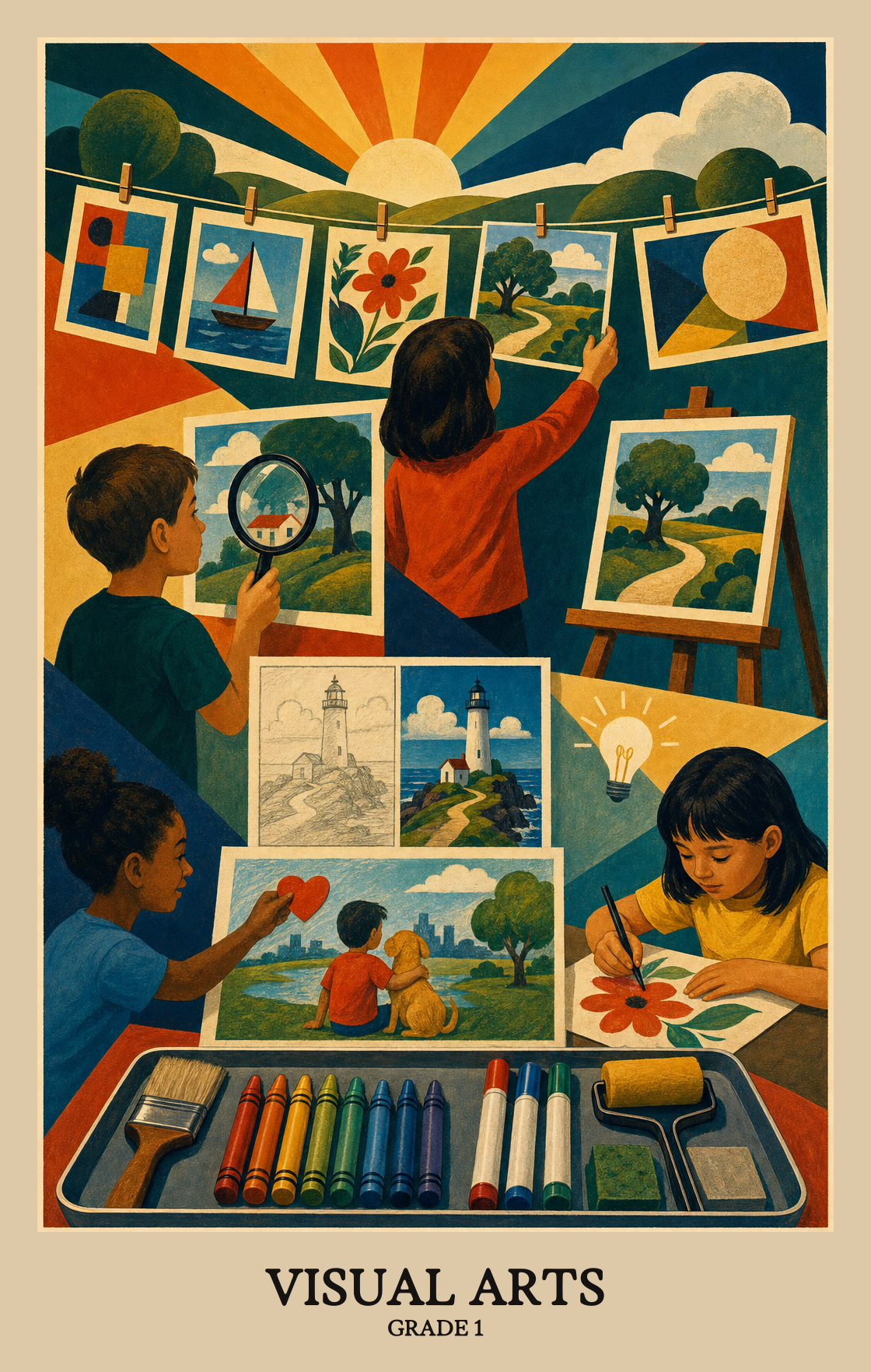
Students slow down and notice what is in a picture. They talk about what they see, what it might mean, and how it makes them feel.
Students experiment with crayons, paint, paper, and clay. They learn how to hold tools, mix colors, and try ideas without worrying about getting it perfect.
Students turn their own experiences into pictures and sculptures. A family trip, a pet, or a favorite story can all become art.
Students look at art made by people in different cultures and time periods. They start to notice why someone might have made a piece and what it shows about life back then.
Students pick a piece they are proud of, decide how to display it, and talk about what they want others to see. They also give kind, useful feedback on classmates' work.
Students connect something from their own life, a memory, a place, a feeling, to make a drawing or artwork. The idea comes from them.
Students look at a painting or sculpture and talk about where it came from, who made it, and what was happening in the world at the time. That context helps the artwork make more sense.
| Standard | Definition | Code |
|---|---|---|
| Making art from your own life | Students connect something from their own life, a memory, a place, a feeling, to make a drawing or artwork. The idea comes from them. | CA-VA:Cn10.1.1 |
| Art and the world around us | Students look at a painting or sculpture and talk about where it came from, who made it, and what was happening in the world at the time. That context helps the artwork make more sense. | CA-VA:Cn11.1.1 |
Students come up with ideas for their own drawings, paintings, or projects. They decide what to make and why before they start.
Students pick a subject, plan how to show it, and make choices about color, shape, or line to bring their idea to life in an artwork.
Students revisit a drawing or artwork they started, make changes to improve it, and decide when it feels finished.
| Standard | Definition | Code |
|---|---|---|
| Coming up with ideas for art | Students come up with ideas for their own drawings, paintings, or projects. They decide what to make and why before they start. | CA-VA:Cr1.1.1 |
| Making art from your own ideas | Students pick a subject, plan how to show it, and make choices about color, shape, or line to bring their idea to life in an artwork. | CA-VA:Cr2.1.1 |
| Finish and improve your artwork | Students revisit a drawing or artwork they started, make changes to improve it, and decide when it feels finished. | CA-VA:Cr3.1.1 |
Students choose which of their drawings or artworks to share with others and can explain why they picked it.
Students practice drawing, painting, or building until their artwork looks the way they want it to before sharing it with others.
Students choose and share artwork that tells a story or shows a feeling. The way they display it is part of the message.
| Standard | Definition | Code |
|---|---|---|
| Choosing art to share with others | Students choose which of their drawings or artworks to share with others and can explain why they picked it. | CA-VA:Pr4.1.1 |
| Finishing artwork to share with others | Students practice drawing, painting, or building until their artwork looks the way they want it to before sharing it with others. | CA-VA:Pr5.1.1 |
| Sharing art and explaining what it means | Students choose and share artwork that tells a story or shows a feeling. The way they display it is part of the message. | CA-VA:Pr6.1.1 |
Students look closely at a piece of art and describe what they see: the colors, shapes, and how the parts fit together.
Students look at a piece of art and talk about what they think the artist was trying to say or show. They explain why the artwork makes them feel or think something specific.
Students look at their own drawing or a classmate's and decide what works well and what could be stronger, using simple rules like "Does it show the idea clearly?"
| Standard | Definition | Code |
|---|---|---|
| Looking closely at art | Students look closely at a piece of art and describe what they see: the colors, shapes, and how the parts fit together. | CA-VA:Re7.1.1 |
| What art means and why artists make it | Students look at a piece of art and talk about what they think the artist was trying to say or show. They explain why the artwork makes them feel or think something specific. | CA-VA:Re8.1.1 |
| Deciding what makes art good | Students look at their own drawing or a classmate's and decide what works well and what could be stronger, using simple rules like "Does it show the idea clearly?" | CA-VA:Re9.1.1 |
Students make their own art, talk about what they see in other people's art, and learn to share their work with others. They try drawing, painting, cutting, and building with simple materials. The focus is on having ideas and following them through to a finished piece.
Keep paper, crayons, scissors, and glue somewhere students can reach without asking. Ask open questions about their pictures, like what is happening or who the person is. Avoid fixing their work or drawing for them.
At this age, finished pictures matter less than the habit of trying. Praise specific choices, like the colors they picked or the story they told, instead of saying the picture looks good. Let them see adults draw badly and keep going.
Start with short making projects that build comfort with basic tools and materials. Add looking and talking activities once routines are steady, then move into projects where students plan, revise, and present a finished piece. Save group critique and gallery-style sharing for the second half of the year.
Students should come up with their own idea for a picture or object, stick with it long enough to finish, and talk about what they made and why. They should also be able to look at another piece of art and say something specific about it.
Planning before making is the hardest part. Most first graders want to start right away and stop as soon as the page has something on it. Build in a quick sketch or talk-it-through step before students get their main materials.
Students look at art from different places and times and connect it to their own lives, but they are not memorizing names or dates. Picture books, museum visits, and family photos all count as ways to build this background at home.
Have a short routine for adding detail, like asking what else is happening in the picture or what the background looks like. Keep a small menu of follow-up prompts posted so students know what to try next without waiting for direction.