Healthy habits at school
Students learn the basics of taking care of their bodies. That means washing hands the right way, covering coughs, and knowing why sleep and breakfast matter before a school day.
This is the year health starts as simple daily habits students can name and practice on their own. Students learn why we wash hands, brush teeth, eat a range of foods, and ask a trusted adult when something hurts or feels wrong. Lessons cover safety at home and school, kind ways to talk to friends, and basic choices that keep a body well. By spring, students can describe one healthy habit they do each day and who to go to for help.
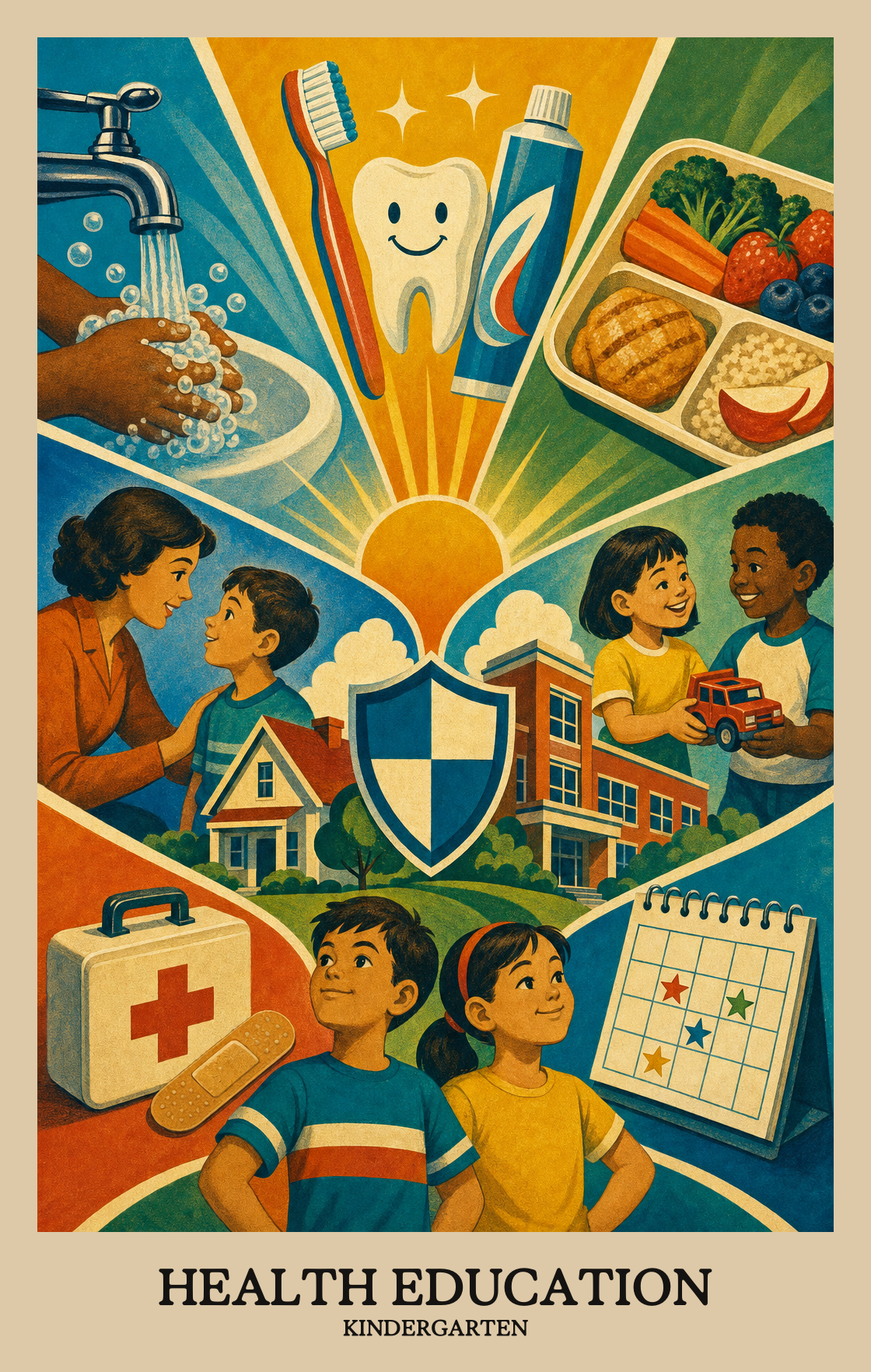
Students learn the basics of taking care of their bodies. That means washing hands the right way, covering coughs, and knowing why sleep and breakfast matter before a school day.
Students practice safety rules at home, on the playground, and near streets. They learn what to do if they feel unsafe and which grown-ups they can ask for help.
Students put words to feelings like happy, sad, worried, and angry. They practice kind ways to talk with classmates and what to say when a friendship gets bumpy.
Students sort everyday foods and notice how their bodies feel after running, resting, or eating. They start setting small goals, like trying a new vegetable or playing outside more.
Students learn basic facts about staying healthy, like why sleep, food, and handwashing matter. These ideas give them a foundation for making simple healthy choices as they grow.
Students learn to notice what shapes their health choices, like how they feel inside or what family members and friends do around them.
Students learn where to find trustworthy health information, like asking a parent, a doctor, or a school nurse. They practice telling the difference between helpful sources and ones that might not be right.
Students practice simple ways to talk and listen with others, like asking for help when something hurts or saying no when something feels wrong. Good communication keeps them safer and healthier.
Students practice making simple choices that are good for their body and feelings, like deciding to wash their hands or ask for help when something feels wrong.
Students practice setting a small, reachable health goal, like drinking more water or getting enough sleep, and think about the steps it takes to follow through.
Students learn simple habits that keep them safe and healthy, like washing hands, getting enough sleep, and knowing when to ask a grown-up for help.
Students practice simple habits that keep themselves and their family healthy, like washing hands, getting enough sleep, and telling a trusted adult when something feels wrong.
| Standard | Definition | Code |
|---|---|---|
| How to stay healthy | Students learn basic facts about staying healthy, like why sleep, food, and handwashing matter. These ideas give them a foundation for making simple healthy choices as they grow. | CA-HE.1.k |
| What shapes how we feel and act | Students learn to notice what shapes their health choices, like how they feel inside or what family members and friends do around them. | CA-HE.2.k |
| Finding help when you feel sick | Students learn where to find trustworthy health information, like asking a parent, a doctor, or a school nurse. They practice telling the difference between helpful sources and ones that might not be right. | CA-HE.3.k |
| Talking about health with others | Students practice simple ways to talk and listen with others, like asking for help when something hurts or saying no when something feels wrong. Good communication keeps them safer and healthier. | CA-HE.4.k |
| Making healthy choices | Students practice making simple choices that are good for their body and feelings, like deciding to wash their hands or ask for help when something feels wrong. | CA-HE.5.k |
| Setting a health goal | Students practice setting a small, reachable health goal, like drinking more water or getting enough sleep, and think about the steps it takes to follow through. | CA-HE.6.k |
| Habits that keep you healthy and safe | Students learn simple habits that keep them safe and healthy, like washing hands, getting enough sleep, and knowing when to ask a grown-up for help. | CA-HE.7.k |
| Keeping yourself and your community healthy | Students practice simple habits that keep themselves and their family healthy, like washing hands, getting enough sleep, and telling a trusted adult when something feels wrong. | CA-HE.8.k |
Students learn the basics of taking care of their bodies and feelings. That includes washing hands, eating a mix of foods, sleeping enough, crossing the street safely, and naming feelings like happy, sad, or scared. Most of it comes up through short conversations, songs, and stories.
Build small routines and talk about why they matter. Wash hands before meals, brush teeth twice a day, pick a bedtime and stick to it, and let students help choose fruits or vegetables at the store. Five minutes of naming feelings at dinner counts too.
Students should know their full name, a parent's name, and how to ask a trusted adult for help. They practice basics like buckling a seatbelt, wearing a helmet, looking both ways, and what to do if a stranger talks to them.
Start with personal care and hygiene in the fall, since these tie to classroom routines. Move into nutrition and physical activity, then safety at home and school, and finish with feelings, friendships, and asking for help. Revisit handwashing and feelings all year.
Students should name basic feelings, use words instead of hitting when upset, take turns, and tell an adult when something feels wrong. At home, label feelings out loud when reading stories or watching shows so students hear the words in context.
Handwashing technique, covering coughs, and using words to solve conflicts come back every month. Decision-making is also new at this age, so model out loud how to choose between two options and why one is the safer or healthier pick.
No memorizing is needed. Students should recognize that some foods help bodies grow strong and some are sometimes foods, and that water, sleep, and moving around all help. Cooking together or sorting groceries does more than a worksheet.
By spring, students should wash hands without prompting, name a few healthy habits, identify trusted adults, name common feelings, and make a simple safe choice when given two options. Watch for these in everyday routines rather than a single test.