Moving safely together
Students learn how to share the gym and the playground without bumping into each other. They practice listening for the whistle, finding their own space, and stopping when asked.
This is the year bodies learn the basic moves that everything else gets built on. Students practice running, jumping, hopping, skipping, throwing, and catching, and they start to notice how their heart beats faster when they move. They also learn how to share space safely, take turns, and follow simple game directions. By spring, students can move through a playground course using different skills without bumping into classmates.
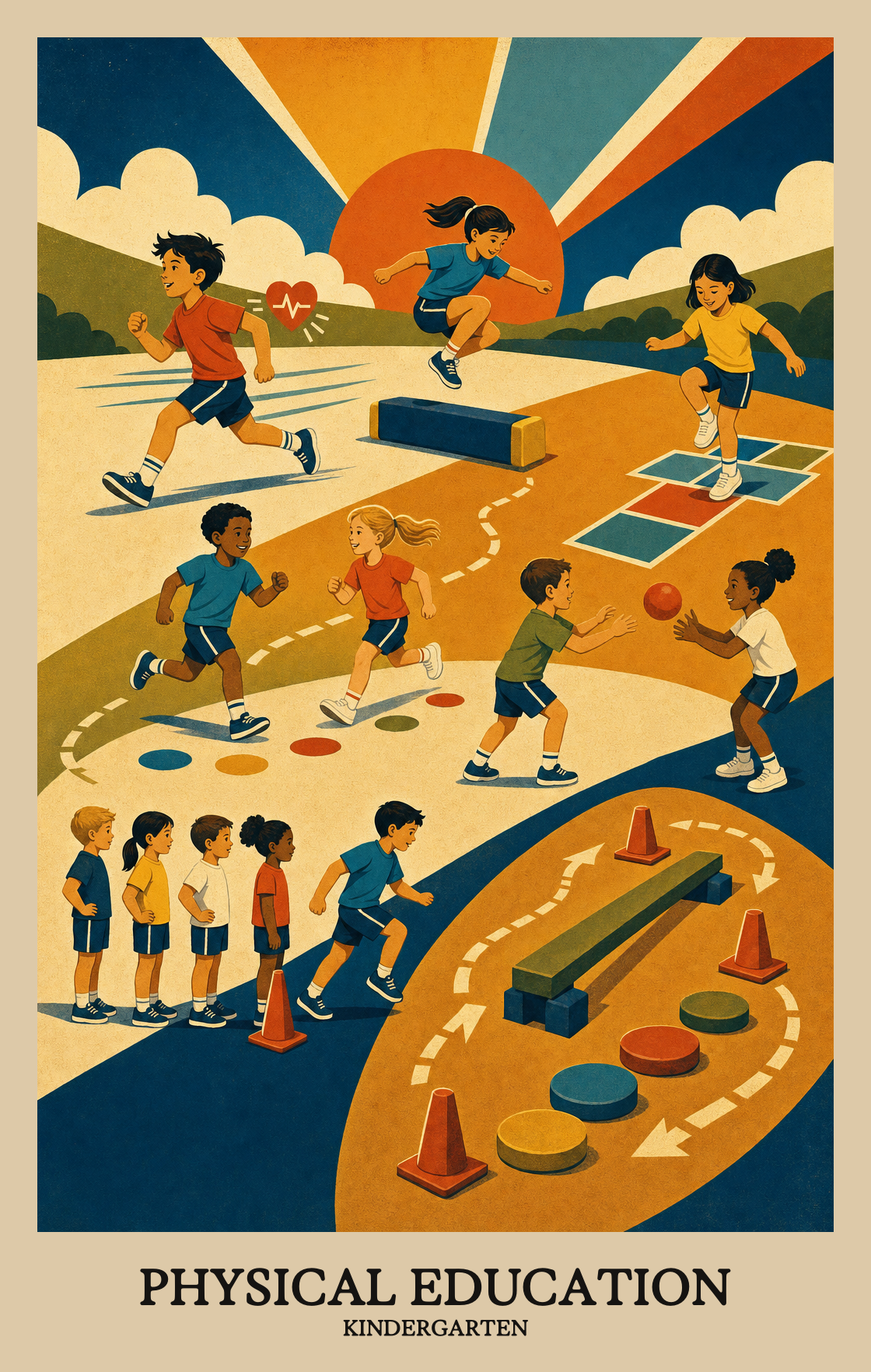
Students learn how to share the gym and the playground without bumping into each other. They practice listening for the whistle, finding their own space, and stopping when asked.
Students try out the building blocks of movement: walking, running, hopping, skipping, and jumping. They notice what their arms and legs do and start to control how fast or slow they go.
Students roll, toss, catch, and kick balls of different sizes. They figure out where to put their hands and feet to make the ball go where they want.
Students do short bursts of active play that get their heart beating and their muscles working. They learn that being tired and sweaty after running around is a good sign.
Students join simple group games and take turns. They practice cheering for classmates, following the rules, and trying again after a miss.
Students practice the basic moves that show up in every game and sport: running, jumping, stopping, and changing direction. The goal is to get comfortable controlling their bodies before more complex activities begin.
Students learn basic ideas about how the body moves, like how to balance, change speed, or control direction. These concepts help students practice physical activities with more awareness and control.
Students learn to notice how their body feels during movement and practice simple habits, like staying active and resting when tired, that keep them healthy and ready to play.
Students learn basic ideas about why moving and exercising helps their body feel strong and healthy. They practice simple ways to get more fit, like moving faster or longer.
Students learn how to stay focused, take turns, and keep trying when something is hard. Those habits help them do better in games and movement activities.
| Standard | Definition | Code |
|---|---|---|
| Moving your body in different ways | Students practice the basic moves that show up in every game and sport: running, jumping, stopping, and changing direction. The goal is to get comfortable controlling their bodies before more complex activities begin. | CA-PE.1.k |
| How your body moves | Students learn basic ideas about how the body moves, like how to balance, change speed, or control direction. These concepts help students practice physical activities with more awareness and control. | CA-PE.2.k |
| Staying active and fit | Students learn to notice how their body feels during movement and practice simple habits, like staying active and resting when tired, that keep them healthy and ready to play. | CA-PE.3.k |
| How to stay healthy and active | Students learn basic ideas about why moving and exercising helps their body feel strong and healthy. They practice simple ways to get more fit, like moving faster or longer. | CA-PE.4.k |
| Feelings and teamwork in gym class | Students learn how to stay focused, take turns, and keep trying when something is hard. Those habits help them do better in games and movement activities. | CA-PE.5.k |
California's fitness assessment for grades 5, 7, and 9. Administration was paused in spring 2022 while the program is redesigned to drop body-composition components; districts continue to receive guidance but do not currently submit student-level results.
Students practice the basics of moving their bodies: running, skipping, hopping, jumping, throwing, catching, and kicking. They also learn how to share space safely with other students and follow simple game rules. Most lessons are short games and movement activities, not formal sports.
Aim for 30 to 60 minutes of active play most days. Playing catch, riding a tricycle, dancing in the living room, or walking to the park all count. The goal is plenty of practice moving in different ways, not drills.
Students should be able to run without bumping into others, hop on one foot, jump with both feet, toss and catch a large ball, and kick a ball that is sitting still. They should also know how to start and stop on a signal.
Start with body awareness and safe movement in shared space, then layer in locomotor skills like running, hopping, and skipping. Add object skills such as rolling, tossing, and catching once students can control their bodies. Save kicking and striking for later in the year when balance is stronger.
Catching is still developing at this age. Most students can trap a large, soft ball against their chest by spring, but catching with just their hands takes longer. Practice with a beach ball or rolled-up sock before moving to a real ball.
Skipping, galloping, and catching tend to lag behind running and jumping. Personal space is also a constant reteach, since students naturally drift toward friends. Plan short refreshers on these throughout the year rather than teaching them once.
Fitness is taught through play, not workouts. Students learn what it feels like when their heart beats faster, when they get out of breath, and when their muscles feel tired. Tag games, animal walks, and obstacle courses do most of the work.
Students learn to take turns, share equipment, follow directions quickly, and play near classmates without getting upset. These habits matter as much as the physical skills and often take the longest to build. Praise effort and good sharing, not just winning.
Students should move safely in a group, follow a two-step direction during a game, and show steady control of basic locomotor skills. They should also be able to identify when their body feels tired or warm. Skill polish comes next year.