Pretend play and imagination
Students step into make-believe with simple props and costumes. They try out characters, voices, and movements based on stories they know and moments from their own lives.
This is the year students learn that pretending is a craft. Students make up characters, act out short scenes, and use their voices and bodies to show how someone feels. They also watch classmates perform and talk about what they noticed. By spring, students can step into a role, act out a simple story with a beginning and an end, and share what they liked about a friend's scene.
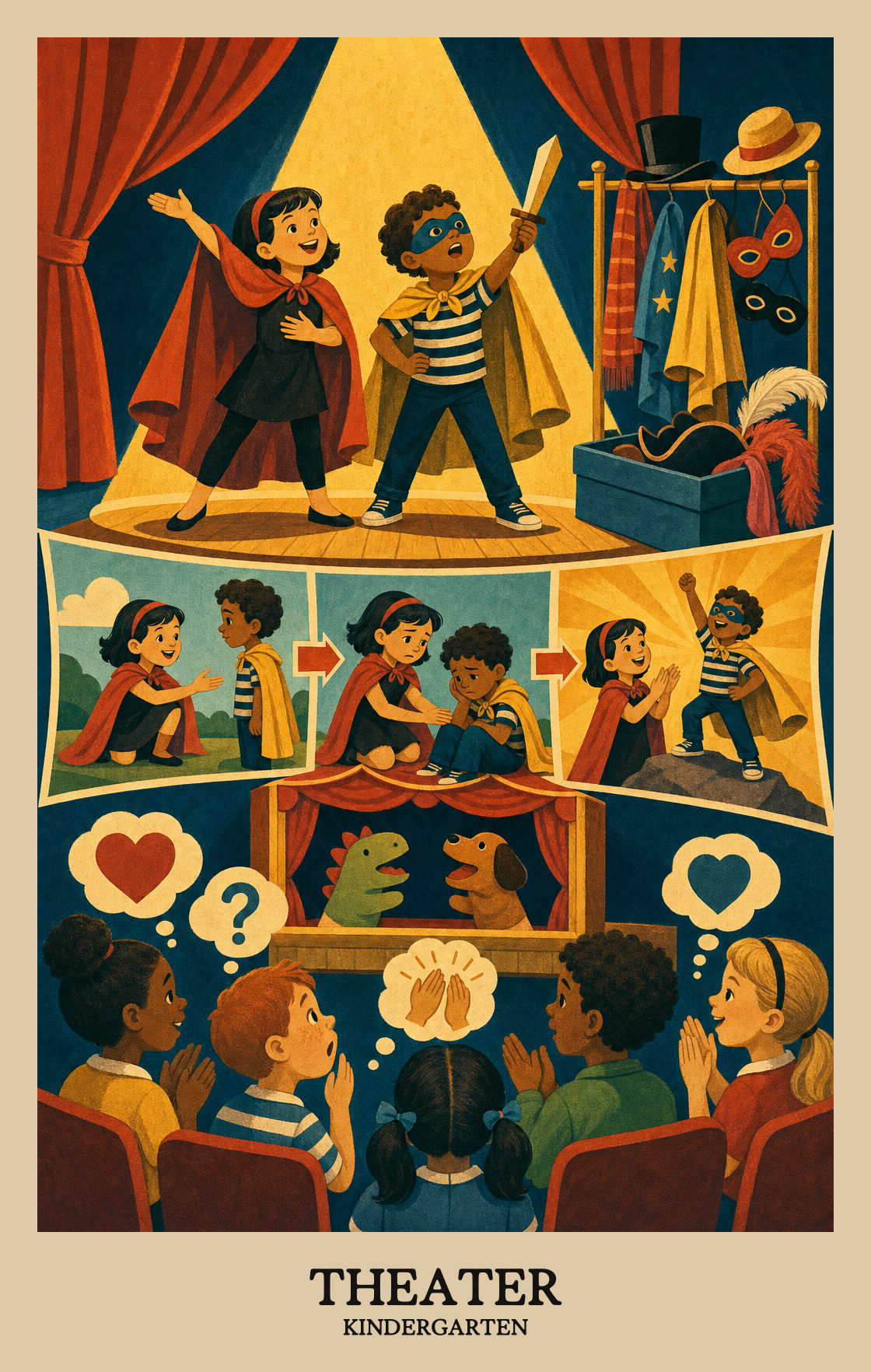
Students step into make-believe with simple props and costumes. They try out characters, voices, and movements based on stories they know and moments from their own lives.
Students start shaping short scenes with a beginning, middle, and end. They take turns adding ideas and listen to classmates to grow a story as a group.
Students rehearse short performances and learn small tricks of the stage, like facing forward and speaking so everyone can hear. They get more comfortable showing work to classmates.
Students watch performances and picture books come to life, then share what they noticed. They talk about how a character felt and what made a scene funny, sad, or surprising.
Students draw on things they know and moments they remember to make choices in a scene or story. Acting is a way to share real feelings and experiences.
Students connect stories, characters, and performances to real life by talking about where a play comes from or what it means to different people and communities.
| Standard | Definition | Code |
|---|---|---|
| Using personal stories in theater play | Students draw on things they know and moments they remember to make choices in a scene or story. Acting is a way to share real feelings and experiences. | CA-TH:Cn10.k.K |
| Stories and art from around the world | Students connect stories, characters, and performances to real life by talking about where a play comes from or what it means to different people and communities. | CA-TH:Cn11.k.K |
Students come up with ideas for pretend play and simple stories, then try them out through movement, voice, or character.
Students take a simple idea for a play or story and decide who the characters are and what happens. They put those pieces together so the story makes sense.
Students practice and adjust their drama work until it feels ready to share. They try it again, make small changes, and decide when it's done.
| Standard | Definition | Code |
|---|---|---|
| Coming up with ideas for a play | Students come up with ideas for pretend play and simple stories, then try them out through movement, voice, or character. | CA-TH:Cr1.k.K |
| Turning ideas into a short play | Students take a simple idea for a play or story and decide who the characters are and what happens. They put those pieces together so the story makes sense. | CA-TH:Cr2.k.K |
| Finish a piece of theater work | Students practice and adjust their drama work until it feels ready to share. They try it again, make small changes, and decide when it's done. | CA-TH:Cr3.k.K |
Students pick a character or short scene to act out and explain why they chose it.
Students practice a song, scene, or movement until they feel ready to share it with others.
Students perform a short scene or character and make choices, like how loud to speak or how to move, that help the audience understand the story.
| Standard | Definition | Code |
|---|---|---|
| Picking a performance to share | Students pick a character or short scene to act out and explain why they chose it. | CA-TH:Pr4.k.K |
| Practicing a skill before performing it | Students practice a song, scene, or movement until they feel ready to share it with others. | CA-TH:Pr5.k.K |
| Share a story through performance | Students perform a short scene or character and make choices, like how loud to speak or how to move, that help the audience understand the story. | CA-TH:Pr6.k.K |
Students look at a short performance or puppet show and say what they notice, like who was in it and what happened.
Students look at a short play or puppet show and say what they think the performers were trying to show, using words like happy, scared, or trying to be funny.
Students look at a classmate's performance and say what they liked and why. They start learning that opinions about theater can be backed up with a reason.
| Standard | Definition | Code |
|---|---|---|
| What happens in a story or play | Students look at a short performance or puppet show and say what they notice, like who was in it and what happened. | CA-TH:Re7.k.K |
| What art means to you | Students look at a short play or puppet show and say what they think the performers were trying to show, using words like happy, scared, or trying to be funny. | CA-TH:Re8.k.K |
| Deciding what makes a performance good | Students look at a classmate's performance and say what they liked and why. They start learning that opinions about theater can be backed up with a reason. | CA-TH:Re9.k.K |
Most of the work is dramatic play. Students pretend to be characters, act out short stories, and use their voice and body to show feelings. There is very little memorizing of lines and almost no formal performance.
Act out favorite picture books together. Take turns being different characters, try silly and serious voices, and ask what the character is feeling. Five minutes of pretend play after a story counts.
Not really. Small group sharing and acting out stories with classmates is plenty. Shy students can start by playing a character with a partner before sharing with the whole class.
Start with imagination and pretend play in the fall, then add character voice and body work in the winter. By spring, students can act out short familiar stories in small groups and talk about what they noticed in each other's work.
Staying in character and watching as an audience are the two hardest. Students need repeated practice listening to a classmate's choices and then giving simple, kind feedback before they can do it on their own.
Acting out stories supports reading comprehension, and naming a character's feelings supports social skills. A short drama activity also gives students another way to show what they learned in a science or social studies lesson.
By the end of the year, students can take on a simple character, use voice and body to show a feeling, and share a short scene with a partner or small group. They can also say one thing they liked about a classmate's acting.