Exploring sound and voice
Students start the year by listening closely to music and trying out their singing voices. They notice loud and soft, fast and slow, and begin to copy simple rhythms with their hands.
This is the year music becomes something students make, not just hear. Students sing simple songs, clap steady beats, and try out loud and soft, fast and slow. They start to notice how a song makes them feel and connect it to things they already know. By spring, students can keep a beat with a group and share a short song or rhythm they helped create.
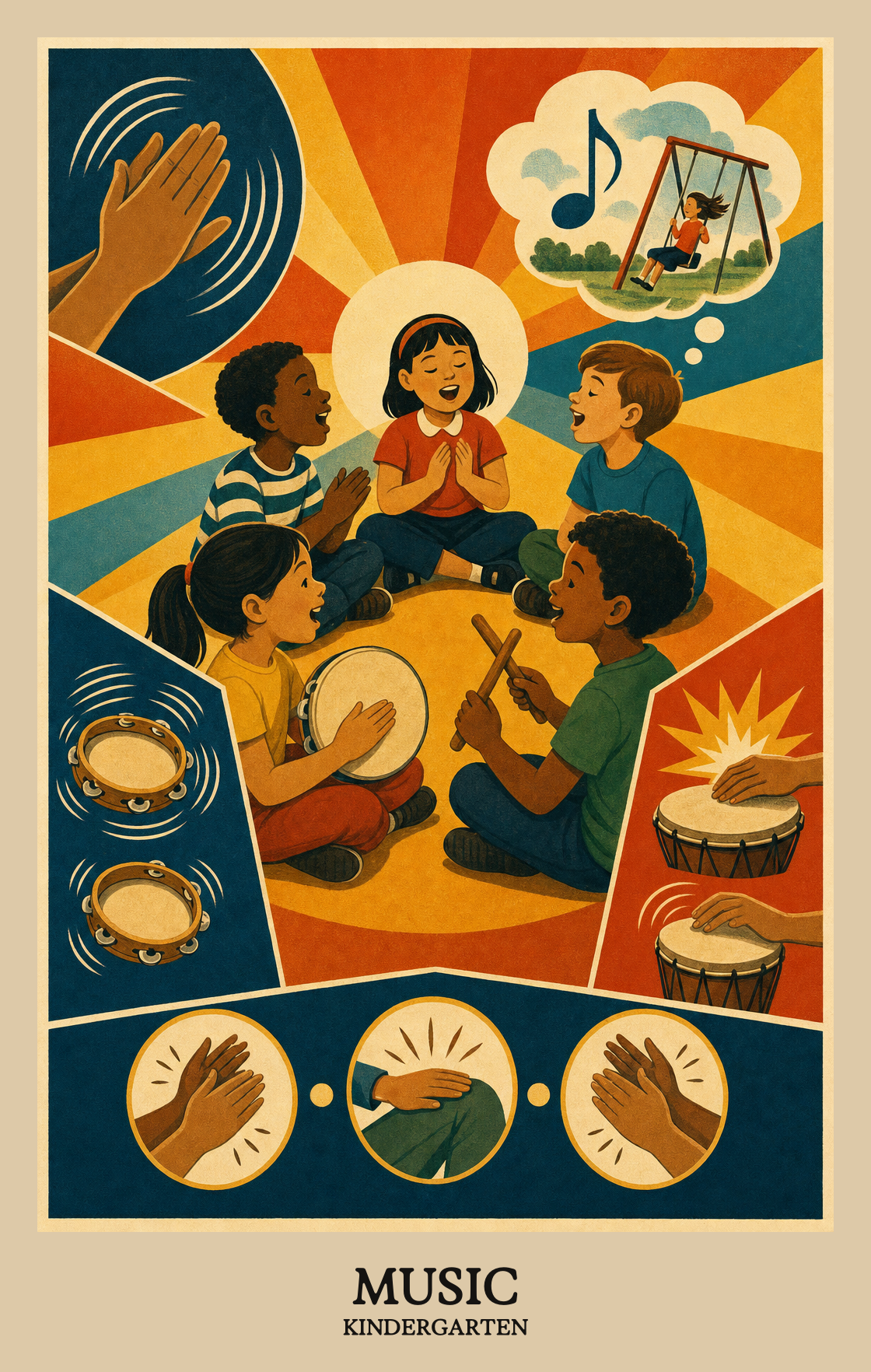
Students start the year by listening closely to music and trying out their singing voices. They notice loud and soft, fast and slow, and begin to copy simple rhythms with their hands.
Students invent short tunes and rhythms of their own. They tap, clap, and sing little ideas, then pick the parts they like best and try them again.
Students practice a song or rhythm and share it with the class. They learn to start together, stay with the group, and show what the music is about.
Students listen to different kinds of music and talk about what they hear and feel. They begin to say what they like about a piece and connect songs to their own family and traditions.
Students connect a song or musical activity to something they already know or have felt. A familiar experience, like a rainy day or a birthday, becomes a bridge into making music.
Songs, dances, and instruments come from real places and times. Students begin to notice that music tells us something about the people and communities who made it.
| Standard | Definition | Code |
|---|---|---|
| Making music from what you know | Students connect a song or musical activity to something they already know or have felt. A familiar experience, like a rainy day or a birthday, becomes a bridge into making music. | CA-MU:Cn10.k.K |
| Music from different times and places | Songs, dances, and instruments come from real places and times. Students begin to notice that music tells us something about the people and communities who made it. | CA-MU:Cn11.k.K |
Students come up with their own musical ideas, like making up a short song or clapping a beat they invented.
Students choose sounds, songs, or movements and put them together to make a short piece of music their own way.
Students listen back to a short song or rhythm they made and decide if they want to change anything before calling it done.
| Standard | Definition | Code |
|---|---|---|
| Imagine and create musical ideas | Students come up with their own musical ideas, like making up a short song or clapping a beat they invented. | CA-MU:Cr1.k.K |
| Putting a song idea together | Students choose sounds, songs, or movements and put them together to make a short piece of music their own way. | CA-MU:Cr2.k.K |
| Finish a song you made | Students listen back to a short song or rhythm they made and decide if they want to change anything before calling it done. | CA-MU:Cr3.k.K |
Students pick a song or musical piece to perform and start learning how to prepare it for an audience.
Students practice a song or rhythm until it sounds the way they want it to, then perform it for others.
Students share a song or rhythm with an audience and mean something by it. A performance isn't just making sound; it's saying something with the music.
| Standard | Definition | Code |
|---|---|---|
| Picking songs to sing and share | Students pick a song or musical piece to perform and start learning how to prepare it for an audience. | CA-MU:Pr4.k.K |
| Practicing a song before performing it | Students practice a song or rhythm until it sounds the way they want it to, then perform it for others. | CA-MU:Pr5.k.K |
| Perform a song and mean it | Students share a song or rhythm with an audience and mean something by it. A performance isn't just making sound; it's saying something with the music. | CA-MU:Pr6.k.K |
Students listen to a short piece of music and share what they notice, like whether it feels fast or slow, loud or soft.
Students listen to a short piece of music and share what it makes them think or feel, in words or movement.
Students listen to a short piece of music and say what they like about it and why. They start learning that opinions about music can be backed up with a reason.
| Standard | Definition | Code |
|---|---|---|
| Listening to music and noticing what you hear | Students listen to a short piece of music and share what they notice, like whether it feels fast or slow, loud or soft. | CA-MU:Re7.k.K |
| What music makes you feel | Students listen to a short piece of music and share what it makes them think or feel, in words or movement. | CA-MU:Re8.k.K |
| Deciding if music sounds good | Students listen to a short piece of music and say what they like about it and why. They start learning that opinions about music can be backed up with a reason. | CA-MU:Re9.k.K |
Students sing simple songs, clap and tap steady beats, and try out classroom instruments like shakers and drums. They also listen to short pieces of music and talk about what they hear. Most of the work happens through games, movement, and group singing.
Sing together in the car, clap along to favorite songs, and ask what the music makes them think of. Five minutes of singing or tapping a beat on the table counts. Students at this age learn music by doing it, not by studying it.
No. The focus is on singing in tune, keeping a steady beat, and noticing things like loud and soft or fast and slow. Reading notes and playing a real instrument come later.
Start with steady beat, call-and-response singing, and exploring sounds. Add simple contrasts like high and low or loud and soft in the middle of the year. By spring, students can create short patterns, perform in a small group, and talk about what they hear.
Students can sing a short song from memory, keep a steady beat with a body movement or shaker, and make up a simple sound pattern of their own. They can also say something specific about a piece of music, like whether it sounds happy or sleepy and why.
Steady beat is the big one. Many students rush, slow down, or match the rhythm of the words instead of the underlying pulse. Short daily practice with walking, patting, or marching to music helps more than longer once-a-week sessions.
Keep singing with them anyway, and pick songs in a comfortable range like simple folk songs or lullabies. Voices at this age are still finding their pitch, and matching tone improves with practice. Avoid commenting on whether it sounds good.
They can join in on a familiar song, keep a steady beat with their hands or feet most of the time, and share an opinion about a piece of music using words like fast, slow, loud, or soft. Comfort participating in a group matters as much as any single skill.