Fitness routines and goal setting
Students kick off the year by checking their own fitness and setting goals they can track. They learn what warm-ups, cool-downs, and steady activity feel like, and why each one matters.
This is the year P.E. shifts from learning skills to using them in real games and routines. Students throw, catch, kick, and strike with more control, then put those skills to work in small-sided games where strategy matters. They also start tracking their own fitness, setting simple goals like running farther or holding a plank longer. By spring, students can warm up on their own and explain why an activity is good for their body.
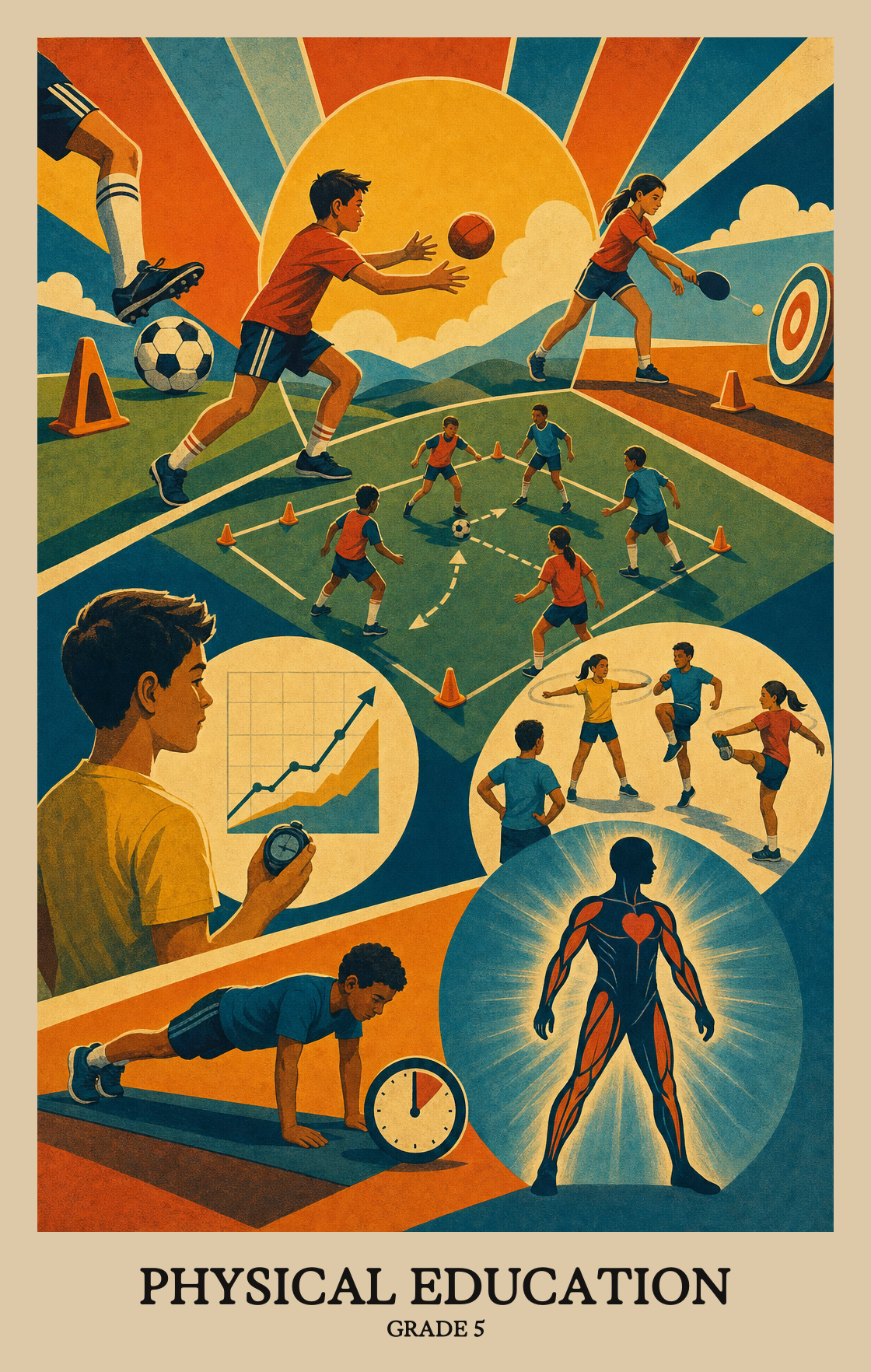
Students kick off the year by checking their own fitness and setting goals they can track. They learn what warm-ups, cool-downs, and steady activity feel like, and why each one matters.
Students sharpen throwing, catching, kicking, striking, and dribbling. They start combining these moves in small-sided games where quick decisions matter as much as the skill itself.
Students learn to read the game. They practice spacing, defense, and working with teammates, and they talk through what worked after each round of play.
Students try rhythm activities, dance steps, and gymnastics-style movement. The focus shifts from winning to control, balance, and expressing ideas through movement.
Students explore activities they can keep doing outside school, from biking to yoga to hiking. They look at how movement connects to health, mood, and possible jobs in sports, coaching, or fitness.
Students practice and refine a range of physical skills, from throwing and catching to jumping and balancing. The goal is solid, consistent form across several different movements, not just one.
Students use what they know about speed, space, and body position to make smarter decisions during games and activities. They start connecting the "why" behind a move, not just the "how."
Students learn how to build habits that keep their bodies healthy and active, not just during gym class but outside school too. They practice setting activity goals and understanding how exercise affects their fitness over time.
Students practice self-control and treat classmates with respect during games and activities. Good sportsmanship, fair play, and personal responsibility are the focus.
Students explain why staying active matters to them personally, whether that's for fitness, fun, a personal challenge, or time with friends.
Students identify jobs connected to fitness and health, such as coaching or athletic training, and learn how to use community resources like parks and recreation programs to stay active and healthy.
| Standard | Definition | Code |
|---|---|---|
| Moving your body with skill and control | Students practice and refine a range of physical skills, from throwing and catching to jumping and balancing. The goal is solid, consistent form across several different movements, not just one. | NY-PE.1.5 |
| How your body moves and why | Students use what they know about speed, space, and body position to make smarter decisions during games and activities. They start connecting the "why" behind a move, not just the "how." | NY-PE.2.5 |
| Staying active and fit for life | Students learn how to build habits that keep their bodies healthy and active, not just during gym class but outside school too. They practice setting activity goals and understanding how exercise affects their fitness over time. | NY-PE.3.5 |
| Respect yourself and others in PE | Students practice self-control and treat classmates with respect during games and activities. Good sportsmanship, fair play, and personal responsibility are the focus. | NY-PE.4.5 |
| Why staying active is good for you | Students explain why staying active matters to them personally, whether that's for fitness, fun, a personal challenge, or time with friends. | NY-PE.5.5 |
| Fitness careers and healthy community habits | Students identify jobs connected to fitness and health, such as coaching or athletic training, and learn how to use community resources like parks and recreation programs to stay active and healthy. | NY-PE.6.5 |
Students should throw, catch, kick, dribble, and strike with control in real games, not just drills. They should also know basic rules and strategy for a few team and individual activities, and be able to keep themselves active without constant reminders.
Aim for 60 minutes of movement most days. That can be a walk after dinner, biking, a backyard game of catch, or dancing in the kitchen. The activity matters more than the sport. Kids who move at home come to PE ready to learn skills instead of catching up on basic coordination.
PE at this age is about building confidence and a few skills students can use for life, not picking varsity athletes. Find one activity outside of team sports that feels good, such as hiking, swimming, biking, or martial arts. Steady practice in something they enjoy builds the same fitness as a team.
A common path is fitness routines and locomotor review in fall, invasion games such as soccer and basketball in winter, then striking and fielding games in spring with a fitness check at each transition. Revisit teamwork and fair play in every unit rather than treating it as a separate week.
Students combine skills under pressure, not just in isolation. A student dribbles while looking up, passes to a moving teammate, and adjusts a throw based on distance. If a skill only works in a line drill, it is not yet mastered.
Use personal goal setting against past performance instead of class rankings. Have students track one or two measures across the year, such as a timed run or a plank hold, and write a short reflection on what they changed. Progress against their own numbers is the point.
Give them strategy roles rather than more reps. Ask them to captain a small-sided game, explain a rule to a teammate, or play a position they avoid. Coaching others sharpens their own understanding and keeps PE useful for athletes who already have skill.
Students should be able to explain why a team spreads out on offense, why a defender stays between the player and the goal, or when to pass instead of shoot. A short exit ticket or a quick chat after a game works better than a written quiz.
Students should name the parts of fitness such as endurance, strength, and flexibility, and match an activity to each one. They should also know how often to be active each week and recognize that activity supports mood and sleep, not just weight.
Look for three signs at home: students can keep up in active play for a sustained stretch, they handle losing a game without falling apart, and they can name an activity they enjoy and would choose on their own. Those habits matter more than any single skill.