Moving safely and following directions
Students learn how to use the gym space without bumping into each other. They practice listening for start and stop signals and following simple directions from a teacher.
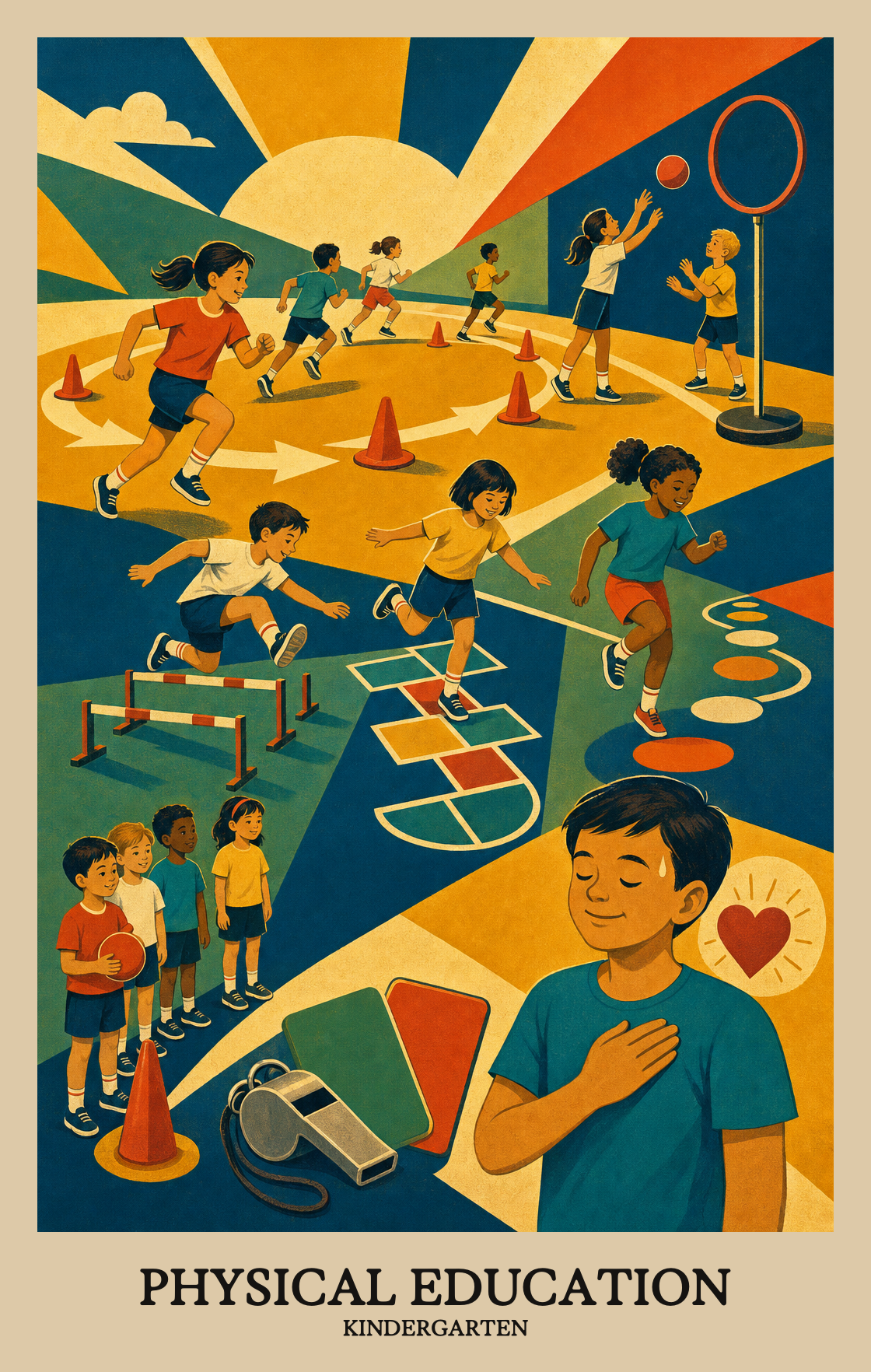
This is the year movement becomes a skill students practice on purpose. Students learn to run, jump, hop, skip, and toss a ball with more control, and they start to follow simple rules in games and group activities. They also begin to notice how their body feels when it moves and why being active matters. By spring, students can take turns, share equipment, and keep moving during a short activity without giving up.
Students learn how to use the gym space without bumping into each other. They practice listening for start and stop signals and following simple directions from a teacher.
Students practice the building blocks of movement: running, hopping, skipping, jumping, and balancing. Parents may notice steadier feet on the playground and more confidence on stairs.
Students try rolling, tossing, catching, and kicking with light balls and beanbags. The goal is getting comfortable with objects in motion, not hitting a target every time.
Students play simple games that involve taking turns, sharing equipment, and cheering on classmates. They start to notice when their heart beats faster and why moving feels good.
Students try a wider mix of activities and talk about ways to stay active at home, like walks, bike rides, or backyard games. They begin to see exercise as something fun, not just school work.
Students practice the basic ways the body moves: running, jumping, throwing, and balancing. Getting comfortable with these skills early builds the foundation for every sport and game that comes later.
Students learn basic ideas about how their bodies move, like how fast, how high, or in which direction. They use those ideas to try new movements and get better at them.
Students learn basic ways to move their bodies and stay active. The focus is on building habits like running, jumping, and playing that keep them healthy as they grow.
Students practice taking turns, following rules, and treating classmates with care during games and activities. The focus is on building habits that make gym class safe and fair for everyone.
Moving the body feels good and helps students stay healthy. In PE, students start to notice that exercise can be fun, challenging, or a way to play with others.
Students learn that gyms, parks, and coaches are tools they can use to stay active. They start to see how choosing active habits now connects to feeling healthy later.
| Standard | Definition | Code |
|---|---|---|
| Moving and controlling your body | Students practice the basic ways the body moves: running, jumping, throwing, and balancing. Getting comfortable with these skills early builds the foundation for every sport and game that comes later. | NY-PE.1.k |
| How your body moves in space | Students learn basic ideas about how their bodies move, like how fast, how high, or in which direction. They use those ideas to try new movements and get better at them. | NY-PE.2.k |
| Staying active and healthy | Students learn basic ways to move their bodies and stay active. The focus is on building habits like running, jumping, and playing that keep them healthy as they grow. | NY-PE.3.k |
| Playing fair and respecting others | Students practice taking turns, following rules, and treating classmates with care during games and activities. The focus is on building habits that make gym class safe and fair for everyone. | NY-PE.4.k |
| Why moving your body feels good | Moving the body feels good and helps students stay healthy. In PE, students start to notice that exercise can be fun, challenging, or a way to play with others. | NY-PE.5.k |
| Careers and communities that keep you moving | Students learn that gyms, parks, and coaches are tools they can use to stay active. They start to see how choosing active habits now connects to feeling healthy later. | NY-PE.6.k |
Students work on the basics of moving their bodies. That means running, hopping, skipping, throwing and catching a soft ball, balancing on one foot, and following simple directions like stop, go, and freeze.
Play together outside. Roll a ball back and forth, kick it around the yard, chase bubbles, race to the mailbox, or hop like a frog down the hallway. Ten minutes of active play a day builds the same skills practiced in gym class.
Start with the building blocks: walking and running with control, jumping with two feet, balancing, and tossing a beanbag. Once students can stop and start safely in a shared space, add catching, kicking, and basic throwing.
No. The goal at this age is comfort with moving, not skill in any sport. Students who can run, jump, balance, and take turns are right where they need to be.
Students practice taking turns, sharing equipment, listening for the whistle, and keeping hands to themselves during games. Short routines repeated daily, like lining up at a spot on the floor, do most of the work.
Most five-year-olds are still figuring out their bodies, and skills come in at different times. Practice one thing at a time at home, like catching a rolled ball or balancing on one foot while brushing teeth. Talk to the gym teacher if concerns continue.
Tie movement to fun and feelings. Ask students how their heart feels after running, let them pick a favorite game, and celebrate effort over winning. The goal is for students to leave the year wanting to move, not dreading it.
By spring, students should run and stop safely, jump with two feet, catch a tossed ball most of the time, follow two-step directions, and take turns without much reminding. Students who can do these things are ready for the next year.