Pretending and playing roles
Students step into make-believe. They try on characters, use their voices and bodies to act out simple ideas, and turn everyday moments into short pretend scenes.
This is the year pretending becomes performing. Students step into characters, act out short stories, and use their voices and bodies to show what a person is feeling. They start to notice what a play is trying to say and share what they liked or wondered about. By spring, students can take on a role in a class skit and explain a choice they made about it.
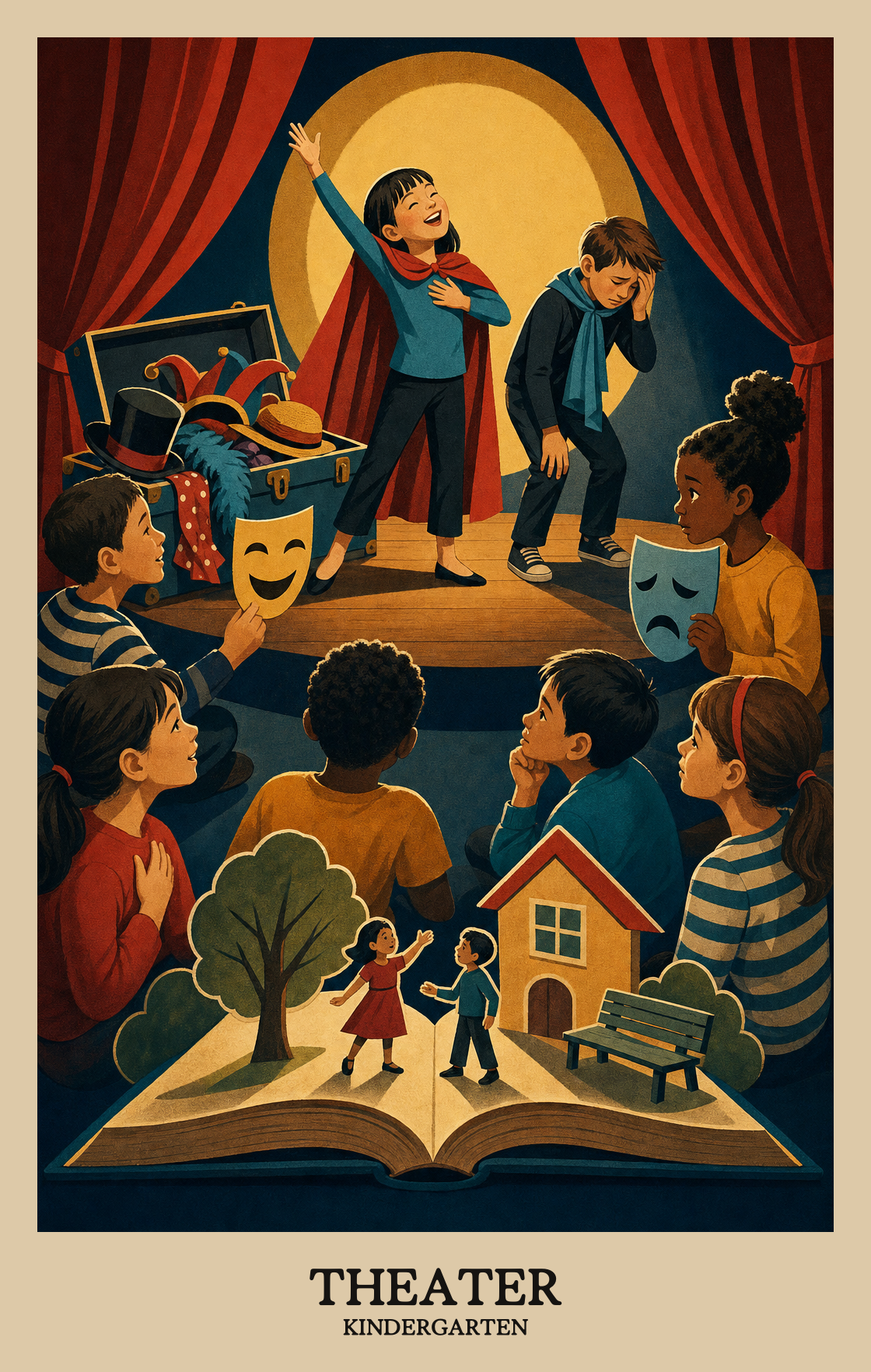
Students step into make-believe. They try on characters, use their voices and bodies to act out simple ideas, and turn everyday moments into short pretend scenes.
Students start shaping their pretend play into something a little more planned. They add a beginning and an end, work with classmates, and decide what happens next in the story.
Students practice a short scene or story to show others. They try out different voices, movements, and ideas, then pick the ones that work best before sharing.
Students watch scenes performed by classmates or grown-ups. They talk about what happened, what the characters wanted, and what they liked or would change.
Students connect something from their own life to a story or character in a play. A memory, a feeling, or a moment from home can shape the choices they make when they act or create.
Stories and plays come from real places, times, and communities. Students connect what they see in a performance to the world they already know.
| Standard | Definition | Code |
|---|---|---|
| Stories from your own life | Students connect something from their own life to a story or character in a play. A memory, a feeling, or a moment from home can shape the choices they make when they act or create. | TH:Cn10.k |
| Stories and art from around the world | Stories and plays come from real places, times, and communities. Students connect what they see in a performance to the world they already know. | TH:Cn11.k |
Students act out simple stories and ideas, using imagination to turn everyday moments into short scenes or characters.
Students choose characters, places, or actions for a short pretend story and put them together into a simple scene they can act out.
Students practice a scene or character choice more than once, then decide when the work feels ready to share.
| Standard | Definition | Code |
|---|---|---|
| Invent a character or story idea | Students act out simple stories and ideas, using imagination to turn everyday moments into short scenes or characters. | TH:Cr1.k |
| Turning ideas into a short play | Students choose characters, places, or actions for a short pretend story and put them together into a simple scene they can act out. | TH:Cr2.k |
| Finishing a piece of theater work | Students practice a scene or character choice more than once, then decide when the work feels ready to share. | TH:Cr3.k |
Students choose a character or short scene to act out and practice showing it to others.
Students practice a scene or short performance again and again, working on how they move, speak, and show feelings so the final performance is ready to share with an audience.
Students share a short scene or story in front of others, using their voice, face, and body to help the audience understand what is happening.
| Standard | Definition | Code |
|---|---|---|
| Choosing a character to perform | Students choose a character or short scene to act out and practice showing it to others. | TH:Pr4.k |
| Practice and polish a performance | Students practice a scene or short performance again and again, working on how they move, speak, and show feelings so the final performance is ready to share with an audience. | TH:Pr5.k |
| Share a story through performance | Students share a short scene or story in front of others, using their voice, face, and body to help the audience understand what is happening. | TH:Pr6.k |
Students watch a short play or puppet show and talk about what they saw, noticing the characters, actions, and story.
Students look at a short play or puppet show and explain what they think is happening and why a character acts the way they do.
Students look at a scene or performance and say what they liked and why. They practice giving a real reason, not just "it was good."
| Standard | Definition | Code |
|---|---|---|
| What a play makes you feel | Students watch a short play or puppet show and talk about what they saw, noticing the characters, actions, and story. | TH:Re7.k |
| What a story means to you | Students look at a short play or puppet show and explain what they think is happening and why a character acts the way they do. | TH:Re8.k |
| Deciding what makes a performance good | Students look at a scene or performance and say what they liked and why. They practice giving a real reason, not just "it was good." | TH:Re9.k |
Students play pretend on purpose. They act out short stories, take on characters, use their voices and bodies to show feelings, and talk about what they saw classmates do. Most of the work happens through games, songs, and acting out picture books.
Read a picture book together and ask students to be one of the characters while reading the page again. Use different voices for a big bear and a small mouse. Keep it short and silly. Confidence builds when the audience is just one trusted adult.
No. At this age, students are making up short scenes, not memorizing scripts. Any sharing is usually a few minutes in the classroom for classmates, not a polished show for an audience.
Dress-up, puppets, pretend kitchen, acting out a favorite story, and playing different family members all count. Ask questions like who are you, where are you, and what do you want. Those three questions are the heart of acting at this age.
Start with body and voice warm-ups and simple imitation games. Move into short pretend scenes based on familiar stories. By spring, students should be making small choices about character and setting, then sharing short scenes and giving kind, specific feedback to classmates.
Two things: staying in a character once the scene starts, and giving feedback that points to something specific instead of just saying it was good. Both get easier with sentence stems and lots of short, low-stakes rounds.
Use folktales and picture books from the cultures in the class as scene starters. Ask students what their family does at dinner, at bedtime, or on a holiday, and turn those moments into short scenes. Personal experience is the main source of material at this age.
Students can pick a character, show that character with voice and body, and act out a short scene with a partner from start to finish. They can also watch a classmate's scene and say one specific thing they noticed.
Listen for pretend play with clear characters and a beginning, middle, and end. Watch for a child who can stay in a role for a minute or two and talk about what a character wanted. That is the foundation next year builds on.