Exploring tools and materials
Students try out crayons, paint, paper, and clay. They learn how to hold a brush, share supplies, and clean up. Parents may see lots of color experiments come home in the backpack.
This is the year art class becomes a real way to share ideas, not just play with crayons. Students try out tools like paint, paper, and clay, and they learn that a picture can mean something to the person who made it. They also start talking about art, noticing what they see and saying what they like or wonder about. By spring, students can finish a piece of artwork and tell a parent what it shows.
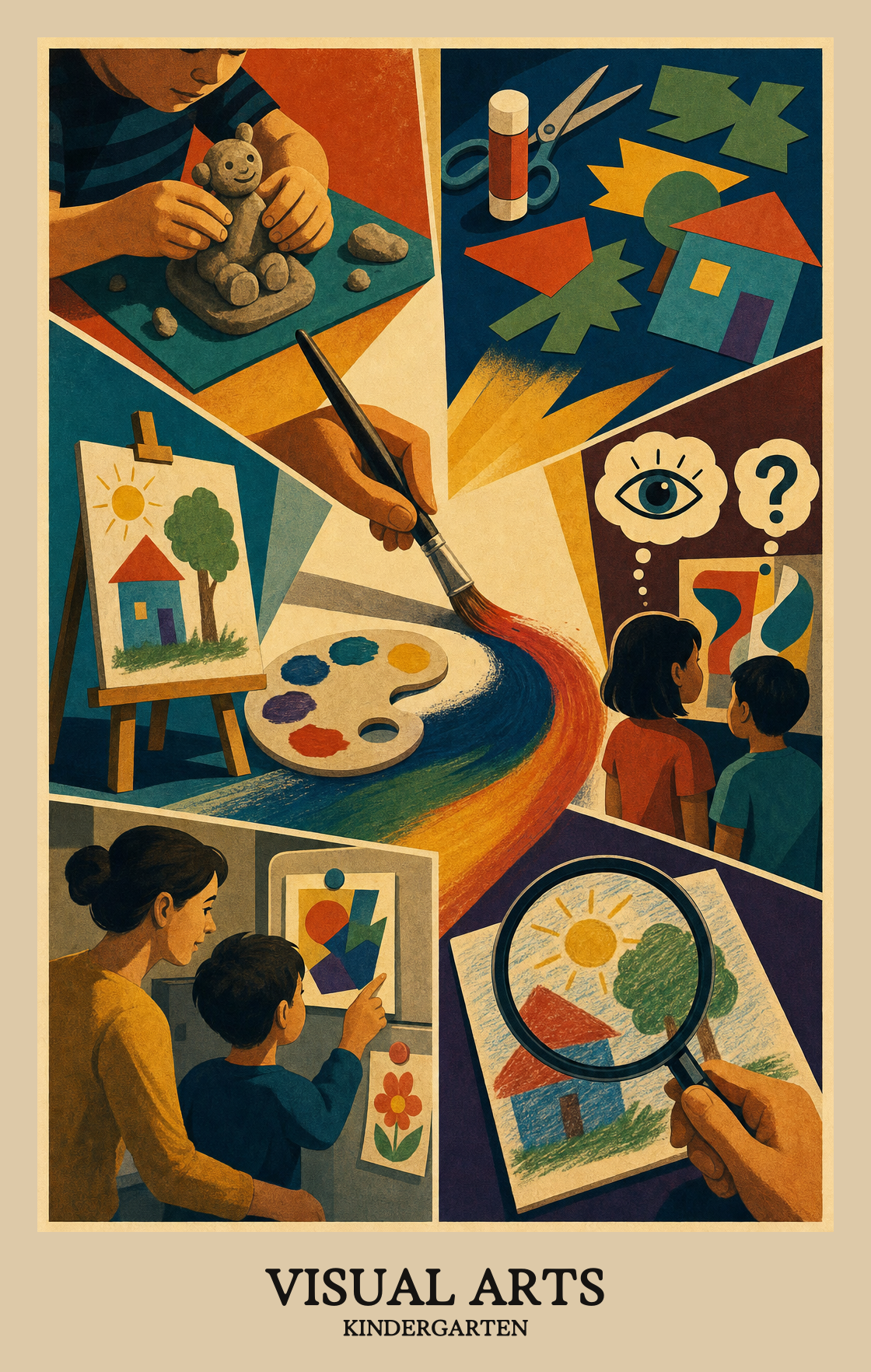
Students try out crayons, paint, paper, and clay. They learn how to hold a brush, share supplies, and clean up. Parents may see lots of color experiments come home in the backpack.
Students draw and build from things they know, like family, pets, and favorite places. Each piece starts with an idea the student picks, not a worksheet to copy.
Students study pictures by other artists and from other cultures. They point out colors, shapes, and what they think is happening. Parents may hear new words like texture or pattern at home.
Students decide when a piece is done, sign their name, and pick favorites to display. They learn to say why they chose a piece and what they like about a classmate's work.
Students draw on things they already know and moments from their own life to make artwork. A picture of a family dinner or a favorite place counts as real artistic thinking.
Art tells stories about people and places. Students look at artwork and talk about where it came from, who made it, and what was happening in the world at the time.
| Standard | Definition | Code |
|---|---|---|
| Making art from what you know and feel | Students draw on things they already know and moments from their own life to make artwork. A picture of a family dinner or a favorite place counts as real artistic thinking. | VA:Cn10.k |
| Art tells us about people and places | Art tells stories about people and places. Students look at artwork and talk about where it came from, who made it, and what was happening in the world at the time. | VA:Cn11.k |
Students come up with their own ideas for art before they start making anything. They practice imagining what they want to create, not just copying what the teacher draws.
Students take an early idea, like a color, a shape, or a feeling, and figure out how to turn it into a finished drawing or artwork.
Students look at their own drawings or projects, decide what to change or finish, and then make those final improvements before calling the work done.
| Standard | Definition | Code |
|---|---|---|
| Coming up with art ideas | Students come up with their own ideas for art before they start making anything. They practice imagining what they want to create, not just copying what the teacher draws. | VA:Cr1.k |
| Putting an art idea together | Students take an early idea, like a color, a shape, or a feeling, and figure out how to turn it into a finished drawing or artwork. | VA:Cr2.k |
| Finish and polish a piece of art | Students look at their own drawings or projects, decide what to change or finish, and then make those final improvements before calling the work done. | VA:Cr3.k |
Students choose which of their drawings or projects to share with others and start to explain why they picked it.
Students practice making their artwork look the way they want it to before sharing it with others. They try again, adjust, and finish their work with care.
Students choose finished artwork to share with classmates and explain what they made and why. The act of showing the work is part of the art itself.
| Standard | Definition | Code |
|---|---|---|
| Pick artwork to share with others | Students choose which of their drawings or projects to share with others and start to explain why they picked it. | VA:Pr4.k |
| Preparing art to share with others | Students practice making their artwork look the way they want it to before sharing it with others. They try again, adjust, and finish their work with care. | VA:Pr5.k |
| Sharing art to tell a story | Students choose finished artwork to share with classmates and explain what they made and why. The act of showing the work is part of the art itself. | VA:Pr6.k |
Students look closely at a piece of art and talk about what they see: the colors, shapes, and what's happening in the picture.
Students look at a piece of art and talk about what they think the artist wanted to say or show. They share what the art means to them and what feeling or story they see in it.
Students look at a drawing or painting and say what they like about it and why. They practice giving a reason for their opinion, not just saying "it's good."
| Standard | Definition | Code |
|---|---|---|
| Looking at and talking about art | Students look closely at a piece of art and talk about what they see: the colors, shapes, and what's happening in the picture. | VA:Re7.k |
| What art means to you | Students look at a piece of art and talk about what they think the artist wanted to say or show. They share what the art means to them and what feeling or story they see in it. | VA:Re8.k |
| Deciding what makes art good | Students look at a drawing or painting and say what they like about it and why. They practice giving a reason for their opinion, not just saying "it's good." | VA:Re9.k |
Students draw, paint, cut, glue, and build with simple materials. They make art about things they know, like family, pets, and favorite places. The focus is on trying ideas and finishing pieces they can talk about, not on making everything look realistic.
Keep crayons, paper, scissors, and glue somewhere students can reach. Ask what their drawing is about and what they might add next. Ten minutes of drawing after dinner does more than a fancy craft kit.
No. At this age, art is about trying ideas and talking about them. A scribble of a dog counts as a drawing of a dog if the student says so.
Start with the basics of holding tools, mixing colors, and cutting safely. Then move into projects where students plan a picture, make it, and revise one part. Save sharing and gallery-style talks for later in the year, once students are used to looking closely at their own work.
Students should be able to name what their piece is about, point to a part they like, and say one thing they changed while making it. That kind of talk matters more than the finished product.
Cutting on a line, gluing without flooding the paper, and cleaning up tools tend to need the most practice. Plan short demos and repeat them across projects rather than teaching them once and moving on.
Treat it as a normal part of making things. Ask what they wanted it to look like and what they could try on the next piece. Keeping the torn paper in a folder and revisiting it later often helps.
Students look at a picture or sculpture and say what they notice, what they think is happening, and how it makes them feel. Use picture books, museum prints, and student work from the class. Keep the talks short, five minutes is plenty.
By the end of the year, students should plan a simple piece, finish it, and talk about what it means. They should use scissors, glue, and basic drawing and painting tools without much help. They should also be able to share one thing they notice in someone else's art.