Getting started with media
Students explore tools like cameras, drawing apps, and recording devices. They come up with their own ideas for short videos, photos, or audio clips and start small projects from scratch.
This is the year students start telling small stories with media tools like cameras, drawing apps, and simple recordings. They come up with ideas, put the pieces together, and tidy up their work before sharing it. Students also talk about what they see and hear in other people's projects and what it might mean. By spring, they can plan a short video, slideshow, or audio clip and explain why they made the choices they did.
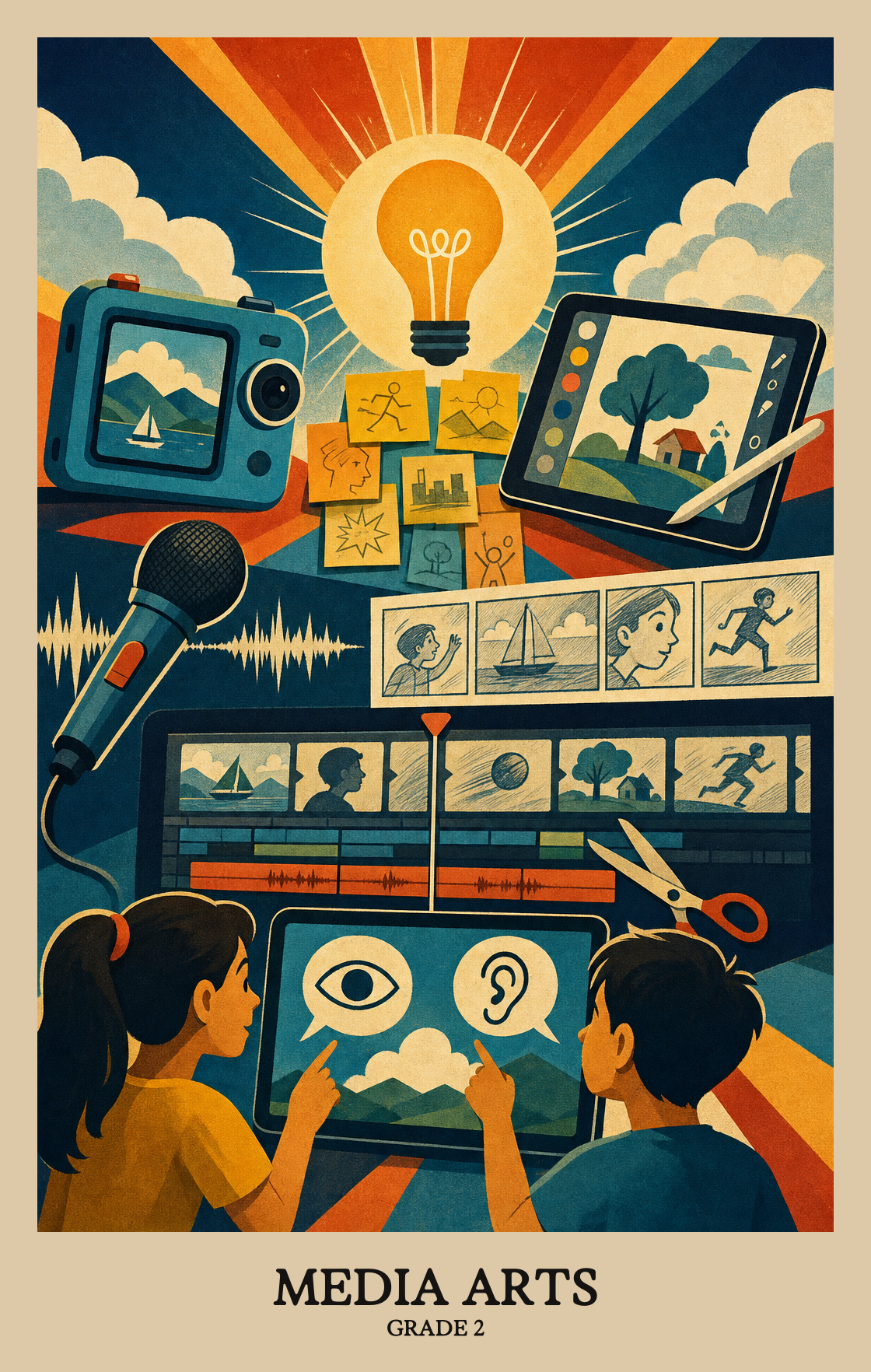
Students explore tools like cameras, drawing apps, and recording devices. They come up with their own ideas for short videos, photos, or audio clips and start small projects from scratch.
Students plan and put together a media piece, deciding what goes first, what comes next, and what to leave out. They learn to keep working on something past the first try.
Students watch and listen to media made by classmates and artists. They notice choices the maker made and talk about what the piece is trying to say.
Students pick a finished piece, polish it, and share it with an audience. They also connect what they make to their own lives and to stories and traditions they know.
Students connect something they already know or have lived through to a media art project they are making. Their own memories and ideas shape the choices they make as they create.
Students look at a piece of media art, like a photo or short video, and talk about where it came from, who made it, and what was happening in the world at the time.
| Standard | Definition | Code |
|---|---|---|
| Using your life to make art | Students connect something they already know or have lived through to a media art project they are making. Their own memories and ideas shape the choices they make as they create. | CA-MA:Cn10.2.2 |
| Art reflects the world around us | Students look at a piece of media art, like a photo or short video, and talk about where it came from, who made it, and what was happening in the world at the time. | CA-MA:Cn11.2.2 |
Students brainstorm ideas for a media project, like a short video or digital drawing, and decide what they want to make before they start creating it.
Students pick the best photos, sounds, or drawings for a media project and arrange them in an order that makes sense.
Students revisit a media project, make small improvements based on feedback or their own review, and decide when it is finished.
| Standard | Definition | Code |
|---|---|---|
| Coming up with ideas for media art | Students brainstorm ideas for a media project, like a short video or digital drawing, and decide what they want to make before they start creating it. | CA-MA:Cr1.2.2 |
| Plan and build a media art project | Students pick the best photos, sounds, or drawings for a media project and arrange them in an order that makes sense. | CA-MA:Cr2.2.2 |
| Finish and polish a media project | Students revisit a media project, make small improvements based on feedback or their own review, and decide when it is finished. | CA-MA:Cr3.2.2 |
Students pick a piece of media they made, such as a drawing, photo, or short video, and explain why it shows their best work.
Students practice and improve a media project (like a photo, video, or digital drawing) until it's ready to share with an audience.
Students choose how to share a piece of media work, such as a drawing, short video, or photo, so the person watching understands the idea behind it.
| Standard | Definition | Code |
|---|---|---|
| Picking artwork to share with others | Students pick a piece of media they made, such as a drawing, photo, or short video, and explain why it shows their best work. | CA-MA:Pr4.2.2 |
| Improve your work before sharing it | Students practice and improve a media project (like a photo, video, or digital drawing) until it's ready to share with an audience. | CA-MA:Pr5.2.2 |
| Sharing art that means something | Students choose how to share a piece of media work, such as a drawing, short video, or photo, so the person watching understands the idea behind it. | CA-MA:Pr6.2.2 |
Students look at a piece of media art, such as a photo, video, or digital image, and explain what they notice and why the creator may have made it that way.
Students look at a piece of media art and explain what the creator was trying to say. They share what the image, sound, or video means to them and point to specific parts that gave them that idea.
Students look at a piece of media art, such as a photo or short video, and decide what makes it work well or fall flat. They use a simple set of questions or rules to explain their thinking.
| Standard | Definition | Code |
|---|---|---|
| Noticing what makes media art work | Students look at a piece of media art, such as a photo, video, or digital image, and explain what they notice and why the creator may have made it that way. | CA-MA:Re7.2.2 |
| What art is trying to say | Students look at a piece of media art and explain what the creator was trying to say. They share what the image, sound, or video means to them and point to specific parts that gave them that idea. | CA-MA:Re8.2.2 |
| Judging what makes media art work | Students look at a piece of media art, such as a photo or short video, and decide what makes it work well or fall flat. They use a simple set of questions or rules to explain their thinking. | CA-MA:Re9.2.2 |
Media arts means making things with cameras, computers, tablets, and recorders. Students take photos, record short videos, make simple animations, or put together a slideshow with sound. The focus is on telling a small story or sharing an idea using pictures and audio.
Let students use a phone or tablet to take photos of something they care about, like a pet or a meal, and ask them to explain why they chose each picture. Record a short video together and watch it back. Talk about what worked and what they would change.
No. A basic phone, tablet, or classroom computer is plenty. The skills students practice, like choosing a good shot, recording clear sound, and putting clips in order, matter more than the tool.
Start with single-image work like photos and drawings on a tablet. Move into short audio recordings, then simple video or stop-motion. End the year with small combined projects where students plan, record, and arrange a few clips around one idea.
Refining means looking at a draft and making it better. Students might re-record a line that was too quiet, crop a photo, or reorder two clips so the story makes more sense. The goal is one round of clear, purposeful changes, not polish.
Students look at a photo, video, or animation and talk about what they notice and what the maker might be trying to say. They use simple criteria such as clear pictures, sound you can hear, and an idea you can follow. Comparing two pieces side by side helps.
Media arts pairs naturally with reading, science, and social studies. Students might record themselves retelling a story, photograph stages of a plant growing, or make a short slideshow about their family or neighborhood. The media project becomes a way to show what they learned.
By spring, students should be able to come up with an idea, gather a few photos or clips that fit it, put them in an order that makes sense, and explain their choices. They should also be able to share one helpful comment about someone else's work.
Yes. Making media is active and creative, more like building with blocks than watching a show. Ask students to plan before they record, then to look back and talk about what they made. That planning and reflecting is where the learning happens.