Moving with control
Students start the year practicing how their bodies move through space. They work on running, skipping, hopping, and stopping safely without bumping into classmates.
This is the year movement gets more skillful and on purpose. Students sharpen the basics like running, jumping, throwing, catching, and kicking, and start putting them together in games and dances. They learn why warming up matters, how their heart speeds up during play, and how to take turns and cooperate with a partner. By spring, students can dribble a ball, jump rope on their own, and follow the rules of a simple group game.
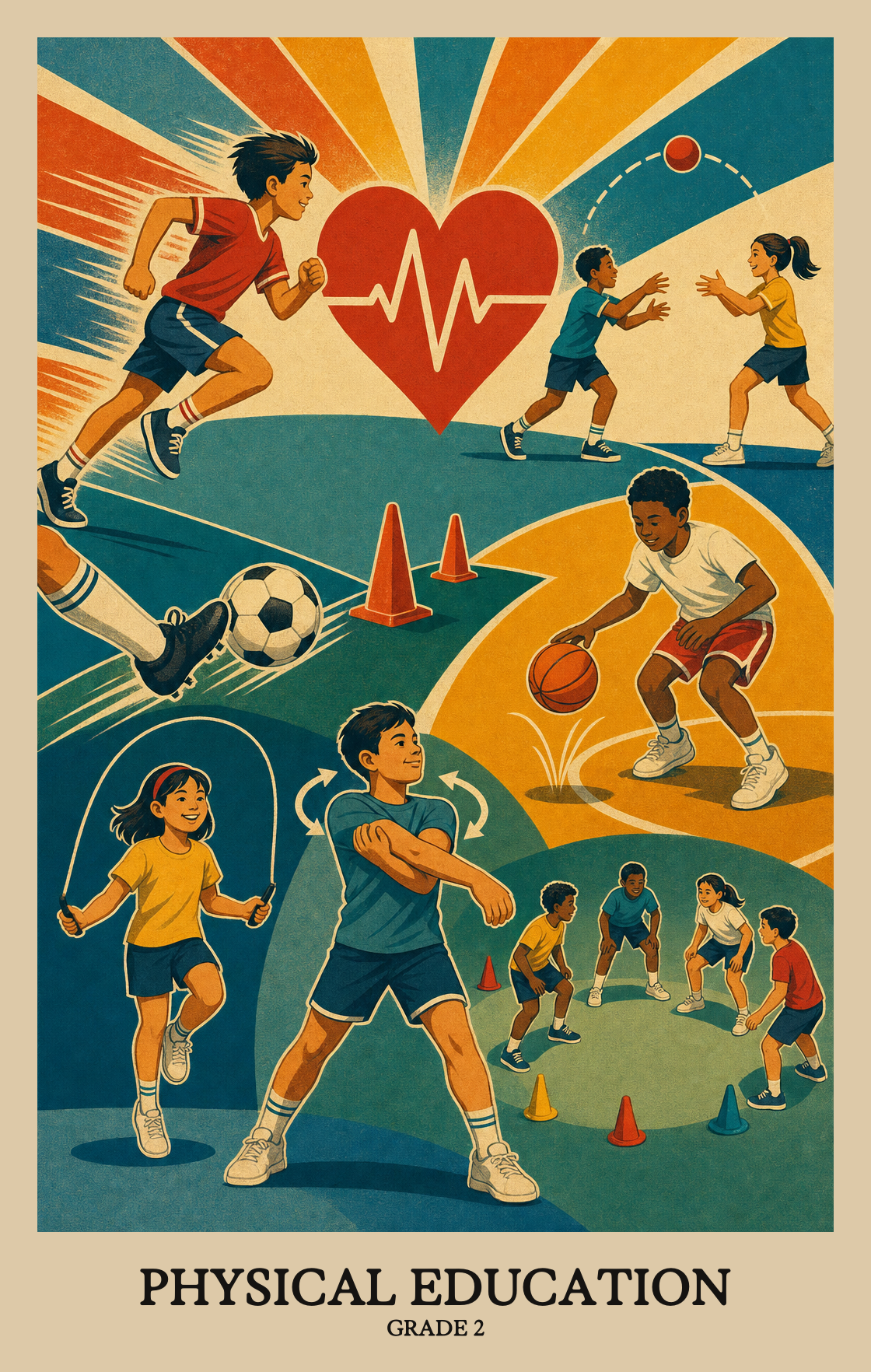
Students start the year practicing how their bodies move through space. They work on running, skipping, hopping, and stopping safely without bumping into classmates.
Students build the basics of ball play. They roll, toss, catch, and kick with a partner, and start to aim at simple targets.
Students notice what their heart and lungs do when they move. They try short bursts of jogging, jumping, and stretching, and learn why warming up matters.
Students put their skills into small games with classmates. They practice taking turns, following rules, and being a fair partner, even when their team does not win.
Students practice the basic moves that show up across many physical activities: running, jumping, throwing, and balancing. Building these skills in second grade makes learning any new sport or game much easier.
Students learn how to move their bodies more skillfully by understanding ideas like speed, direction, and balance. Knowing these basics helps them get better at games and activities in gym class.
Students check how fit they are, then practice ways to get stronger, faster, or have more stamina. The goal is a body that feels good and performs well in school and in play.
Students learn what exercise does to their bodies and why it matters. They practice simple strategies, like pacing themselves during a run or stretching after activity, to build habits that keep them healthy.
Students learn how their feelings and teamwork habits affect how well they move and play. They practice things like staying focused, encouraging classmates, and bouncing back after a mistake during games or activities.
| Standard | Definition | Code |
|---|---|---|
| Moving your body in different ways | Students practice the basic moves that show up across many physical activities: running, jumping, throwing, and balancing. Building these skills in second grade makes learning any new sport or game much easier. | CA-PE.1.2 |
| How your body moves and why | Students learn how to move their bodies more skillfully by understanding ideas like speed, direction, and balance. Knowing these basics helps them get better at games and activities in gym class. | CA-PE.2.2 |
| Staying fit and healthy through exercise | Students check how fit they are, then practice ways to get stronger, faster, or have more stamina. The goal is a body that feels good and performs well in school and in play. | CA-PE.3.2 |
| Fitness habits that keep your body healthy | Students learn what exercise does to their bodies and why it matters. They practice simple strategies, like pacing themselves during a run or stretching after activity, to build habits that keep them healthy. | CA-PE.4.2 |
| Mindset and teamwork in physical activity | Students learn how their feelings and teamwork habits affect how well they move and play. They practice things like staying focused, encouraging classmates, and bouncing back after a mistake during games or activities. | CA-PE.5.2 |
California's fitness assessment for grades 5, 7, and 9. Administration was paused in spring 2022 while the program is redesigned to drop body-composition components; districts continue to receive guidance but do not currently submit student-level results.
Students practice running, jumping, hopping, skipping, throwing, catching, and kicking. They start putting these moves together in simple games and routines. They also learn why warming up matters and how their body feels when it works hard.
Ten minutes of active play most days is plenty. Walks to the park, bike rides, dancing in the kitchen, or tossing a ball back and forth all count. The goal is steady practice, not a workout.
Students should run and stop with control, jump and land safely, skip with a smooth rhythm, and throw and catch a small ball from a short distance. They should also be able to follow simple game rules and play fairly with a partner.
Start with the basic moves on their own: running, jumping, hopping, skipping, throwing, catching, kicking. Then combine them into short routines and partner games. Save small-group games and simple strategy work for the second half of the year, once the moves feel automatic.
Students can explain ideas like fast and slow, high and low, near and far, and use them on purpose. They can change direction, speed, or level when a game asks for it. Talking through the move while doing it is a good sign it has stuck.
Break the skill into smaller pieces and give short, frequent practice. For catching, start with a soft, slow ball from one step away. For skipping, practice the step-hop pattern on one foot at a time before linking them.
Students learn to notice a faster heartbeat, heavier breathing, and warm skin after running or jumping. They try simple activities that build strength, like animal walks, and stretches that improve flexibility. The point is awareness, not testing.
Students practice taking turns, sharing equipment, following rules, and cheering on classmates. They learn to handle losing a game without quitting and winning without bragging. Short class talks after games help these habits stick.
Practice one skill at a time in a low-pressure setting at home, like tossing a rolled sock into a laundry basket or balancing on a curb. Keep it playful and short. Confidence usually grows once a student feels one small win.