Naming feelings and getting to know me
Students learn to spot what they are feeling and put a word to it, like happy, frustrated, or worried. They start to notice what they are good at and what feels hard.
This is the stretch when students start putting names to big feelings instead of just acting them out. They learn to notice when they are angry, sad, or nervous, and try simple ways to calm down like deep breaths or asking for help. Students also practice listening to classmates and taking turns. By spring, a student can name how they feel, share a toy without a meltdown, and notice when a friend is upset.
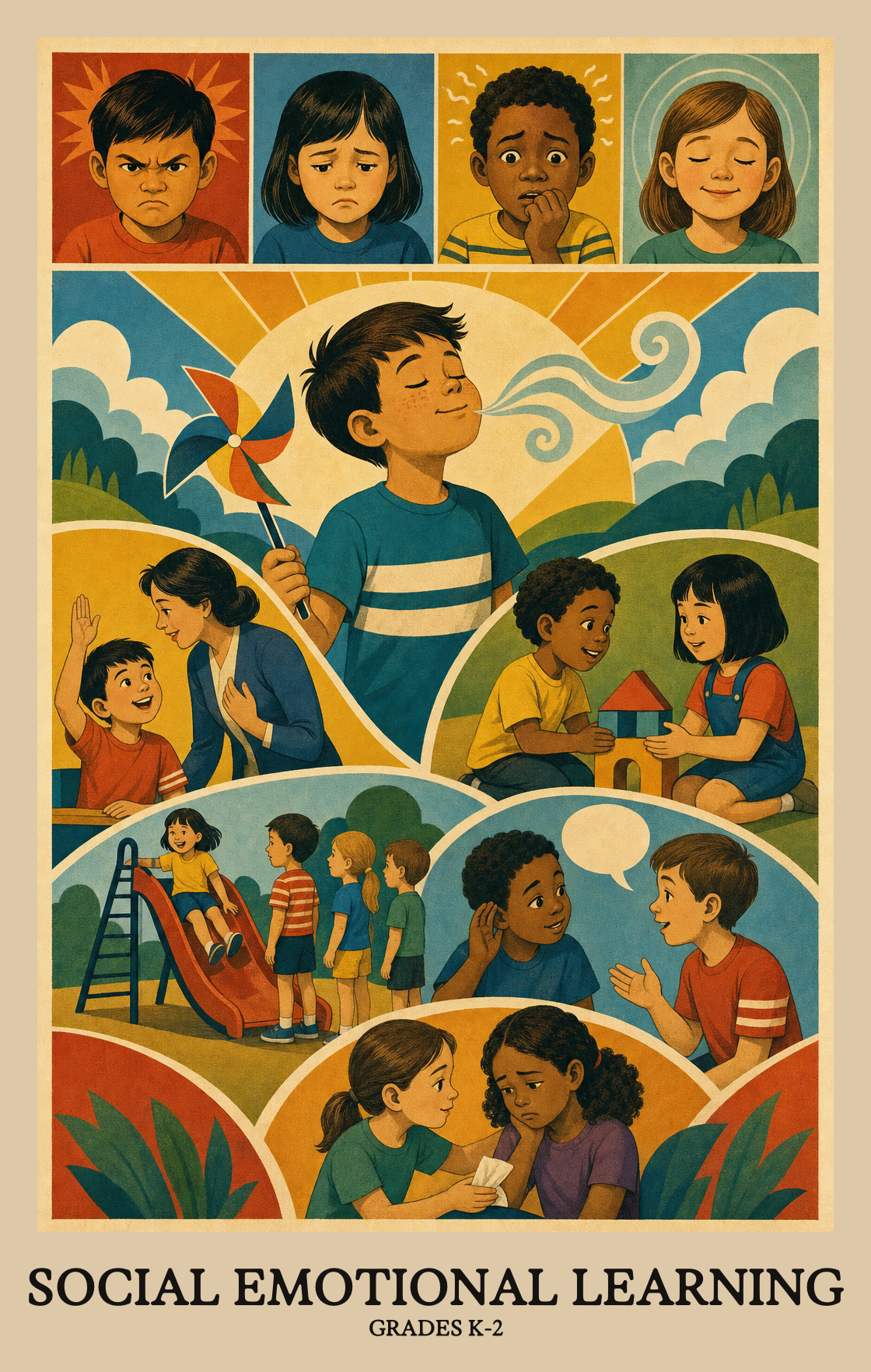
Students learn to spot what they are feeling and put a word to it, like happy, frustrated, or worried. They start to notice what they are good at and what feels hard.
Students practice ways to settle a big feeling, like taking a breath or asking for a break. They set small goals and keep going when something feels tricky.
Students notice when a classmate looks sad, left out, or excited. They learn that other kids may feel or see things differently, and that those differences are okay.
Students practice sharing, taking turns, and listening when someone else is talking. They learn how to ask for help, include a classmate, and work out a small disagreement.
Students think before they act and ask whether a choice is safe, fair, and kind. They learn that small actions, like helping a friend or telling the truth, matter at school and at home.
Students learn to notice their own feelings and thoughts and recognize how those feelings shape the way they act at school, at home, and with friends.
Students practice recognizing when feelings are getting big and figuring out what to do next. They build habits for staying calm, following through on tasks, and working toward things they want to get better at.
Students practice seeing a situation from someone else's point of view, including people whose lives look different from their own.
Students practice making friends, working through disagreements, and getting along with people who are different from them. These early relationship habits help students feel steady and supported at school.
Students practice stopping to think before acting, then choose a response that is kind and unlikely to hurt others. This applies at recess, in class, and at home.
| Standard | Definition | Code |
|---|---|---|
| Knowing your feelings and what they do Grades K-2 | Students learn to notice their own feelings and thoughts and recognize how those feelings shape the way they act at school, at home, and with friends. | CA-SEL.1.k-2 |
| Handling big feelings and staying on track Grades K-2 | Students practice recognizing when feelings are getting big and figuring out what to do next. They build habits for staying calm, following through on tasks, and working toward things they want to get better at. | CA-SEL.2.k-2 |
| Seeing things from someone else's point of view Grades K-2 | Students practice seeing a situation from someone else's point of view, including people whose lives look different from their own. | CA-SEL.3.k-2 |
| Making friends and being a good one Grades K-2 | Students practice making friends, working through disagreements, and getting along with people who are different from them. These early relationship habits help students feel steady and supported at school. | CA-SEL.4.k-2 |
| Making choices that help others Grades K-2 | Students practice stopping to think before acting, then choose a response that is kind and unlikely to hurt others. This applies at recess, in class, and at home. | CA-SEL.5.k-2 |
Students learn to name what they are feeling, calm down when upset, take turns, and notice when a classmate needs help. Most of the work happens in small moments like sharing crayons, lining up, or recovering from a spill, not in formal lessons.
Name emotions out loud as they happen. Try short check-ins like asking what made them happy or frustrated today. When a meltdown starts, sit close and wait it out before talking. Practicing the words for feelings is most of the work at this age.
Schools focus on classroom skills like calming down, listening, and getting along with classmates. Families stay the main source of values at home. The two work best when adults use similar words for feelings and similar steps for calming down.
Start the year heavy on self-awareness and naming feelings, then build into self-management strategies once routines are set. Empathy and relationship skills grow naturally through partner work and class meetings. Save decision-making practice for the second half, once students have the vocabulary.
Calming down before reacting and seeing a situation from another student's view are the hardest. Expect to model these the same way all year, especially after recess, transitions, and group work. Short, repeated practice beats long lessons.
Pick one strategy and use it every time, like taking three slow breaths or squeezing and releasing both fists. Practice it when everyone is calm so it is ready when feelings get big. Five minutes a few times a week is plenty.
By the end of second grade, students can usually name common feelings in themselves and others, use a calming strategy with a reminder, take turns in a small group, and solve a simple disagreement with adult support. Independence in these moments is the marker, not perfection.
Big feelings and frequent conflicts are normal at this age, but a student who cannot recover after most upsets or who avoids all peer contact may need more support. Start with a conversation between the teacher and family, then loop in the school counselor if patterns continue for several weeks.