Listening and steady beat
Students start the year by listening closely to music and finding the steady beat. They begin to notice fast and slow, loud and soft, and talk about what they hear in simple words.
This is the year music shifts from simply singing along to making real choices as a young musician. Students invent short rhythms and melodies, practice songs until they sound the way they want, and share them with the class. They also start to notice how a song feels, why a composer might have written it, and whether their own performance matches what they were trying to do. By spring, students can perform a short piece they helped shape and tell you why they made those choices.
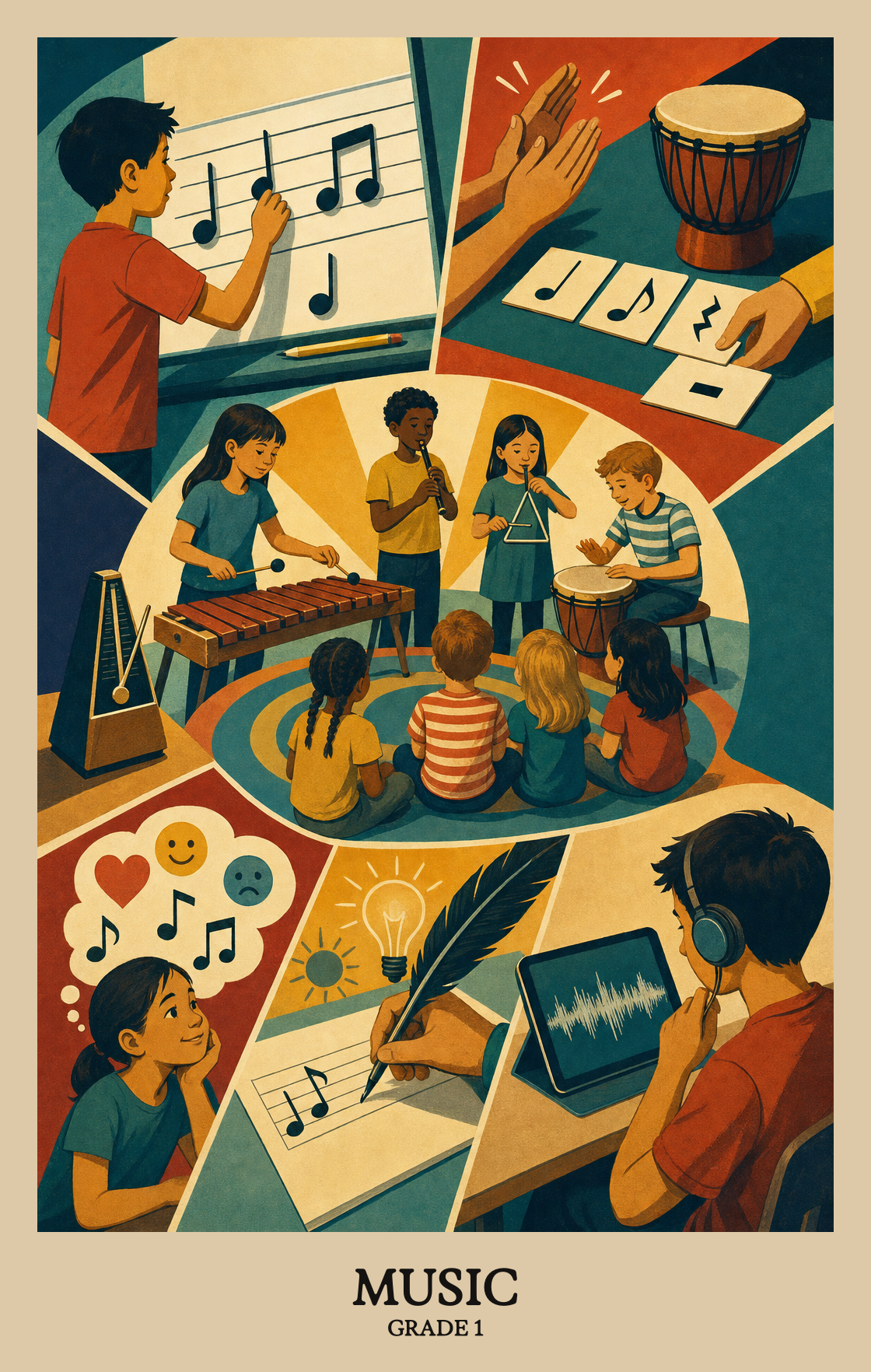
Students start the year by listening closely to music and finding the steady beat. They begin to notice fast and slow, loud and soft, and talk about what they hear in simple words.
Students try out small musical ideas of their own. They tap rhythms, hum short tunes, and play with sound on classroom instruments to see what fits a feeling or a story.
Students take a favorite musical idea and work on it until it feels finished. They practice it, decide how it should sound, and get it ready for an audience.
Students sing and play in front of classmates or family. They focus on staying with the beat, using a clear voice, and showing the feeling of the song.
Students listen to songs from different places, holidays, and times. They share songs from home and notice how music connects to memories, stories, and the people who make it.
Students connect what they know and feel to the music they make or listen to, drawing on their own life as part of the process.
Songs and music come from real places, times, and communities. Students listen to music from different cultures or eras and talk about what it tells them about the people who made it.
| Standard | Definition | Code |
|---|---|---|
| Making music from your own experiences | Students connect what they know and feel to the music they make or listen to, drawing on their own life as part of the process. | MU:Cn10.1 |
| Music from different times and places | Songs and music come from real places, times, and communities. Students listen to music from different cultures or eras and talk about what it tells them about the people who made it. | MU:Cn11.1 |
Students come up with their own musical ideas, like inventing a rhythm, humming a new melody, or deciding how a song should sound.
Students take a musical idea, like a short rhythm or melody, and shape it into something more complete by trying different sounds and deciding what works best.
Students revisit a song or rhythm they started, make small changes to improve it, and finish it as a complete piece.
| Standard | Definition | Code |
|---|---|---|
| Coming up with music ideas | Students come up with their own musical ideas, like inventing a rhythm, humming a new melody, or deciding how a song should sound. | MU:Cr1.1 |
| Putting a song idea together | Students take a musical idea, like a short rhythm or melody, and shape it into something more complete by trying different sounds and deciding what works best. | MU:Cr2.1 |
| Finish and improve a song | Students revisit a song or rhythm they started, make small changes to improve it, and finish it as a complete piece. | MU:Cr3.1 |
Students choose a song or piece to perform and think about how they want it to sound before they play or sing it.
Students practice a song or rhythm until they can perform it cleanly for an audience. The focus is on fixing small mistakes and making the music sound the way it was meant to sound.
Students perform a song or rhythm for others with a clear purpose, such as telling a story or sharing a feeling the music gave them.
| Standard | Definition | Code |
|---|---|---|
| Choosing music to perform | Students choose a song or piece to perform and think about how they want it to sound before they play or sing it. | MU:Pr4.1 |
| Practicing a song before performing it | Students practice a song or rhythm until they can perform it cleanly for an audience. The focus is on fixing small mistakes and making the music sound the way it was meant to sound. | MU:Pr5.1 |
| Perform music and mean it | Students perform a song or rhythm for others with a clear purpose, such as telling a story or sharing a feeling the music gave them. | MU:Pr6.1 |
Students listen to a short piece of music and describe what they notice, like how it gets louder, faster, or changes in feel. They start paying attention to what makes music sound the way it does.
Students listen to a short piece of music and explain what feeling or story they think it tells, using what they hear in the melody or rhythm as their reason.
Students listen to a piece of music and use a simple reason, like "it was fast" or "it felt happy," to explain what they liked or didn't like about it.
| Standard | Definition | Code |
|---|---|---|
| Listening and noticing how music works | Students listen to a short piece of music and describe what they notice, like how it gets louder, faster, or changes in feel. They start paying attention to what makes music sound the way it does. | MU:Re7.1 |
| What music is trying to say | Students listen to a short piece of music and explain what feeling or story they think it tells, using what they hear in the melody or rhythm as their reason. | MU:Re8.1 |
| Deciding if music sounds good | Students listen to a piece of music and use a simple reason, like "it was fast" or "it felt happy," to explain what they liked or didn't like about it. | MU:Re9.1 |
Students sing, clap, move, and play simple instruments like rhythm sticks and drums. They make up short patterns of their own, perform short pieces for the class, and talk about songs they hear. Most learning happens through doing, not through worksheets.
Sing in the car, clap along to songs, and let students bang out steady beats on a pot or a couch cushion. Ask what song they learned this week and have them teach it. Five minutes of singing or moving to music counts.
Not in the way adults usually picture it. Students start with high and low sounds, fast and slow beats, and simple patterns they can clap or sing back. Formal note reading comes later.
Start with steady beat, echo singing, and call-and-response, then layer in high and low pitch, loud and soft, and short rhythm patterns. By winter, students can create their own short patterns. By spring, they can perform a short piece and talk about choices they made.
Students can keep a steady beat, sing a short song in tune most of the time, make up a simple rhythm or melody, and say something specific about a piece of music they heard. They can also tell a classmate what they liked or would change about a performance.
Not at all. Most performing this year happens as a whole class or in small groups, not solo. Singing along to favorite songs at home builds confidence without any pressure.
Keeping a steady beat while singing trips up many students, as does telling the difference between beat and rhythm. Plan to revisit both across the year through movement, body percussion, and short games rather than one big unit.
Students learn songs from a range of places and times, and talk about where a song comes from and why people sing it. A simple question at home, such as what the song was about or where it came from, reinforces this.
They can echo a short rhythm, sing a familiar song with the class, create a short pattern of their own, and give a simple opinion about a piece of music with a reason. Steady beat should feel automatic in most activities.