Trying out ideas and tools
Students start the year exploring what art can be. They try crayons, markers, paint, and paper, and learn to come up with their own ideas instead of copying a model.
This is the year art moves from making marks to making choices. Students draw and paint on purpose, picking colors, shapes, and subjects that mean something to them. They start talking about their own work and other people's art, saying what they notice and why they like it. By spring, students can finish a piece, share it with the class, and explain the idea behind it.
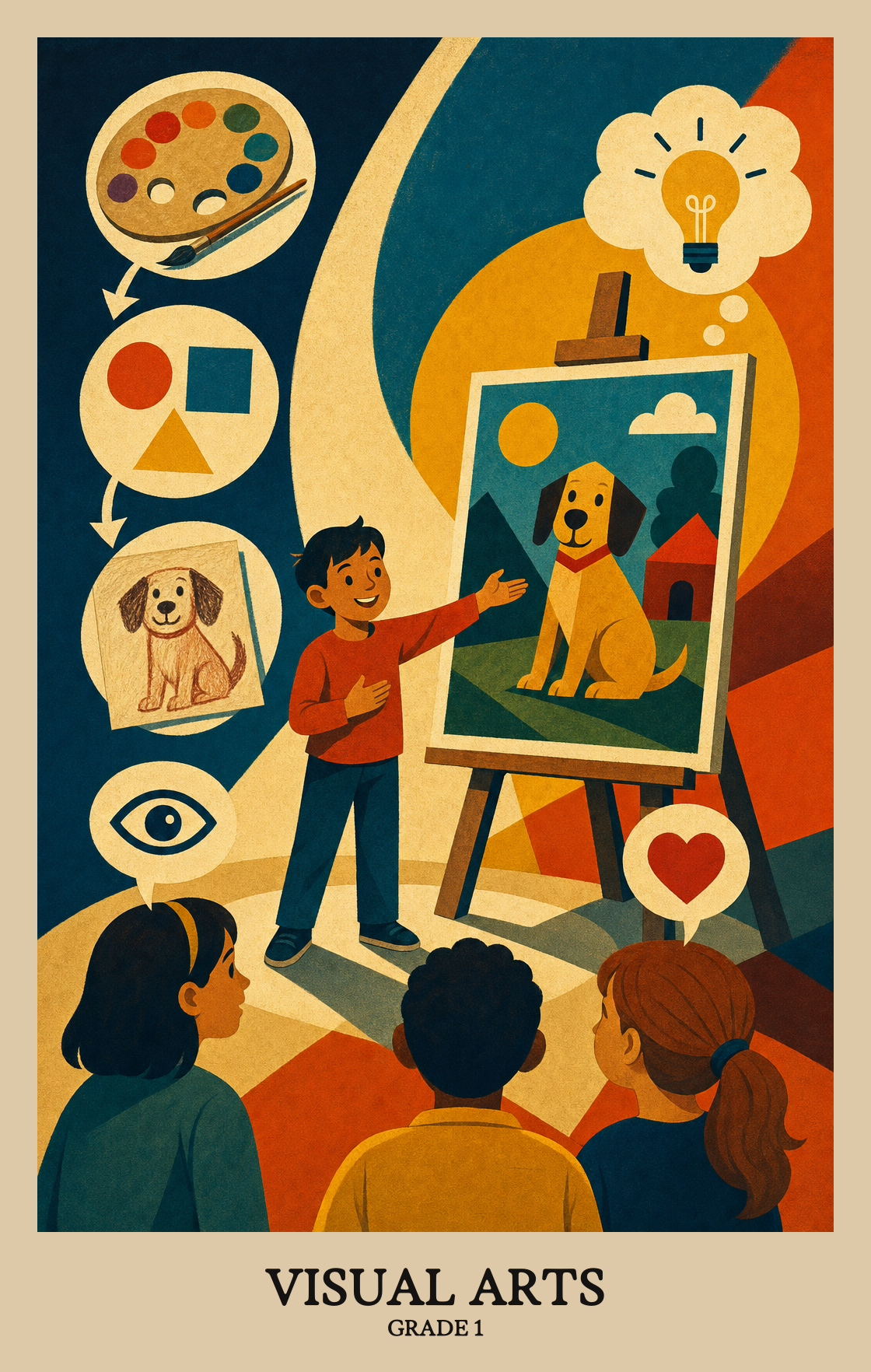
Students start the year exploring what art can be. They try crayons, markers, paint, and paper, and learn to come up with their own ideas instead of copying a model.
Students plan a picture or project before they begin. They notice what is working, fix the parts they want to change, and stick with a piece until it feels finished.
Students slow down and look at paintings, drawings, and objects from different places and times. They describe what they see and guess what the artist might have been thinking.
Students choose pieces they are proud of and get them ready to show. They talk about why they made each choice and listen as classmates share what their own art means.
Students connect something from their own life to what they create. A memory, a feeling, or something they've noticed can become the starting point for a drawing or other artwork.
Students look at a painting or artwork and talk about when it was made, who made it, and what was happening in the world at the time.
| Standard | Definition | Code |
|---|---|---|
| Making art from your own life | Students connect something from their own life to what they create. A memory, a feeling, or something they've noticed can become the starting point for a drawing or other artwork. | VA:Cn10.1 |
| Art and the world around us | Students look at a painting or artwork and talk about when it was made, who made it, and what was happening in the world at the time. | VA:Cn11.1 |
Students come up with their own ideas before they start making art. They might sketch a plan, talk through what they want to create, or just think it through before picking up a pencil or paintbrush.
Students pick a subject (like an animal or a place) and plan how to show it before they start making their artwork.
Students look back at a drawing or project they started, make changes to improve it, and decide when it's finished.
| Standard | Definition | Code |
|---|---|---|
| Turning ideas into art | Students come up with their own ideas before they start making art. They might sketch a plan, talk through what they want to create, or just think it through before picking up a pencil or paintbrush. | VA:Cr1.1 |
| Making art from your own ideas | Students pick a subject (like an animal or a place) and plan how to show it before they start making their artwork. | VA:Cr2.1 |
| Finish and improve your artwork | Students look back at a drawing or project they started, make changes to improve it, and decide when it's finished. | VA:Cr3.1 |
Students pick which of their drawings or projects is ready to share, and explain why they chose it.
Students practice and improve a piece of artwork until it is ready to share with others.
Students choose how to share their artwork with others and think about what message or feeling it sends to someone looking at it.
| Standard | Definition | Code |
|---|---|---|
| Choosing which art to show others | Students pick which of their drawings or projects is ready to share, and explain why they chose it. | VA:Pr4.1 |
| Improve art before sharing it | Students practice and improve a piece of artwork until it is ready to share with others. | VA:Pr5.1 |
| Sharing art and explaining what it means | Students choose how to share their artwork with others and think about what message or feeling it sends to someone looking at it. | VA:Pr6.1 |
Students look closely at a piece of art and describe what they see, such as the colors, shapes, and how the parts fit together.
Students look at a piece of art and explain what they think the artist meant. They use what they see in the image to back up their idea.
Students look at their own drawings or classmates' work and decide what makes it good, using simple questions like "Does it show what I planned?" or "Are the colors working?"
| Standard | Definition | Code |
|---|---|---|
| Looking at and thinking about art | Students look closely at a piece of art and describe what they see, such as the colors, shapes, and how the parts fit together. | VA:Re7.1 |
| What art means and why artists make it | Students look at a piece of art and explain what they think the artist meant. They use what they see in the image to back up their idea. | VA:Re8.1 |
| Judging what makes art work | Students look at their own drawings or classmates' work and decide what makes it good, using simple questions like "Does it show what I planned?" or "Are the colors working?" | VA:Re9.1 |
Students make art from their own ideas and experiences, try out tools like paint, crayons, clay, and collage, and talk about what they see in other people's work. They also learn to share finished pieces and explain what their art is about.
Keep paper, pencils, scissors, glue, and a few crayons or markers in one spot students can reach. Ask what they are making and why they picked those colors or shapes. Short, regular drawing time matters more than fancy materials.
At this age the point is trying ideas, not making something that looks real. Praise specific choices, like a bold color or a careful line, instead of saying the picture is good or bad. Let them see adults draw too, even badly.
Start with short making projects that build comfort with basic tools and shapes. Add looking and talking about artwork once routines are steady, then move into projects where students plan, revise, and present a finished piece with a clear idea behind it.
Students can come up with an idea, pick materials on purpose, finish a piece, and say a sentence or two about what it means. They can also look at someone else's art and point to something they notice and something they wonder about.
Planning before making and sticking with a piece long enough to refine it. Many students want to declare a work done after two minutes. Build in a step where students look at their own work, name one thing to change, and then change it.
Students learn that art comes from real people in real places and times. Looking at a painting, a sculpture, or a craft from another culture gives them ideas for their own work and teaches them to notice details instead of glancing past them.
They can talk about their own art with more than one sentence, use basic tools without constant reminders, and give a simple opinion about a piece of artwork using what they see in it. Comfort with revision is the strongest signal.