Moving with control
Students practice the building blocks of movement: running, hopping, skipping, and stopping on cue. Parents may notice steadier balance on the playground and more confidence on stairs and uneven ground.
This is the year movement gets more deliberate. Students practice running, jumping, throwing, catching, and balancing with better control, and they start to notice how their bodies feel after exercise. They learn to take turns, follow game rules, and play safely with classmates. By spring, students can perform basic skills like skipping or tossing a ball to a partner and explain why moving every day keeps them healthy.
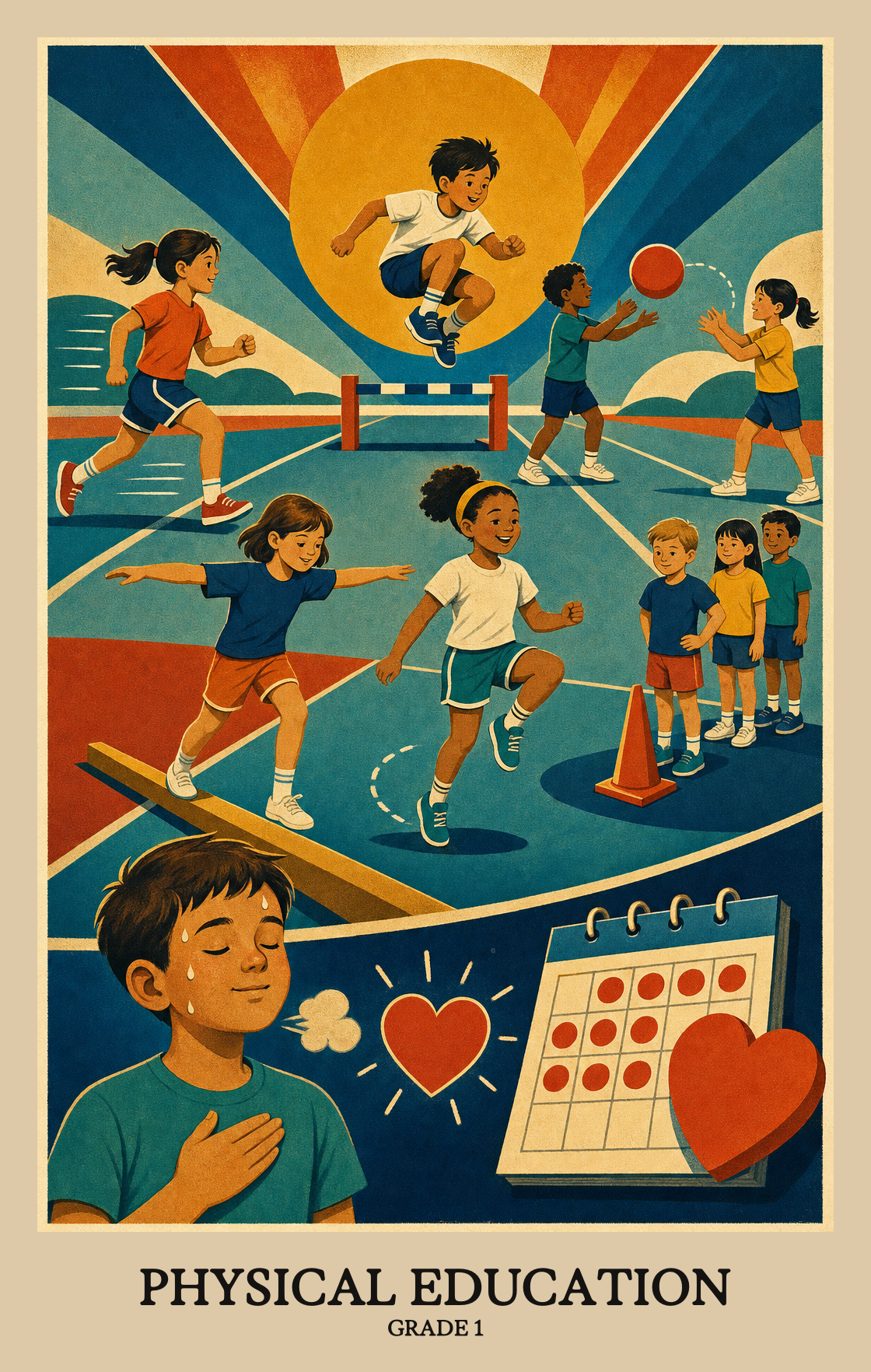
Students practice the building blocks of movement: running, hopping, skipping, and stopping on cue. Parents may notice steadier balance on the playground and more confidence on stairs and uneven ground.
Students work on tossing, catching, and kicking with bigger balls and softer targets. At home, games of catch get a little longer before the ball hits the ground.
Students learn to take turns, share equipment, and follow simple rules in small group games. Parents may hear more about who they played with and less about who got the ball first.
Students try short bursts of jumping, climbing, and active play that get the heart pumping. They start to notice what a strong body feels like and why a water break matters.
Students talk about why moving every day feels good and name activities they enjoy outside of school. Walks, bike rides, and family games at home start to feel like part of staying healthy.
Students practice running, jumping, skipping, throwing, and catching until each movement feels controlled. The goal is building a base of physical skills they can use in any game or activity.
Students learn basic movement ideas like direction, speed, and balance, then use those ideas to move better in games and activities.
Students learn how to stay active and build basic fitness habits. They practice moving their bodies in ways that keep their heart, muscles, and energy levels healthy.
Students learn to take turns, follow rules, and treat classmates kindly during games and activities. Good sportsmanship and safe choices are the focus.
Students learn that moving their bodies is good for more than fitness. Exercise can be fun, challenging, and a way to connect with others.
Students learn that jobs like coaching or teaching fitness exist, and that parks, gyms, and community programs are resources they can use to stay active and healthy.
| Standard | Definition | Code |
|---|---|---|
| Moving your body in different ways | Students practice running, jumping, skipping, throwing, and catching until each movement feels controlled. The goal is building a base of physical skills they can use in any game or activity. | NY-PE.1.1 |
| How your body moves and why | Students learn basic movement ideas like direction, speed, and balance, then use those ideas to move better in games and activities. | NY-PE.2.1 |
| Staying active and healthy | Students learn how to stay active and build basic fitness habits. They practice moving their bodies in ways that keep their heart, muscles, and energy levels healthy. | NY-PE.3.1 |
| Respecting yourself and others in gym class | Students learn to take turns, follow rules, and treat classmates kindly during games and activities. Good sportsmanship and safe choices are the focus. | NY-PE.4.1 |
| Why moving feels good | Students learn that moving their bodies is good for more than fitness. Exercise can be fun, challenging, and a way to connect with others. | NY-PE.5.1 |
| Staying active and healthy for life | Students learn that jobs like coaching or teaching fitness exist, and that parks, gyms, and community programs are resources they can use to stay active and healthy. | NY-PE.6.1 |
Students practice basic movement skills like running, skipping, hopping, throwing, catching, and kicking. They play simple games, learn to share space safely with classmates, and start to notice how their body feels when they move. Most lessons are active from start to finish.
Aim for active play most days, even in short bursts. Tossing a ball back and forth, playing tag in the yard, dancing in the kitchen, or walking to the park all count. The goal is for kids to move, have fun, and try things that feel a little tricky.
At this age, skills are still forming, so messy throws and missed catches are normal. Praise effort and small improvements rather than winning. Practicing one skill for five minutes a few times a week, like bouncing a ball or balancing on one foot, builds real confidence.
Start with traveling skills like running, skipping, and galloping, then move into balance and jumping. Add throwing, catching, kicking, and striking once students can control their bodies in shared space. Revisit each skill in short cycles so students keep practicing rather than learning a skill once and moving on.
Students can perform basic locomotor skills with control, toss and catch a large ball at close range, and kick a stationary ball toward a target. They follow simple game rules, take turns, and play safely near other students. Form will still be rough, and that is expected.
Catching, skipping, and overhand throwing tend to lag behind running and jumping. Build in extra practice with light balls, scarves, and beanbags so students get many repetitions without fear of getting hurt. Cue one thing at a time, such as watching the ball into the hands.
Start with low-pressure entry points, such as being a partner counter or a line leader, and build back into activity. Talk privately to find out what is going on, since shyness, sensory issues, and past gym experiences all play a role. Praise small wins and keep expectations consistent.
About 60 minutes of active play across the day is a good target, broken into shorter chunks. Recess, walking, bike riding, climbing at the park, and active chores all count. Try to limit long stretches of sitting, especially after school.
By spring, students should move safely in a shared space, follow two-step directions during games, and use basic skills like running, jumping, throwing, and catching with growing control. They should also take turns, share equipment, and bounce back from losing without melting down.